


Panama Oeste Commuters Live Against the Clock Amidst Traffic Crisis
Translated from Spanish, summarized and contextualized by DistantNews.
At a glance
News
Named sources
Context piece
- Over 100,000 commuters in Panama Oeste face daily arduous journeys to Panama City for work, study, or medical appointments.
- The daily commute involves multiple transfers and can take over two hours during peak times, leading to exhaustion and burnout.
- Traffic restrictions on the Bridge of the Americas have worsened congestion, impacting public transport and increasing travel times.
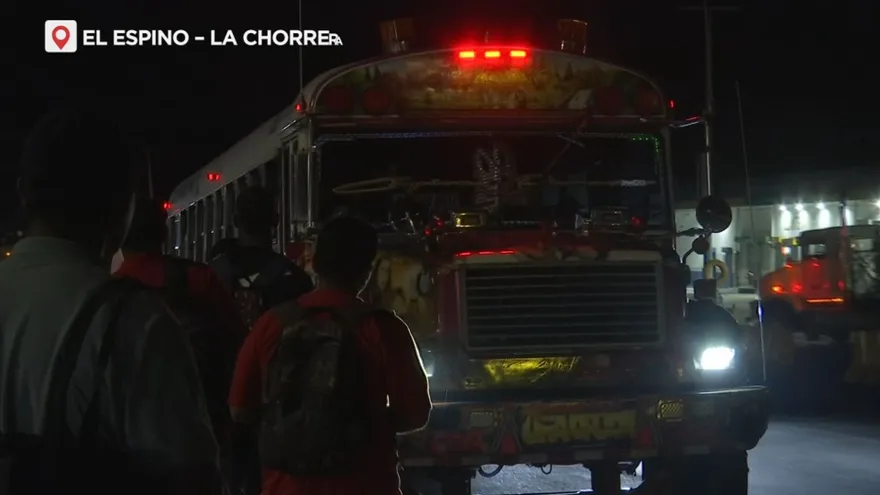
Every morning before sunrise, thousands of lights flicker on in homes across Panama Oeste. For over 100,000 drivers and countless public transport users, the day begins not at the office or school, but on the Interamericana and Vía Centenario highways. This daily odyssey is a crossroad of fatigue, routine, and the urgent need to arrive on time.
For more than 100,000 drivers and thousands of public transport users, the day does not start in the office or classrooms, but on the Interamericana and Vía Centenario: a daily journey where fatigue, routine, and the need to arrive on time intersect.
Projections from the INEC, based on the 2023 Census, indicate Panama Oeste's population is 807,284. Of these, an estimated 362,000 are in the workforce. Approximately 80% of this labor force commutes daily to Panama City for work, education, or medical appointments. Ramiro Chirú, a resident of La Chorrera, exemplifies this struggle. His commute to his job in Amador requires four transfers: from his neighborhood to Parque Feuillet, then a bus to the Gran Terminal de Albrook, and finally a Metrobus to Amador. By the time he reaches his destination, physical exhaustion has already set in.
Similar stories unfold daily. Artemio travels nearly 50 kilometers from Cirí Grande to connect with main routes in El Espino de La Chorrera. Data from the Transit and Land Transport Authority (ATTT) reveals a daily flow of 160,000 vehicles between Panama City and Panama Oeste. The Bridge of the Americas handles 100,000 vehicles, while the Vía Centenario manages 60,000.
His journey to his workplace in Amador becomes a race against obstacles that includes four transfers.
Recent restrictions on heavy vehicles, including large buses, at the Bridge of the Americas have exacerbated the situation. This forces modifications to usual routes via the Vía Centenario, increasing travel times and straining the public transport fleet. What would normally be a 35-45 minute journey covering 38 kilometers between La Chorrera and Panama City can now stretch to two hours or more due to traffic congestion during peak hours.
Data from the Transit and Land Transport Authority (ATTT) counts a daily flow of 160,000 vehicles moving between the capital and Panama Oeste.
The impact of this mobility crisis extends beyond lost time. A study by the job portal Konzerta found that 79% of workers in Panama experience burnout. Mental health experts at the Hospital Complex warn that adding over four hours of daily commuting to a workday accelerates emotional wear and tear, significantly deteriorating mental well-being.
What in normal conditions of fluidity would represent a journey of 35 to 45 minutes to cover the 38 kilometers between La Chorrera and Panama City, in peak hours transforms into 2 hours or more of vehicular congestion.
DistantNews Editorial
Originally published by TVN Panamá in Spanish. Translated, summarized, and contextualized by our editorial team with added local perspective. Read our editorial standards.
More Stories


From Our Blog

What Gets Lost (and Found) When News Is Translated

The Critical Role of Diaspora Media in Global News

What Travellers Should Know About Countries with Restricted Press

A Digital Nomad's Guide to Following Local News

How the Same Story Looks Different in Different Countries
