

Panama's Ciudad de la Salud performs first robotic surgeries for gynecological cancer
Translated from Spanish, summarized and contextualized by DistantNews.
At a glance
News
Sources not specified
New plan
- Panama's Ciudad de la Salud has performed its first robotic surgeries for gynecological cancer treatment.
- The procedures included hysterectomies for cancer and operations to remove fibroids, all utilizing a newly acquired surgical robot.
- This technological advancement aims to increase surgical precision, reduce blood loss, and facilitate patient recovery, forming part of the Social Security Fund's modernization efforts.
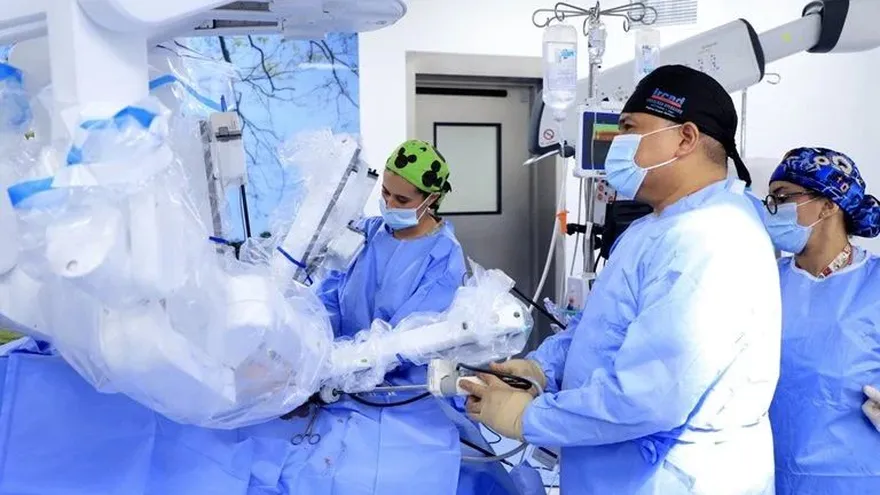
Panama's Ciudad de la Salud has marked a significant advancement in medical technology by performing its first robotic surgeries specifically for treating gynecological cancers within the Social Security Fund's (CSS) hospital network. The initial interventions included two hysterectomies for cancer and one operation to remove uterine fibroids with reconstruction, all conducted using a recently incorporated surgical robot.
Specialists involved highlighted that the robotic technology enhances surgical precision, leading to reduced blood loss and a less complicated recovery for patients compared to traditional open techniques. Gynecologic oncologist Miguel Cáceres noted that robotic assistance also improves the efficiency of medical teams. Procedures that previously demanded a full day due to the physical strain on surgeons can now be completed more effectively, allowing for three procedures to be finished in a single day.
The integration of robotic surgery is part of a broader technological modernization drive by the CSS, which has acquired three such systems. One is installed at the Ciudad de la Salud, while the other two are designated for the Dr. Rafael Hernández Specialized Hospital in David and the Dr. Gustavo Nelson Collado Hospital in Herrera province.
Furthermore, the CSS plans to develop robotic telesurgery programs to connect hospitals across the country. This initiative aims to enable specialists to remotely participate in procedures, thereby expanding access to complex treatments for patients outside major urban centers and minimizing the need for extensive travel.
Robotic assistance also has an impact on the work dynamic of medical teams. Oncological operations that previously required a large part of a workday due to the physical effort involved for surgeons can now be performed more efficiently.
DistantNews Editorial
Originally published by TVN Panamá in Spanish. Translated, summarized, and contextualized by our editorial team with added local perspective. Read our editorial standards.
More Stories



From Our Blog

What Gets Lost (and Found) When News Is Translated

The Critical Role of Diaspora Media in Global News

What Travellers Should Know About Countries with Restricted Press

A Digital Nomad's Guide to Following Local News

How the Same Story Looks Different in Different Countries
