

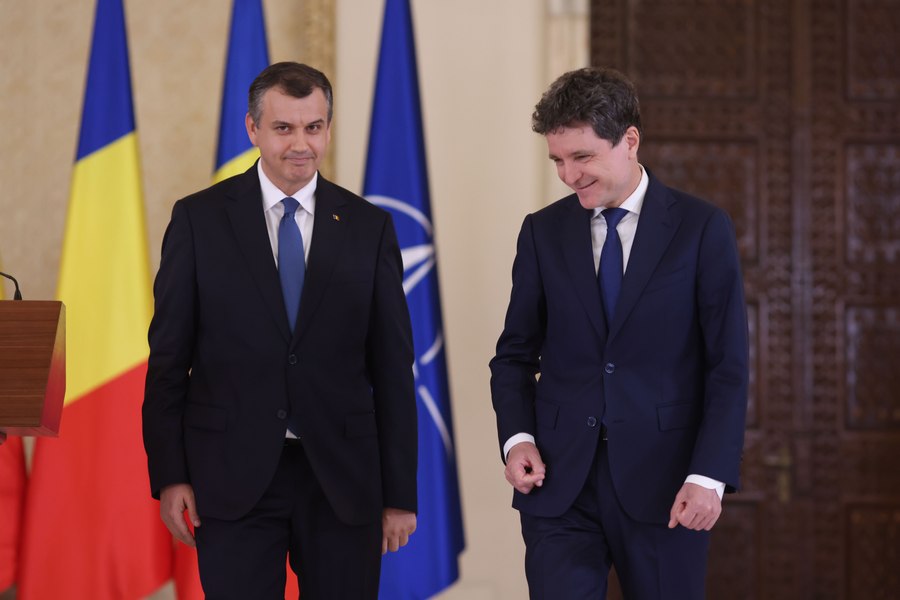

'Pandemic Model' Proposed by Remus Pricopie for Rapid Government Installation, Excluding AUR Votes
Translated from Romanian and summarized by DistantNews. Read the original for the full story.
At a glance
Analysis
Named sources
Ongoing story
- SNSPA rector Remus Pricopie proposed a model for quickly forming a new government without AUR party votes.
- He suggests the PNL and possibly USR parties should vote for the new executive, even if they remain in opposition, citing a similar responsible move during the pandemic.
- Pricopie warns that aligning with AUR, which he labels as extremist and promoting Moscow-aligned narratives, would harm Romania's financial markets, borrowing costs, international credibility, and European relations.
Remus Pricopie, rector of the National School of Political and Administrative Studies (SNSPA), has put forth a strategy for the swift formation of a new Romanian government, emphasizing political responsibility over partisan conflicts. He advocates for the PNL, and potentially USR, to support a new executive by voting it into power, even if they choose to stay in opposition.
In these conditions, there is practically only one political model that can lead to the rapid installation of a new government: PNL - and possibly also USR - to vote for the new Executive, even if they do not participate directly in governance.
Pricopie draws a parallel to the pandemic period, when the PSD party voted for two PNL/USR governments without joining them, a decision he frames as responsible leadership during a critical time for Romania. He believes a similar approach now is crucial to prevent the country from being governed with the support of the AUR party, which he identifies as extremist and promoting narratives aligned with Moscow.
It would not be a formula without precedent. During the pandemic, PSD voted for two PNL/USR governments, without entering into governance. It was, at the time, a solution of responsibility in a complicated moment for Romania.
He highlights the significant stakes involved, stating that Romania's financial markets, borrowing costs for the budget deficit, international credibility, and relationships with European and Euro-Atlantic partners are all at risk. Pricopie expresses concern over the degradation of public discourse, citing inflammatory language used between former governing partners. He argues that serious nations prioritize continuity and predictability, separating legitimate political conflict from the country's strategic interests.
The stake is a major one: the installation of a government without the votes of the extremists from AUR.
The SNSPA rector warns that any association, direct or indirect, with formations that consistently promote themes and narratives close to Moscow's propaganda would send a detrimental signal in an already fragile regional context. He points to the public space being flooded with derogatory terms, underscoring the tense atmosphere that questions the political actors' ability to distinguish electoral competition from the nation's strategic interests.
Cooperation with Tencent opens access to advanced fintech solutions and international expertise in the field of digital payments and lays the foundation for a long-term strategic partnership.
About this summary
Originally published by Adevărul in Romanian. Translated, summarized, and contextualized automatically by DistantNews, with a note on how the source frames the story. Not individually reviewed before publishing. How this works.
More Stories
From Our Blog

News in Translation: What Gets Lost, and How We Keep the Framing

Diaspora Media: How Communities Abroad Follow Home

Traveling Where the Press Is Not Free: How to Read the News There

The Digital Nomad's Guide to Local News

The Same Story, Different Countries: How Coverage Changes at the Border
