

Pardow: Chile's last three governments overestimated the power of the second round
Translated from Spanish, summarized and contextualized by DistantNews.
At a glance
Analysis
Sources not specified
Context piece
- Former Chilean Minister Diego Pardow reflects on the challenges of governing and building collective purpose.
- Pardow argues that recent Chilean governments have overestimated the power of second-round election victories.
- He suggests that leaders must negotiate support, as their initial mandates are often narrow.
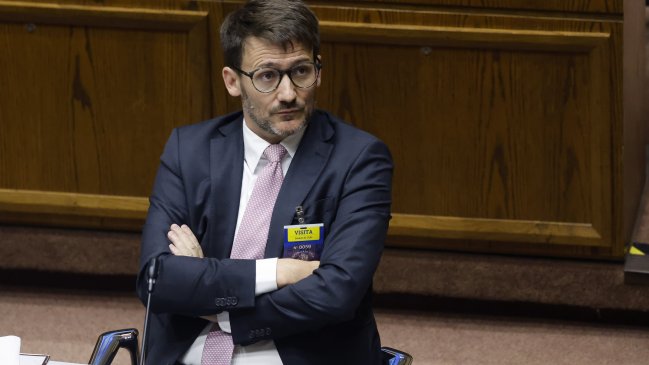
Former Chilean Minister of Energy, Diego Pardow, has analyzed the experiences of the last three governments, suggesting they have consistently overestimated the influence of winning a presidential election in the second round. Pardow, affiliated with the Broad Front (FA), shared his insights on the complexities of wielding power and the difficulty in forging a collective purpose for society.
The exercise of power changes you a lot and gives you many lessons in humility, in understanding the magnitude of the challenge, and how difficult it is to articulate a collective will.
"The exercise of power changes you a lot and gives you many lessons in humility, in understanding the magnitude of the challenge, and how difficult it is to articulate a collective will," Pardow stated in an interview with La Tercera. He noted that societal dispersion and a tendency toward disorder are more common than a shared purpose. "Fixing a common purpose is extraordinarily difficult. And before having the responsibility of leading these processes, I don't think we should underestimate it," he added, reflecting on his time in Gabriel Boric's government.
Pardow believes the Broad Front underestimated the challenge of generating agreements and a collective purpose, a miscalculation stemming from overestimating the electoral signal. "Giving more meaning than it had to the electoral triumph is natural when one wins an election; there is a certain euphoria, and many people start agreeing with you. It's normal," he acknowledged. However, he stressed that after three consecutive administrations exhibiting a similar pattern, it is institutionally important for Chile to learn.
Fixing a common purpose is extraordinarily difficult. And before having the responsibility of leading these processes, I don't think we should underestimate it.
He categorized Chile's nine presidencies since the return of democracy into three groups of three. The first three featured strong leaders winning in the first round or close to it, with robust parliamentary majorities. The next three were more transitional. The most recent three, including Sebastián Piñera's second term, Gabriel Boric's term, and José Antonio Kast's potential administration, are characterized by mandates below 30% and parliamentary support ranging from one-fifth to one-third of Congress. "The rest you have to negotiate as your government progresses," Pardow explained. He asserted that Piñera, Boric, and Kast have all overestimated the power of the second round, winning with "borrowed votes."
Giving more meaning than it had to the electoral triumph is natural when one wins an election; there is a certain euphoria, and many people start agreeing with you. It's normal.
Consequently, Pardow views it as an error to "look at politics from the perspective of 'how am I doing versus how do I fix the problem.'" He observed that the current government faces this issue, with the Republican Party appearing more focused on its identity than on solving immediate problems. "In general, when you let your decisions be governed in that way, it's a bad approach," he concluded.
The rest you have to negotiate as your government progresses.
DistantNews Editorial
Originally published by Cooperativa in Spanish. Translated, summarized, and contextualized by our editorial team with added local perspective. Read our editorial standards.
More Stories


From Our Blog

What Gets Lost (and Found) When News Is Translated

The Critical Role of Diaspora Media in Global News

What Travellers Should Know About Countries with Restricted Press

A Digital Nomad's Guide to Following Local News

How the Same Story Looks Different in Different Countries
