

Part of Evangelical Fortified Church Collapses in Romanian Village
Translated from Hungarian, summarized and contextualized by DistantNews.
At a glance
News
Official statement
Ongoing story
- A section of the Evangelical fortified church in Muzna, Romania, has collapsed.
- The Ministry of Culture is working with local authorities to assess the damage and determine necessary interventions.
- The church, built between 1480 and 1486, is a significant example of late Gothic architecture in Transylvania.
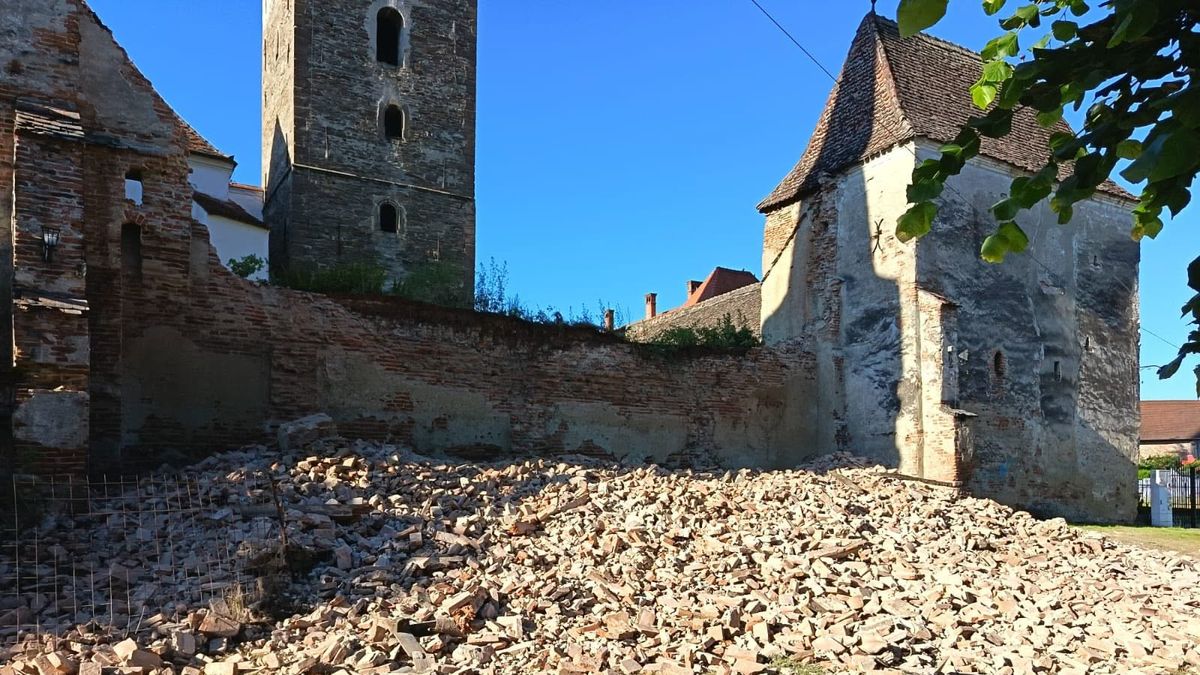
A portion of the Evangelical fortified church in Muzna, a village in Romania's Transylvania region, has collapsed. The Ministry of Culture confirmed it is in constant contact with the Sibiu County Directorate of Culture and heritage specialists who are assessing the situation to determine the required interventions for securing the monument.
Emergency conservation work was last carried out on the northern side of the building complex in 2017, with the ministry's approval. The Romanian Evangelical Church of Augsburg Confession financed the stabilization and securing of the building. However, the works were never officially handed over, as they halted at the archaeological excavation stage without the project's subsequent phases being implemented.
The fortified church, once inhabited by Saxons, is considered one of the most valuable late Gothic-style churches in the region. Constructed between 1480 and 1486, its building was led by the renowned Saxon stonemason Andreas Lapicida from Sibiu. The organ was crafted by master Carl Hesse from Vienna and was put back into operation in 2014.
The current church is built on the external walls of a former basilica and features a three-nave, ribbed vault ceiling. It is surrounded by a peasant fortress reinforced with towers, which includes a Gothic chapel likely dating from the 14th century. The fortress construction began in 1520, with walls reaching 9 meters high and featuring bastions. The gate tower faces southeast. The church, along with its defensive walls, is a masterpiece of Saxon architecture in Transylvania. The rooms within the fortress walls, which once served as storage for residents' food supplies, now house a museum showcasing the lifestyle of the former Saxon inhabitants.
Collapses of valuable medieval fortified churches have occurred previously in Transylvania's historic Saxon territories. Many of these churches became ownerless after their congregations emigrated to Germany before the fall of communism. In 2016, the tower and part of a 13th-century Romanesque fortified church in Rotbav, Brașov County, collapsed. Subsequently, the tower of a 15th-century church in Roades also crumbled. The then-Romanian Minister of Culture, Vlad Alexandrescu, proposed creating an emergency fund to save endangered built heritage, noting that over 600 monuments in Romania were on the verge of collapse, with Saxon fortified churches being particularly at risk.
DistantNews Editorial
Originally published by Magyar Nemzet in Hungarian. Translated, summarized, and contextualized by our editorial team with added local perspective. Read our editorial standards.
More Stories


From Our Blog

Countries Without a Free Press: What You Need to Know

What Press Freedom Means for the News You Read

What Gets Lost (and Found) When News Is Translated

The Critical Role of Diaspora Media in Global News

What Travellers Should Know About Countries with Restricted Press
