


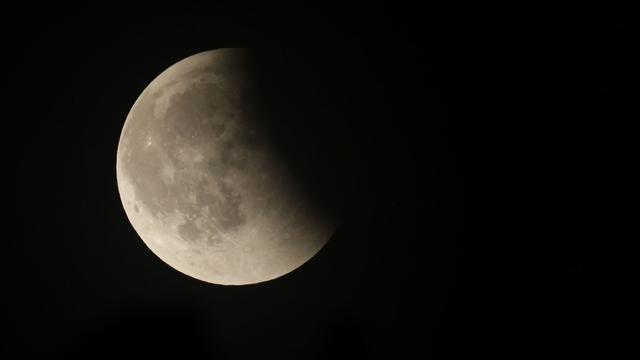
Partial lunar eclipse to grace skies over Berlin and Brandenburg early Friday
Translated from German and summarized by DistantNews. Read the original for the full story.
At a glance
News
From a news agency
Context piece
- A partial lunar eclipse will be visible in Berlin and Brandenburg early Friday morning, following a recent solar eclipse.
- Clear skies and a low horizon will be key for viewing the event, which begins around 3:22 AM.
- The Wilhelm-Foerster-Observatory will open its terrace for viewing, with optimal observation times recommended between 5:00 AM and 5:30 AM in Brandenburg.
Residents in Berlin and Brandenburg have another celestial event to anticipate as a partial lunar eclipse is set to grace the skies early Friday morning. This follows the spectacular solar eclipse that occurred on August 12.
According to Monika Staesche from the board of the Foundation Planetarium Berlin, successful viewing hinges on "caffeine, clear weather, and a certain kinetic energy to get out of bed." Clouds are identified as the primary challenge, though current forecasts for Berlin and southern Brandenburg appear favorable.
Viewers will need a clear line of sight to the southwest and west, as the moon will be positioned very low on the horizon. The eclipse event commences at 3:22 AM, with optimal viewing in Berlin expected from 4:33 AM. The maximum phase of the eclipse, as seen from Berlin, will occur at 6:12 AM.
Caffeine, clear weather, and a certain kinetic energy, so that you get out of bed.
The Wilhelm-Foerster-Observatory in Berlin plans to open its terrace starting at 4:30 AM to accommodate skygazers. For those in Brandenburg, the head of the Urania-Planetarium in Potsdam, Simon Plate, suggests observing between 5:00 AM and 5:30 AM. He notes that the sky will not yet be fully bright, allowing the partially eclipsed moon to stand out more distinctly against the background.
While the eclipse is visible to the naked eye, using binoculars or a small telescope will enhance the viewing experience, revealing finer details. During a partial lunar eclipse, the Earth passes between the sun and the moon, casting a shadow on the lunar surface. In this instance, approximately 93 percent of the visible moon will be obscured by the Earth's shadow.
Then the sky is not yet so bright, and the partly eclipsed moon stands out better against the background.
About this summary
Originally published by Die Zeit in German. Translated, summarized, and contextualized automatically by DistantNews, with a note on how the source frames the story. Not individually reviewed before publishing. How this works.
More Stories

From Our Blog

What Gets Lost (and Found) When News Is Translated

How the Same Story Looks Different in Different Countries

The Critical Role of Diaspora Media in Global News

What Travellers Should Know About Countries with Restricted Press

A Digital Nomad's Guide to Following Local News
