


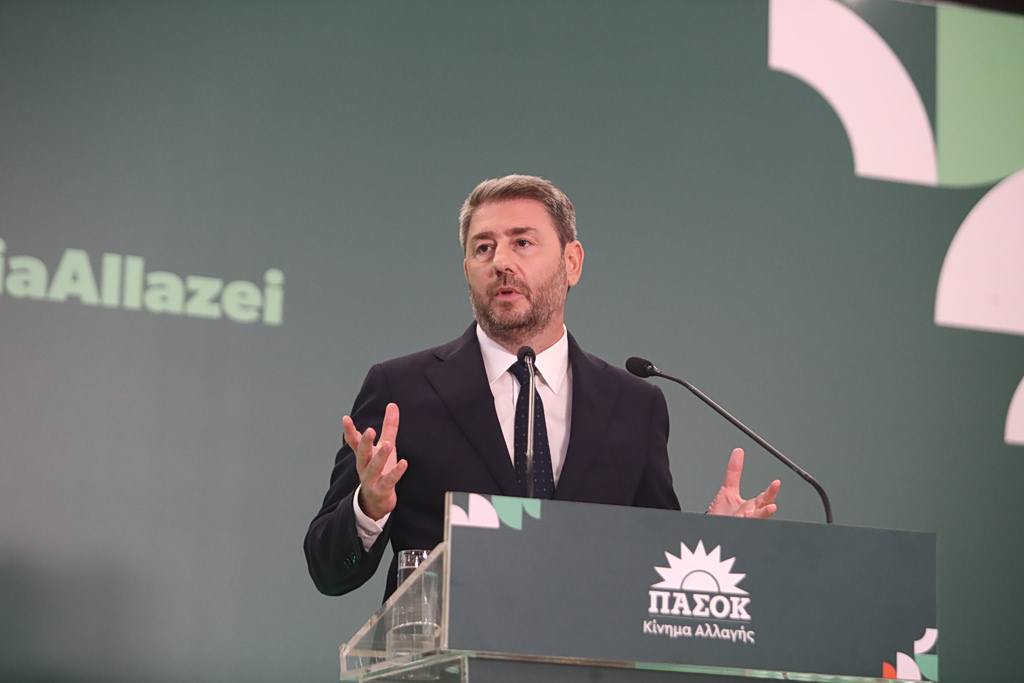
PASOK leader calls for education priority, criticizes government
Translated from Greek, summarized and contextualized by DistantNews.
At a glance
News
Sources not specified
Context piece
- PASOK-KINAL leader Nikos Androulakis called for education to be a national priority, proposing measures to support teachers and reduce inequalities.
- He criticized the government for limiting public investment in education, increasing financial burdens on families, and promoting private options.
- Androulakis also dismissed university police as a costly failure and questioned the quality of non-state universities.
Nikos Androulakis, president of PASOK-KINAL, has called for a new national plan centered on education. Speaking at a party event in Athens, he emphasized the need to reduce social and educational inequalities, strengthen public schools, and improve working conditions for teachers.
Androulakis presented PASOK's proposals, framing education as a "public good, social right, institution of democracy, and the strongest mechanism for social mobility." He specifically advocated for salary increases for educators and incentives, including housing support, for those working in remote and island areas to address teacher shortages.
Education is a public good, a social right, an institution of democracy, and the strongest mechanism for social mobility.
The PASOK leader launched a strong critique of the current government, alleging that seven years of its rule have led to reduced public investment in education, greater financial strain on families, and an increased reliance on private educational choices. He accused the government of treating education as a "service market" and creating a tiered system, contrasting it with PASOK's vision of a robust public education system offering equal opportunities.
The university police is a very expensive fiasco.
Furthermore, Androulakis labeled the university police initiative a "very expensive fiasco," arguing that government actions have failed to resolve issues within universities. He also criticized the establishment of non-state universities, suggesting it amounted to the "university-ization of colleges" rather than creating institutions of international repute. He stressed the country's need for a strong, outward-looking public university with unified operational standards, strict academic criteria, and high-quality benchmarks.
Addressing school violence and a recent incident at an exam center, Androulakis raised serious questions about the integrity of the national exams. He demanded clear answers from the government regarding the circumstances of the incident and assurances that candidates were treated equitably. He concluded by reiterating that strong public education is fundamental to reducing inequality, enhancing social mobility, and building a more modern and just Greece.
The university-ization of colleges.
DistantNews Editorial
Originally published by Ta Nea in Greek. Translated, summarized, and contextualized by our editorial team with added local perspective. Read our editorial standards.
More Stories
From Our Blog

What Gets Lost (and Found) When News Is Translated

The Critical Role of Diaspora Media in Global News

What Travellers Should Know About Countries with Restricted Press

A Digital Nomad's Guide to Following Local News

How the Same Story Looks Different in Different Countries
