

Patriots Too Costly: Search for Cheaper Missiles Underway, Ukraine Offers Help
Translated from Polish, summarized and contextualized by DistantNews.
At a glance
News
Sources not specified
Context piece
- Western air defense systems like the Patriot and SAMP/T are effective but use expensive, hard-to-produce missiles, prompting a search for cheaper alternatives.
- The U.S. Army is initiating a project to acquire a low-cost interceptor missile, aiming for a unit cost under $1 million, to counter simpler threats like drones and aircraft.
- Ukrainian company Fire Point has unveiled plans for its own air defense missile, the FP-7.x Freya, as new players emerge in the arms market driven by the war in Ukraine.
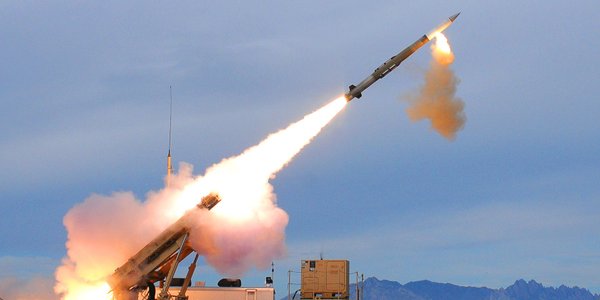
The high cost and long production times for missiles used in Western air defense systems, such as the U.S.-made Patriot and the Franco-Italian SAMP/T, are creating significant challenges for Ukraine and other users. The best missile for the Patriot, the PAC-3 MSE, costs around $7 million each, with new orders facing multi-year delays. Even less expensive PAC-2 GEM-T missiles are costly.
The best missile for the Patriot, PAC-3 MSE, costs about $7 million per unit, and projected delivery times for new orders are measured in years.
This economic strain is particularly acute when considering the cost of defense versus offense. If a ballistic or cruise missile costs $1-2 million and requires multiple interceptors to destroy, the cost of defense quickly outstrips the cost of attack. This imbalance is driving a search for more affordable alternatives.
If a ballistic or cruise missile costs $1-2 million, and statistics show that more than one anti-aircraft missile is needed to destroy each one, then defense suddenly becomes incomparably more expensive than offensive actions.
The U.S. Army has launched a project to procure a cheap missile designed to counter simpler targets like aircraft, drones, and cruise missiles, and potentially short-range ballistic missiles. The goal is a mass-producible, inexpensive missile with four main components, each costing no more than $250,000. The total cost, including upgrades to the air defense system's fire control, is targeted at under $1 million per missile.
The U.S. Army recently launched a project to acquire a cheap missile. It is to be effective mainly against simpler targets (aircraft, drones, cruise missiles, helicopters – although the elimination of short-range ballistic missiles is also considered), easy to mass-produce, and cheap.
Meanwhile, the war in Ukraine has opened up opportunities for new arms manufacturers. Ukrainian firm Fire Point, known for its Flamingo cruise missiles, has revealed plans for the FP-7.x Freya air defense missile. This missile is intended to be part of an international air defense system, potentially integrating with radars from companies like Hensoldt, Saab, or Thales.
The first of these is the Ukrainian company Fire Point, famous for producing the Flamingo FP-1, FP-2, and FP-5 cruise missiles. In May, it revealed details of a plan to develop the FP-7.x Freya air defense missile.
DistantNews Editorial
Originally published by Rzeczpospolita in Polish. Translated, summarized, and contextualized by our editorial team with added local perspective. Read our editorial standards.
More Stories



From Our Blog

What Gets Lost (and Found) When News Is Translated

The Critical Role of Diaspora Media in Global News

What Travellers Should Know About Countries with Restricted Press

A Digital Nomad's Guide to Following Local News

How the Same Story Looks Different in Different Countries
