

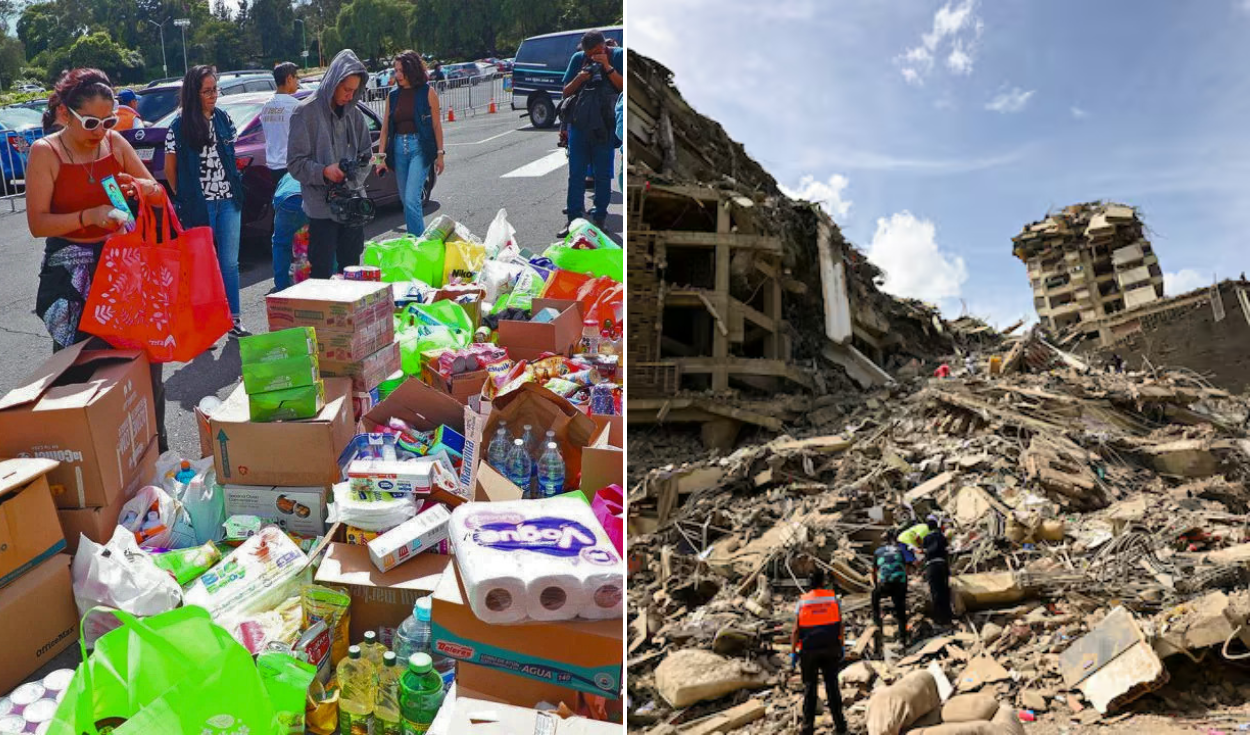
Peruvian firefighters rescue woman trapped for 86 hours in Venezuela building after earthquake
Translated from Spanish, summarized and contextualized by DistantNews.
At a glance
News
Named sources
Outcome reported
- Peruvian firefighters rescued a 60-year-old woman trapped for 86 hours in a collapsed 15-story building in Venezuela following strong earthquakes.
- Specialized electronic search equipment and coordinated efforts by Peruvian, Venezuelan, and Salvadoran rescuers located the survivor.
- The complex rescue operation involved penetrating multiple concrete slabs over 10-12 hours, utilizing cameras, sensors, and canine units.
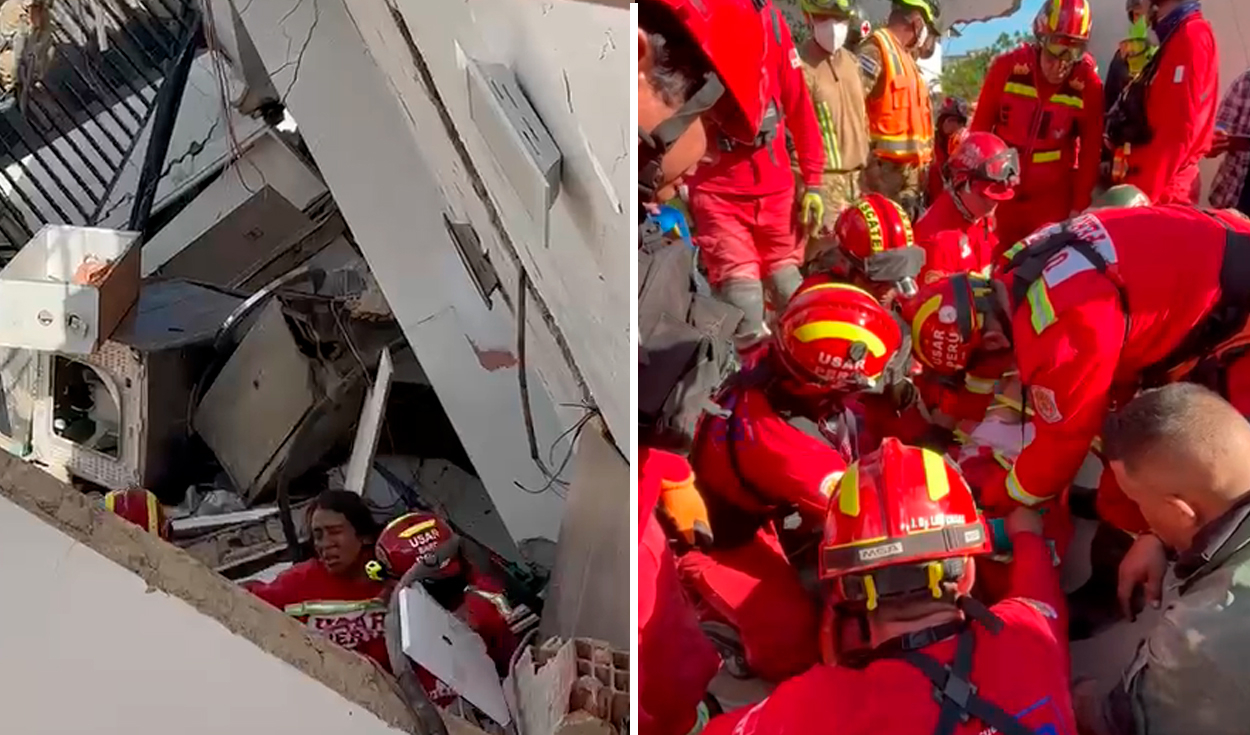
A team of Peruvian firefighters has successfully rescued a 60-year-old woman who was trapped for nearly three days in the rubble of a collapsed 15-story building in La Guaira, Venezuela. The dramatic rescue occurred early Sunday morning, following powerful earthquakes that struck the region.
The Urban Search and Rescue (USAR) team from the General Body of Volunteer Firefighters of Peru (CGBVP) confirmed the operation. Brigadier Major Carlos Malpica highlighted the crucial role of specialized electronic search equipment, combined with the coordinated efforts of rescuers from Peru, Venezuela, and El Salvador, in locating the survivor.
With our electronic listening system, we were able to pinpoint her location, and a team of 30 personnel with dogs, after more than 10 hours of work, managed to penetrate nearly five slabs and finally reach the woman
"With our electronic listening system, we were able to pinpoint her location, and a team of 30 personnel with dogs, after more than 10 hours of work, managed to penetrate nearly five slabs and finally reach the woman," Malpica explained. The search began after an initial inspection with the USAR team from El Salvador. When traditional silence and listening methods failed to detect signs of life, the Peruvian firefighters deployed advanced electronic listening devices.
We first performed a vertical access of approximately three meters and then a horizontal one of one and a half meters. The operation lasted between 12 and 14 hours and was carried out alongside the teams from El Salvador and Venezuela
Brigadier Claudio Sáenz, leader of the Peruvian USAR team, detailed the high-risk operation. The national contingent arrived in Venezuela the previous day and established their base in La Guaira. Two search groups were deployed to affected areas. In one zone, specialists used search cameras, electronic sensors, and canine units to locate the woman, enabling the planning of a complex rescue maneuver.
"We first performed a vertical access of approximately three meters and then a horizontal one of one and a half meters. The operation lasted between 12 and 14 hours and was carried out alongside the teams from El Salvador and Venezuela," Sáenz stated. The devices used include cameras with extendable poles and sensors capable of detecting movement and sounds within the debris, relaying information via screens and headphones to pinpoint potential survivors.
The sensors are placed at different points of the collapsed structure and, through screens and headphones, allow identification of the location where a person with life could be.
DistantNews Editorial
Originally published by La República in Spanish. Translated, summarized, and contextualized by our editorial team with added local perspective. Read our editorial standards.
More Stories
From Our Blog

What Gets Lost (and Found) When News Is Translated

The Critical Role of Diaspora Media in Global News

What Travellers Should Know About Countries with Restricted Press

A Digital Nomad's Guide to Following Local News

How the Same Story Looks Different in Different Countries
