


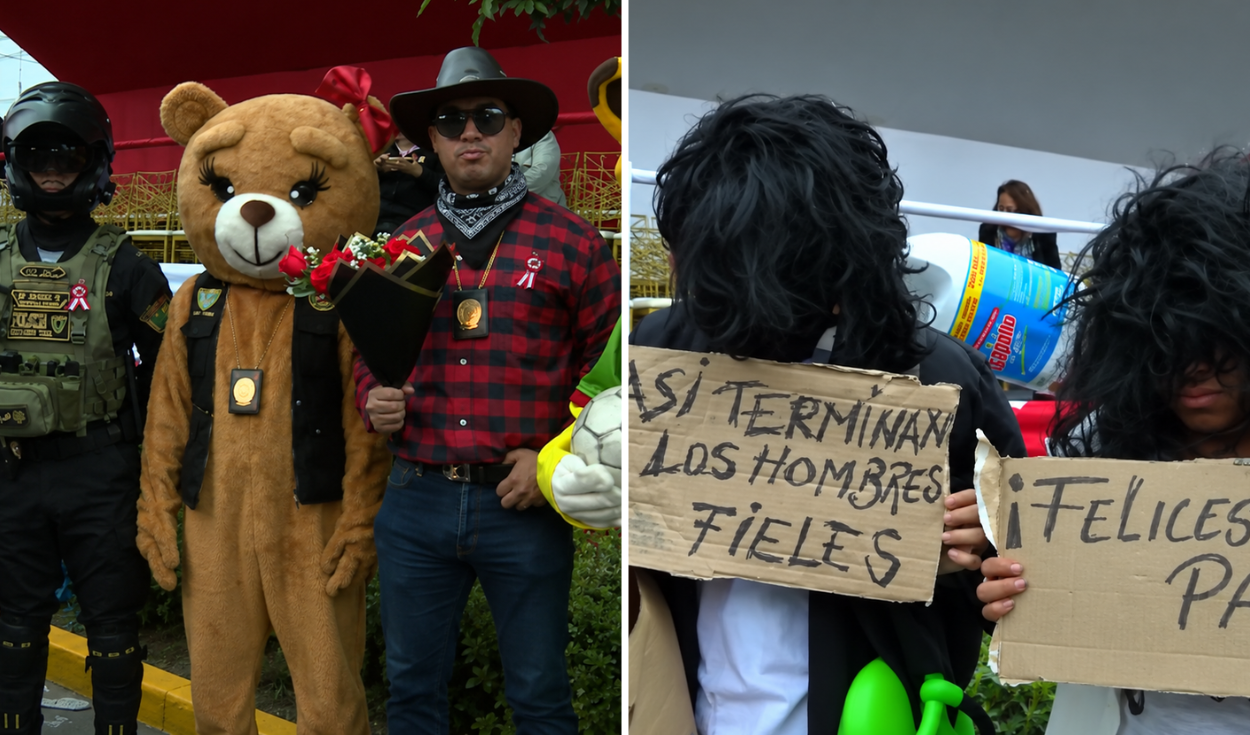
Peruvian Police's 'Grupo Terna' surprise parade-goers with undercover disguises
Translated from Spanish, summarized and contextualized by DistantNews.
At a glance
News
Named sources
Context piece
- Peruvian police officers from the Grupo Terna surprised the public with their unusual disguises during the 2026 Great Civic-Military Parade.
- These disguises, including school children and homeless individuals, are part of the unit's strategy for undercover operations to combat crime.
- The Grupo Terna, created in 2012, specializes in intelligence and infiltration to tackle various illicit activities.
Agents of Peru's National Police (PNP) Grupo Terna unit captured public attention during the 2026 Great Civic-Military Parade with their distinctive undercover disguises. The officers, known for their ability to blend into various environments, appeared dressed as a schoolchild, a homeless person, a tiger, and a teddy bear, among other characters.
Their presence on Avenida Brasil, where thousands gathered for the traditional Fiestas Patrias ceremony, drew smiles, applause, and numerous photographs. The public display also served as an opportunity for the PNP to explain the purpose behind these unconventional costumes. The disguises are a key strategy for the Grupo Terna, allowing officers to infiltrate criminal environments unnoticed and gather intelligence to combat crime effectively.
The use of disguises responds to an infiltration technique that allows Grupo Terna members to go unnoticed during their interventions.
The Grupo Terna, established in 2012 as part of the Escuadrón Verde, focuses on intelligence and infiltration to combat crimes affecting citizens. According to Technician Honorio José, agents undergo specialized training, developing skills in persuasion and mimicry to adapt to different social contexts. This preparation ensures they can effectively carry out their missions in operations against robbery, theft, and other illicit activities.
Their main mission consists of combating crimes that affect citizens through intelligence and infiltration actions in environments where criminal organizations operate.
DistantNews Editorial
Originally published by La República in Spanish. Translated, summarized, and contextualized by our editorial team with added local perspective. Read our editorial standards.
More Stories


From Our Blog

What Gets Lost (and Found) When News Is Translated

The Critical Role of Diaspora Media in Global News

What Travellers Should Know About Countries with Restricted Press

A Digital Nomad's Guide to Following Local News

How the Same Story Looks Different in Different Countries
