


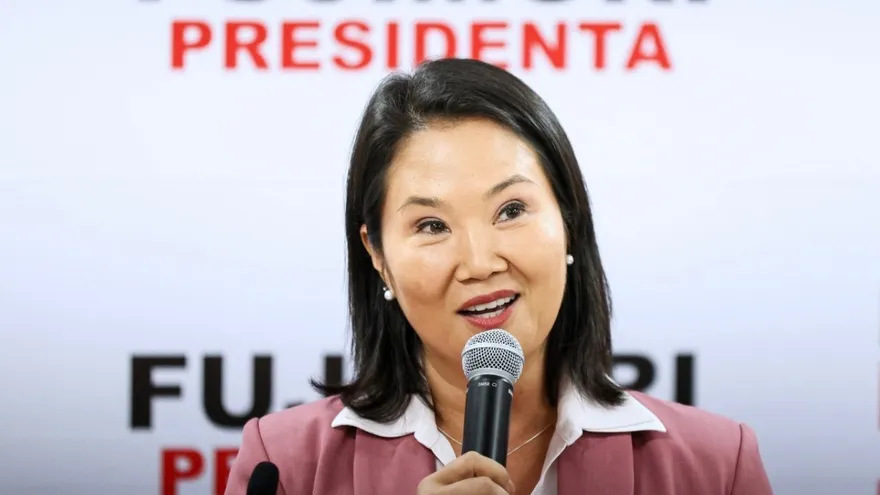
Peruvian victims' families reject Fujimori government, citing impunity fears
Translated from Spanish, summarized and contextualized by DistantNews.
At a glance
News
Named sources
New plan
- Relatives of victims of crimes committed by the Peruvian state have rejected Keiko Fujimori's government, citing fears of democratic regression and impunity.
- Gisela Ortiz stated that Fujimori's government poses a danger and lacks legitimacy, calling for the preservation of victim memory and judicial independence.
- The families announced upcoming mobilizations on July 28, the day of Fujimori's inauguration, rejecting any reconciliation without justice.
Relatives of victims of state crimes and citizen groups in Peru have voiced strong opposition to the incoming government of President-elect Keiko Fujimori. They question her legitimacy and warn of a democratic setback and increased impunity.
Gisela Ortiz, whose brother was killed by a "death squad" in 1992, declared that these organizations "reject Keiko Fujimori's government, do not recognize her as president, and point out that she lacks legitimacy." Ortiz expressed concern that Fujimorismo represents a risk of an authoritarian government with no guarantees for human rights.
It is a statement from the organizations of relatives and victims to reject Keiko Fujimori's government, not recognize her as president, and point out that she lacks legitimacy.
The statement, signed by families and victims of the internal armed conflict (1980-2000) and recent social protests, also called for preserving the memory of victims, protecting judicial independence, and urged international organizations to monitor the situation. The families highlighted laws passed in Congress that they believe favor impunity, such as amnesties and the prosecution of military and police personnel in military courts.
The families have come out to speak about the danger that Fujimorismo represents, that of having an authoritarian government without guarantees of human rights.
Keiko Fujimori, a right-wing politician, had called for "reconciliation" to overcome a decade of instability. However, the families announced further protests for July 28, Fujimori's inauguration day. Milagros Samillán, whose sister died during protests against the previous government, stated, "We do not recognize Keiko Fujimori's government. We will not accept any reconciliation that comes without justice. Talking with her is making a deal with mafias."
Peru has seen significant political instability, with eight presidents since 2016, many removed by Congress where Fujimorismo holds considerable influence. The families' rejection signals a potential continuation of social unrest.
We do not recognize Keiko Fujimori's government. We will not accept any reconciliation that comes without justice. Talking with her is making a deal with mafias.
DistantNews Editorial
Originally published by TVN Panamá in Spanish. Translated, summarized, and contextualized by our editorial team with added local perspective. Read our editorial standards.
More Stories

From Our Blog

What Gets Lost (and Found) When News Is Translated

The Critical Role of Diaspora Media in Global News

What Travellers Should Know About Countries with Restricted Press

A Digital Nomad's Guide to Following Local News

How the Same Story Looks Different in Different Countries
