


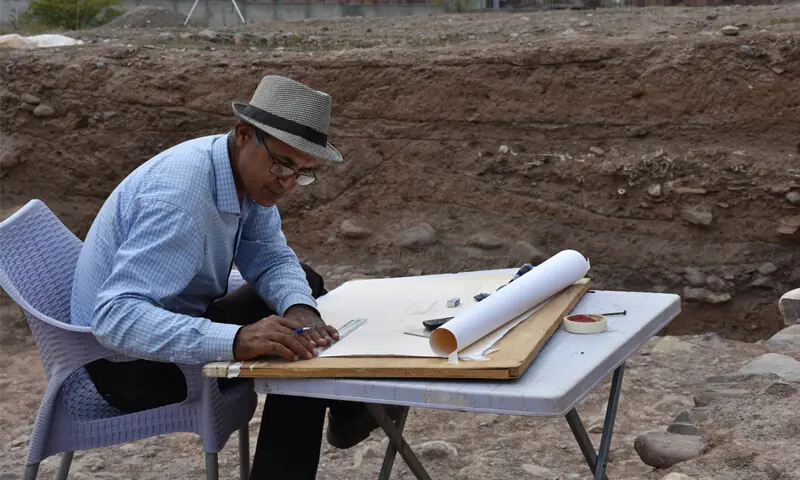
Peshawar University professor receives Ashoka Award in London for numismatic research
Translated from English, summarized and contextualized by DistantNews.
At a glance
News
Named sources
New plan
- Peshawar University Professor Gul Rahim Khan received the Ashoka Award 2025 in London.
- The award recognizes his research paper on medieval Kashmiri queens' coinage.
- Khan emphasized numismatics' value in understanding history beyond written records.
Professor Gul Rahim Khan of Peshawar University has been honored with the prestigious Oriental Numismatic Society (ONS) Ashoka Prize 2025 in London. This international recognition celebrates his outstanding scholarly contribution for the best paper published in the Oriental Numismatic Society's journal during 2025.
His award-winning research paper, titled “Attribution of Coins to the Queens of the Utpala Dynasty of Medieval Kashmir,” delves into the historical significance of ancient coinage. Professor Khan highlighted the critical role of numismatics in historical research, stating, “Numismatics is not merely about studying old coins or rare metals; coins are metallic documents that offer authentic evidence where written chronicles fall silent.”
Numismatics is not merely about studying old coins or rare metals; coins are metallic documents that offer authentic evidence where written chronicles fall silent.
Khan's work specifically focuses on attributing coins to the queens of the Utpala Dynasty. He explained that this attribution helps scholars re-examine the socio-political status, governance, and powerful agency of female rulers in medieval Kashmir, a subject often overlooked in historical narratives. The recognition underscores the importance of exploring diverse historical sources to gain a more comprehensive understanding of the past.
Attributing these specific coins to the queens of the Utpala Dynasty helps us re-examine the socio-political status, governance and powerful agency of female rulers in medieval Kashmir, which has oft
DistantNews Editorial
Originally published by Dawn in English. Translated, summarized, and contextualized by our editorial team with added local perspective. Read our editorial standards.
More Stories


From Our Blog

What Gets Lost (and Found) When News Is Translated

The Critical Role of Diaspora Media in Global News

What Travellers Should Know About Countries with Restricted Press

A Digital Nomad's Guide to Following Local News

How the Same Story Looks Different in Different Countries
