


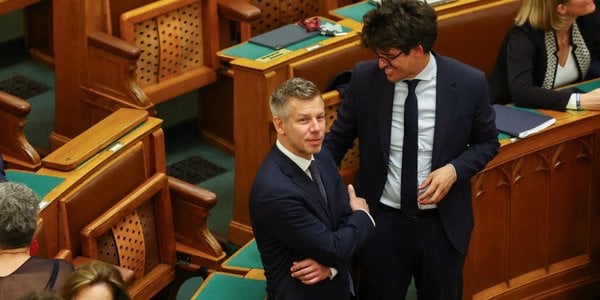
Peter Magyar accounts for the first 100 days of government: 'We are building a democratic state'
Translated from Polish, summarized and contextualized by DistantNews.
At a glance
News
Sources not specified
Context piece
- Hungary's Tisza party marks its first 100 days in government, highlighting over 30 laws and two constitutional amendments passed.
- Key achievements include recovering EU funds through anti-corruption measures and reducing parliamentary costs.
- Experts note a "radical change" in the country's social atmosphere and international standing.
Hungary's Tisza party is marking its first 100 days in government, a period characterized by the passage of over 30 laws and two constitutional amendments. The party emphasizes its commitment to building a democratic state and has focused on reforms aimed at restoring Hungary's standing and recovering European Union funds that were frozen under the previous administration.
A significant focus has been on reclaiming EU funds, which were withheld during Viktor Orbán's tenure. To achieve this, Tisza's government has implemented comprehensive anti-corruption measures and enhanced transparency protocols. The party asserts that these actions have successfully secured the release of EU funds, marking a critical step in normalizing Hungary's financial relationship with the bloc.
Domestically, the government has implemented austerity measures within parliament, reducing operational costs and lowering salaries for lawmakers. Furthermore, five parliamentary investigative committees have been established, and the threshold for requiring a two-thirds majority to pass certain laws has been lowered. Legislative terms have also been capped, limiting parliamentary service to 12 years and the prime minister's tenure to two terms. Tisza states these decisions are aimed at preventing any single political force from consolidating power for decades, fostering a more dynamic democracy.
Experts observing Hungary's political landscape note a "radical change" in both the social atmosphere and the country's international position. Political scientist Gyorgy Foldes highlighted the influx of EU funds as a direct result of these reforms and the new domestic policy. He also pointed out that Hungary has regained allies, attributing this partly to the government's internal policies.
Social psychologist Gyorgy Csepeli described the election victory as an end to what he termed the 16-year "silent genocide" of the Orbán government. He noted initial steps toward healing, including the removal of hateful rhetoric, increased parliamentary transparency, and a shift away from a perceived "suicidal" Eastern opening. The government's handling of recent heatwaves and associated issues was also praised.
W ciągu pierwszych 100 dni poczyniono wstępne kroki ku uzdrowieniu sytuacji: zniknęły pełne nienawiści plakaty, prace parlamentu stały się przejrzyste, zakończono samobójcze tzw. otwarcie na Wschód, a dawny przyjaciel stał się wrogiem – i odwrotnie.
DistantNews Editorial
Originally published by Rzeczpospolita in Polish. Translated, summarized, and contextualized by our editorial team with added local perspective. Read our editorial standards.
More Stories


From Our Blog

What Gets Lost (and Found) When News Is Translated

The Critical Role of Diaspora Media in Global News

What Travellers Should Know About Countries with Restricted Press

A Digital Nomad's Guide to Following Local News

How the Same Story Looks Different in Different Countries
