

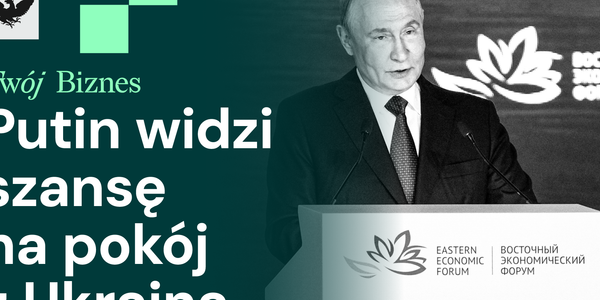

Péter Magyar to Wyborcza: Poland follows Hungary's political path, Russian gas remains cheaper
Translated from Polish and summarized by DistantNews. Read the original for the full story.
At a glance
News
Named sources
Context piece
- Péter Magyar, a Hungarian politician, suggests Poland under Donald Tusk is following a path previously forged by Hungary under Viktor Orbán.
- Magyar acknowledges the historical friendship between Poland and Hungary but emphasizes that political alliances are driven by interests, not sentiment.
- He states that while Hungary's natural ally is Tusk's party (EPL), Hungary must negotiate energy deals considering both security and price, noting Russian gas is cheaper than LNG via the Baltic Sea.
From Budapest, we observe Péter Magyar's remarks to Gazeta Wyborcza, suggesting a shift in Poland's political alignment, echoing Hungary's recent trajectory. Magyar posits that Poland, under Donald Tusk, is now mirroring Hungary's political landscape, a sentiment he frames as Poland 'blazing a trail' that Hungary is now following. This perspective, while acknowledging historical ties, underscores a pragmatic, interest-driven approach to international relations, a hallmark of contemporary European politics.
I don't know if a role model. But the feeling that Poland blazed a trail, which we are now following, is definitely present.
Magyar's comments on political endorsements, particularly regarding Karol Nawrocki's support for Viktor Orbán, highlight the complex web of allegiances and interests. He notes that while individual politicians may choose sides, legitimate governments prioritize cooperation based on national interests. His assertion that "in politics, there are no friendships. There are interests" resonates deeply within the current geopolitical climate, where strategic partnerships often supersede ideological solidarity.
Let's be honest: in politics, there are no friendships. There are interests.
Crucially, Magyar addresses the contentious issue of energy imports, particularly gas. He acknowledges that while Poland, under Tusk, offers liquefied natural gas (LNG) via the Baltic Sea, Russian gas remains significantly cheaper. This economic reality, coupled with Hungary's mandate for energy security and diversification, necessitates a pragmatic approach. Magyar indicates Hungary will negotiate, but the price differential is a stark reality that cannot be ignored. This pragmatic stance on energy, balancing political alignment with economic necessity, is a key differentiator in how Central European nations navigate their relationship with both Russia and the EU.
LNG, which is pumped through the Baltic Sea, through Poland and Slovakia, is significantly more expensive than gas imported from Romania, Russia, or Austria.
This interview offers a unique insight into the evolving dynamics within Central Europe. Magyar's framing of Poland following Hungary's lead, his candid discussion of political interests over friendships, and his pragmatic approach to energy policy all contribute to a narrative that diverges from typical Western European perspectives. For us in Hungary, these are not just political talking points; they reflect a strategic positioning aimed at securing national interests in a complex and often challenging international arena. The enduring Polish-Hungarian friendship, as Magyar rightly points out, is a historical constant, but its contemporary expression is increasingly shaped by these pragmatic considerations.
Of course, we will enter into negotiations. And we want to work together. Prime Minister Tusk said he would do everything to lower that price, so that this offer is as attractive as possible.
About this summary
Originally published by Rzeczpospolita in Polish. Translated, summarized, and contextualized automatically by DistantNews, with a note on how the source frames the story. Not individually reviewed before publishing. How this works.
More Stories


From Our Blog

News in Translation: What Gets Lost, and How We Keep the Framing

Diaspora Media: How Communities Abroad Follow Home

Traveling Where the Press Is Not Free: How to Read the News There

The Digital Nomad's Guide to Local News

The Same Story, Different Countries: How Coverage Changes at the Border
