


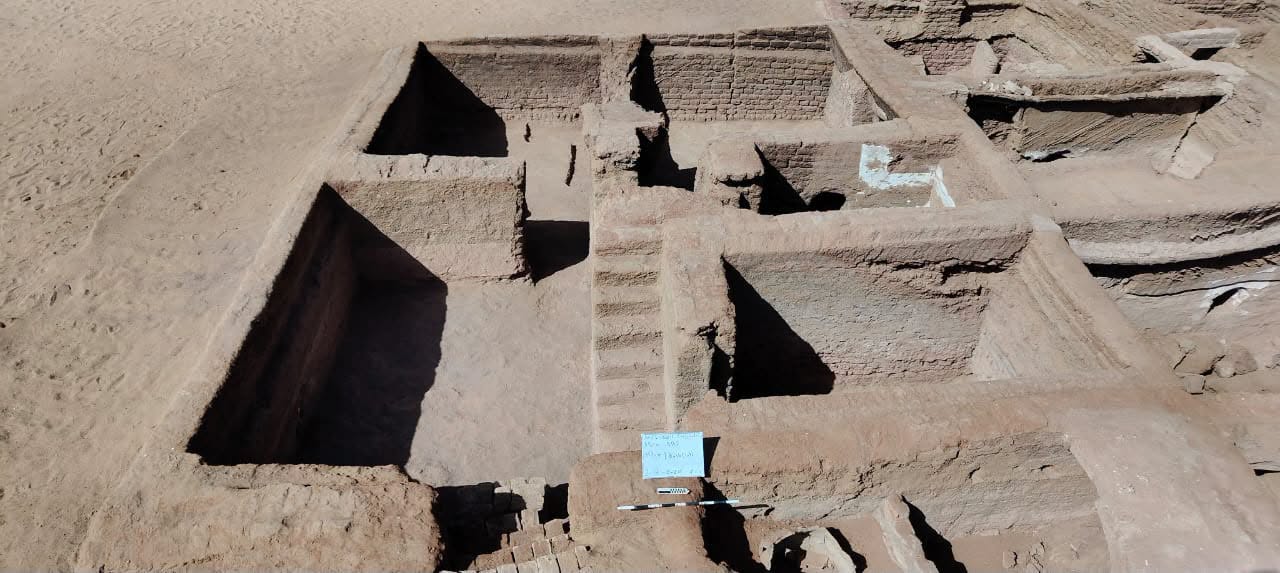
Photos-Miracle in the desert: Entire, intact ancient city hidden in Egypt uncovered
Summarized and contextualized by DistantNews.
At a glance
News
Official statement
Outcome reported
- Archaeologists discovered an intact ancient city from the Byzantine era in Egypt's Western Desert.
- The mud-brick settlement at Ain El-Sabeel features an organized urban grid, fortresses, churches, and residential homes.
- Artifacts include pottery, glass vials, lamps, ostraca with Coptic and Greek writings, and gold coins, offering insights into daily life and economy.
An Egyptian archaeological mission has unearthed a remarkably preserved ancient city in the Western Desert, offering a rare glimpse into life during the Byzantine era. Located at the Ain El-Sabeel site in the Dakhla Oasis, the entire residential city, constructed from mud brick, has been revealed by the shifting sands.
The settlement showcases a sophisticated urban design, with major avenues and intersecting streets leading to public squares. At its core lies a grand basilican church dating to the mid-4th century AD. The city was built for self-sufficiency and security, evidenced by two watchtowers and a fortified fortress. Excavators also found residential homes with vaulted ceilings and spacious halls, complete with baking ovens and kitchens, providing tangible details of daily routines.
Among the significant structures are two specific residences: "The House of Thesus," believed to belong to a church deacon from the late 4th century AD, and "The House of Tabibus," potentially an early Christian "house church" from the early 4th century AD.
The discovery yielded a wealth of artifacts, including domestic pottery, glass vials, clay lamps, and nearly 1,000 ostraca, pottery shards used as writing surfaces. These inscribed fragments, in Coptic and Greek, document daily transactions, sales, and personal letters. The economic landscape is further illuminated by numerous bronze coins and a collection of gold coins minted during the reign of Emperor Constantius II. This detailed record provides historians with invaluable insights into the social and economic networks that sustained Egypt's desert oases during a period of significant imperial change.
DistantNews Editorial
Originally published by Egypt Independent. Summarized and contextualized by our editorial team with added local perspective. Read our editorial standards.
More Stories


From Our Blog

The Critical Role of Diaspora Media in Global News

What Gets Lost (and Found) When News Is Translated

What Travellers Should Know About Countries with Restricted Press

A Digital Nomad's Guide to Following Local News

How the Same Story Looks Different in Different Countries
