


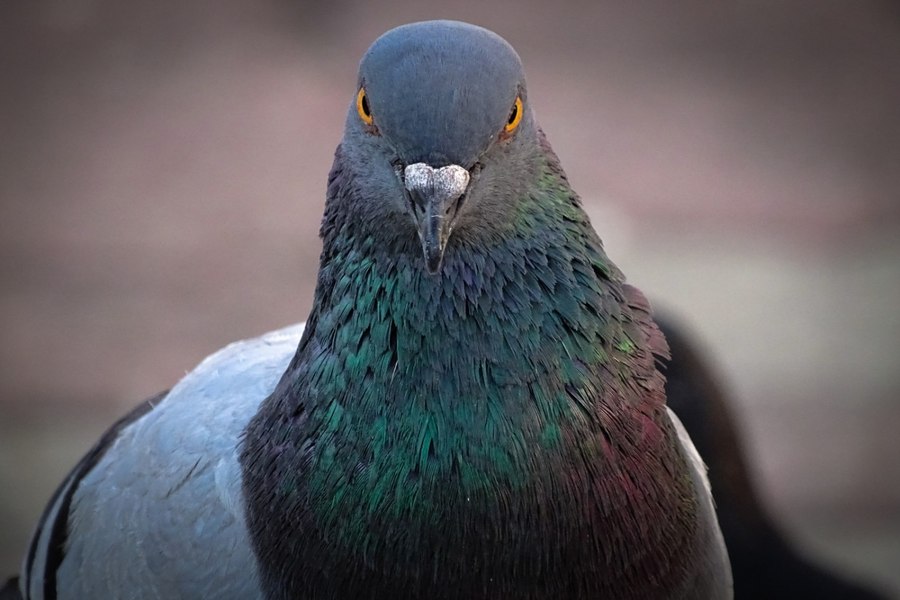
Pigeon livers may hold 'quantum compass' for navigation, study suggests
Translated from Romanian, summarized and contextualized by DistantNews.
At a glance
News
Named sources
Context piece
- Researchers have identified iron-rich structures in pigeon livers that may function as a quantum compass for navigation.
- These structures, containing macrophages with superparamagnetism, could provide directional information to the birds' brains.
- Experiments showed pigeons with deactivated structures became disoriented, suggesting a biological basis for their homing ability.
Pigeons possess a remarkable homing instinct, capable of finding their way home from hundreds of kilometers away. For centuries, the mechanism behind this ability remained a mystery, but a new international study suggests a key piece of the puzzle has been found: a potential "quantum compass" within the pigeon's liver.
Researchers from the University of Bonn and the Max Planck Institute of Animal Behavior propose that pigeons utilize iron-rich structures in their livers to detect Earth's magnetic field. These structures contain specialized immune cells called macrophages, which accumulate large amounts of iron. These cells exhibit a rare physical property known as superparamagnetism, allowing them to react to magnetic fields. Scientists believe these structures could act like a compass needle, guiding the birds when visual landmarks are absent.
What seems like an extraordinary intuition in birds might actually have a very concrete biological basis.
"What seems like an extraordinary intuition in birds might actually have a very concrete biological basis," explained biologist Martin Wikelski, a lead author of the study. Immunologist Clivia Lisowski added, "We already knew that the liver and spleen can have magnetic properties because they are involved in breaking down red blood cells and storing iron in the body."
We already knew that the liver and spleen can have magnetic properties because they are involved in breaking down red blood cells and storing iron in the body.
To test their hypothesis, the team conducted an experiment with 34 homing pigeons. Birds were released 19 kilometers from their home on an overcast day. Half of the pigeons received a substance called clodronate, which eliminates macrophages and disrupts their connection to the nervous system. The results were striking: pigeons without the treatment returned home in about 70 minutes. However, pigeons with their potential "quantum compass" deactivated became completely disoriented, with none returning the same day.
Interestingly, when the weather cleared, the treated pigeons navigated home without difficulty. This suggests that while the quantum compass may be crucial for navigation in challenging conditions, pigeons also rely on other cues, such as the sun, when available. The study opens new avenues for understanding avian navigation and the complex biological mechanisms that enable these incredible feats.
None of the pigeons treated with clodronate returned the same day, under persistent cloud cover. Their behavior indicated random orientation in space.
DistantNews Editorial
Originally published by Adevărul in Romanian. Translated, summarized, and contextualized by our editorial team with added local perspective. Read our editorial standards.
More Stories


From Our Blog

What Gets Lost (and Found) When News Is Translated

The Critical Role of Diaspora Media in Global News

What Travellers Should Know About Countries with Restricted Press

A Digital Nomad's Guide to Following Local News

How the Same Story Looks Different in Different Countries
