


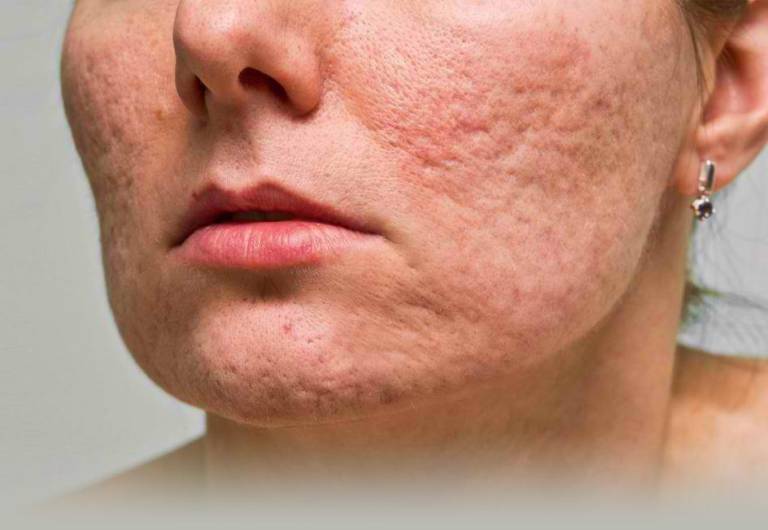
Pitted Scars Are Permanent Without Special Treatment, Experts Say
Translated from Malay, summarized and contextualized by DistantNews.
At a glance
News
Named sources
Context piece
- Atrophic scars, or pitted scars, are permanent skin texture changes that do not heal on their own and require specialized treatment.
- These scars form when the body produces insufficient collagen during the healing process, leaving permanent indentations on the skin.
- Common causes include severe acne, chickenpox, and injuries, with picking at active acne increasing the risk of permanent scarring.
Pitted scars, known medically as atrophic scars, are permanent changes to skin structure that do not resolve without specific treatment. Many believe these scars can be treated with skincare products, but they actually form when the body fails to produce enough collagen during healing. This collagen deficiency prevents damaged tissue from fully repairing, leading to lasting indentations.
Dr. Hamidah Mohd. Salleh, CEO of Klinik Lovina, explained that pitted scars develop when the collagen produced is insufficient to fill damaged skin areas. "When there is a wound or inflammation, the body produces collagen to repair the area. But if there isn't enough collagen, the skin heals with indentations, forming atrophic scars," she told Utusan Malaysia. She identified cystic acne as a primary cause because its inflammation affects deep dermal layers, damaging skin structure. Other causes include chickenpox, folliculitis, boils, accidents, surgery, or injuries affecting deeper skin layers.
Dr. Hamidah also highlighted that picking at active acne significantly increases the risk of developing pitted scars. "When acne is picked while still active, the inflammation can go deeper and cause tissue damage that ultimately leaves permanent scars," she stated. Factors like prolonged acne without treatment, genetic predisposition to scarring, and smoking also raise the risk, as they slow down skin healing.
Pitted scars vary in type, including ice pick, boxcar, and rolling scars, each with distinct shapes, depths, and treatment methods. "Each scar type requires a different treatment approach. Therefore, a doctor's examination is crucial to identify the scar type before appropriate treatment can be administered," she advised. Treatment selection depends on the scar's type, depth, and duration, meaning each patient needs a personalized plan. Aesthetic treatments include chemical peels, TCA CROSS, microneedling, dermapen, CO2 laser, subcision, fillers, and skin boosters to stimulate new collagen. However, most patients, especially those with older scars, require a combination of treatments because these are harder to heal than newer scars. "The earlier treatment begins, the better the results. Newer scars are easier to treat," she concluded.
DistantNews Editorial
Originally published by Utusan Malaysia in Malay. Translated, summarized, and contextualized by our editorial team with added local perspective. Read our editorial standards.
More Stories



From Our Blog

What Gets Lost (and Found) When News Is Translated

The Critical Role of Diaspora Media in Global News

What Travellers Should Know About Countries with Restricted Press

A Digital Nomad's Guide to Following Local News

How the Same Story Looks Different in Different Countries
