

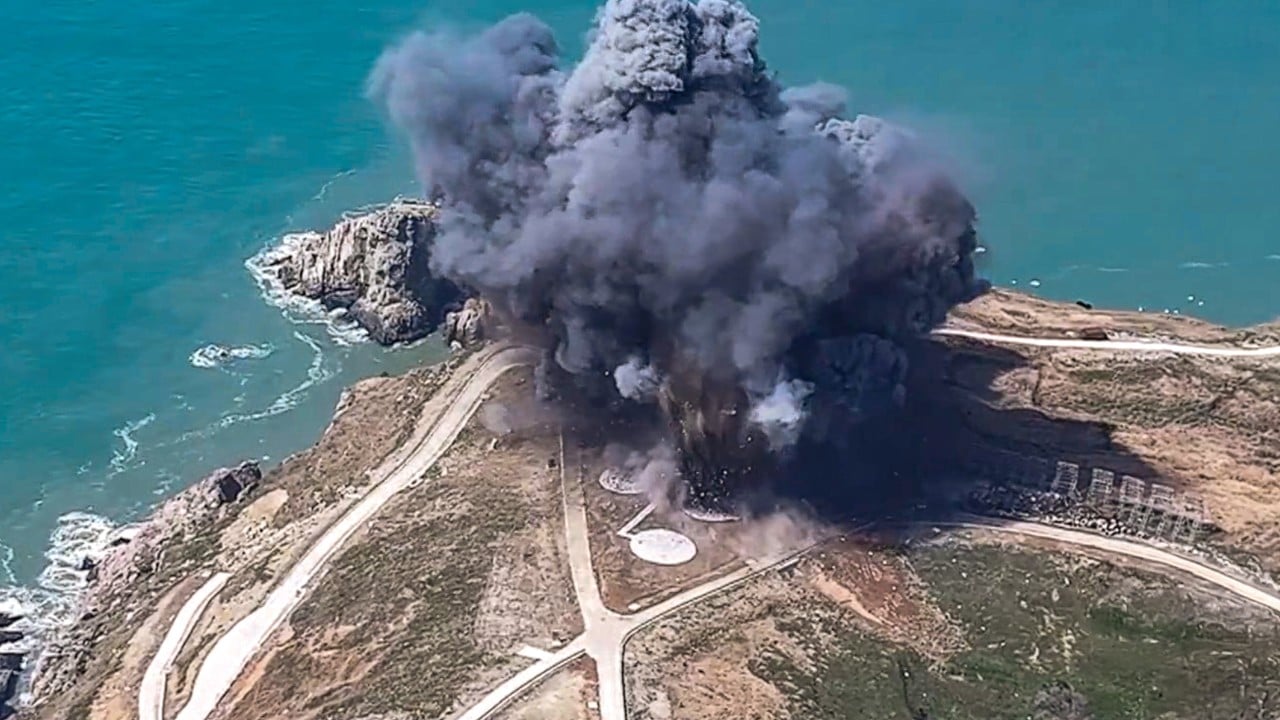
PLA's 'Steel Rain' munitions hint at Taiwan war plans
Translated from English, summarized and contextualized by DistantNews.
At a glance
News
Sources not specified
Context piece
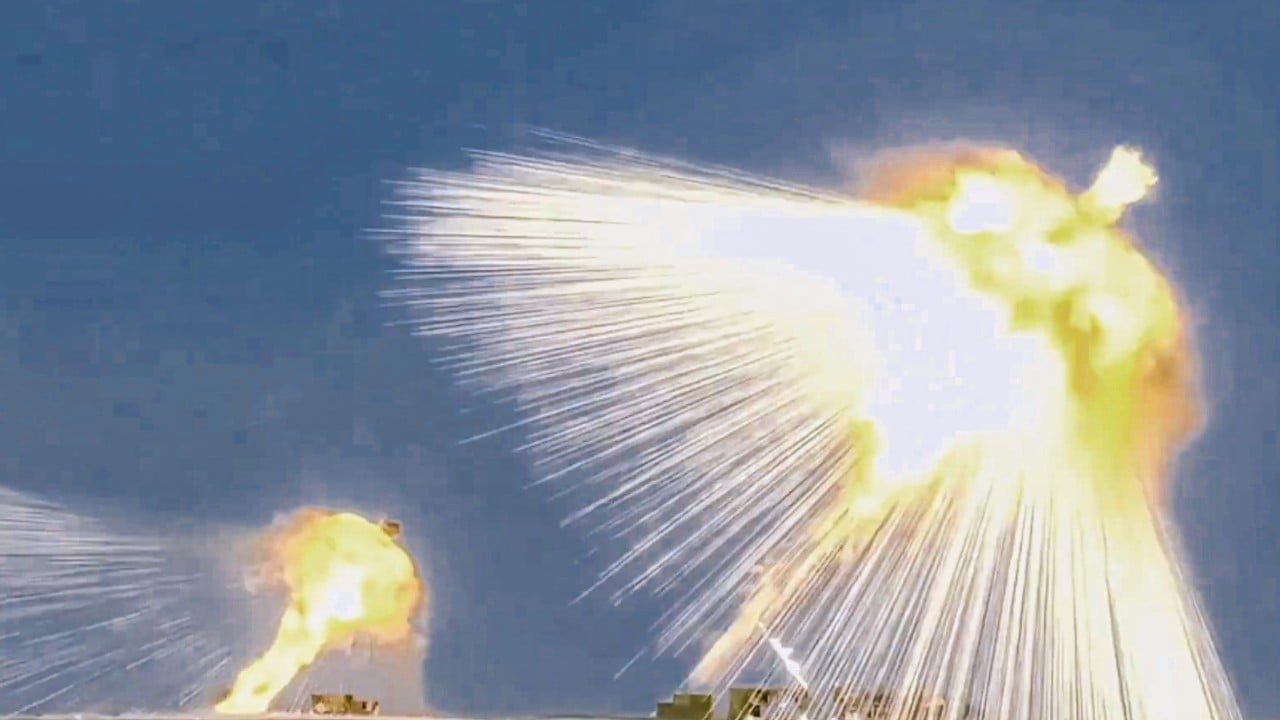
- China's People's Liberation Army (PLA) has displayed new airburst munitions, dubbed 'Steel Rain,' capable of showering targets with metal fragments.
- The footage showcases rockets detonating mid-air, designed to attack personnel and lightly armored equipment.
- Analysts suggest these munitions could be used to disrupt Taiwan's defenses before a larger invasion.
The People's Liberation Army (PLA) has revealed new airburst munitions, showcased in a video titled 'Steel Rain,' offering a glimpse into its potential tactics for a conflict over Taiwan. The footage depicts rockets from the PHL-191 system detonating above a desert training range, dispersing high-speed metal fragments over a wide area.
These newly displayed munitions appear designed as fragmentation warheads, intended to target personnel and lightly protected vehicles. The PHL-191 rocket system, also known as the PHL-16 or PCL-191, is considered by some analysts to be China's equivalent to the U.S. High Mobility Artillery Rocket System (Himars). This system was notably employed during the PLA's extensive drills near Taiwan in December.
Military analysts interpret the 'Steel Rain' demonstration as a potential indicator of Beijing's strategy in a Taiwan conflict. The focus on airburst munitions suggests a possible prioritization of disrupting Taiwan's command, control, and communication capabilities, as well as its detection and response mechanisms, before launching larger-scale air and amphibious assaults.
Mike Bosack, director of the Parley Policy Initiative, commented on the significance of airburst rockets. "The use of airburst rockets is notable because it signals that these particular weapons would not be used for targeting assets that Taiwan normally stores in mountains and bunkers," he explained. This suggests a shift towards area saturation attacks rather than pinpoint strikes on hardened targets.
The use of airburst rockets is notable because it signals that these particular weapons would not be used for targeting assets that Taiwan normally stores in mountains and bunkers.
DistantNews Editorial
Originally published by South China Morning Post in English. Translated, summarized, and contextualized by our editorial team with added local perspective. Read our editorial standards.
More Stories


From Our Blog

Countries Without a Free Press: What You Need to Know

What Press Freedom Means for the News You Read

What Gets Lost (and Found) When News Is Translated

The Critical Role of Diaspora Media in Global News

What Travellers Should Know About Countries with Restricted Press
