


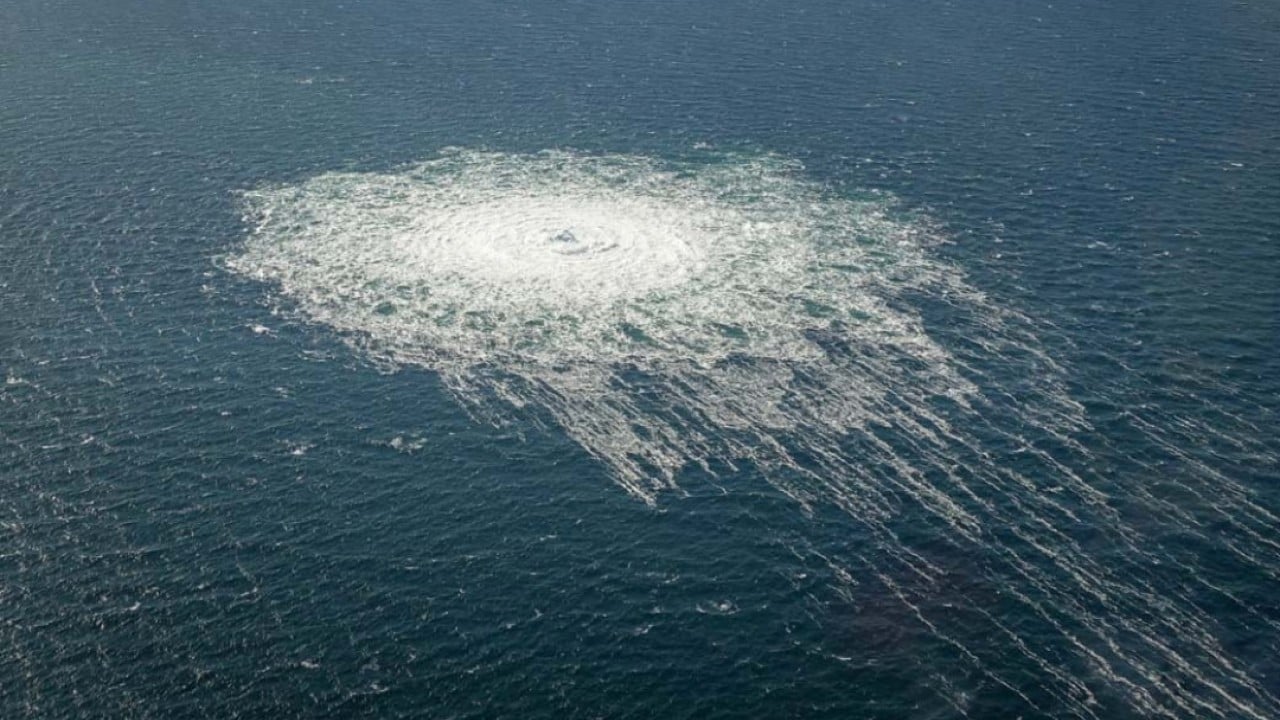
PLA Scientists Say Submarine Cables Carrying 99% of Global Data Could Be ‘Easy Target’
Translated from English, summarized and contextualized by DistantNews.
At a glance
News
Named sources
Context piece
- Chinese military researchers warn that underwater submarine cables, carrying 99% of global data, are vulnerable to low-cost drones.
- The seabed, previously a difficult and costly area to control, is becoming a new arena for great power rivalry.
- Attacks on undersea infrastructure, like the Nord Stream pipelines and Red Sea cables, highlight the growing risks.
Chinese military researchers have identified underwater submarine cables, the backbone of the international digital economy, as increasingly vulnerable targets for low-cost drones. These cables, which transmit 99 percent of intercontinental data traffic, are crucial for supporting online services and cross-border financial transactions estimated to be worth $10 trillion annually.
The barrier to entry for undersea warfare is lowering.
The seabed, historically considered a strategic "blind spot" due to the challenges and high costs associated with exploration and control, is now emerging as a "new arena for great power rivalry." Researchers Shi Guanglei and Shi Haiming from the National Defence University noted in Science and Technology Daily that the barrier to entry for undersea warfare is lowering. They pointed to the Aukus pact between Australia, Britain, and the United States as a significant driver of this shift.
In the past, underwater operations relied heavily on crewed submarines, which were expensive and posed significant risks to personnel, making it difficult for small and medium countries to conduct underwater military activities.
Previously, underwater operations relied heavily on expensive crewed submarines, posing risks to personnel and limiting participation for smaller nations. However, the development of small and medium-sized unmanned undersea vehicles (UUVs) has changed the landscape. These UUVs are described as "low-cost, easy to deploy in batches and pose no risk of casualties, allowing countries to seize control of the seabed."
small and medium-sized unmanned undersea vehicles (UUVs) were “low-cost, easy to deploy in batches and pose no risk of casualties, allowing countries to seize control of the seabed”.
The researchers highlighted the growing threat by citing recent incidents. These include the 2022 sabotage of the Nord Stream pipelines, which transported natural gas from Russia to Germany, and the disruption of internet services caused by severed cables in the Red Sea last year. These events underscore the vulnerability of undersea infrastructure and the potential for significant disruption.
underwater pipelines and optical cables had become an “easy target”
DistantNews Editorial
Originally published by South China Morning Post in English. Translated, summarized, and contextualized by our editorial team with added local perspective. Read our editorial standards.
More Stories

From Our Blog

Countries Without a Free Press: What You Need to Know

What Press Freedom Means for the News You Read

What Gets Lost (and Found) When News Is Translated

The Critical Role of Diaspora Media in Global News

What Travellers Should Know About Countries with Restricted Press
