


Player sent off for covering mouth during World Cup argument
Translated from Finnish, summarized and contextualized by DistantNews.
At a glance
News
Named sources
Context piece
- A football player received a direct red card for covering his mouth while arguing with an opponent, a violation of a recent rule change.
- The rule, implemented after incidents involving alleged racist and homophobic slurs, prohibits covering one's mouth during aggressive or confrontational speech with an opponent.
- An referee expert praised the application of the rule, stating it clearly signals that such behavior will not be tolerated in the sport.
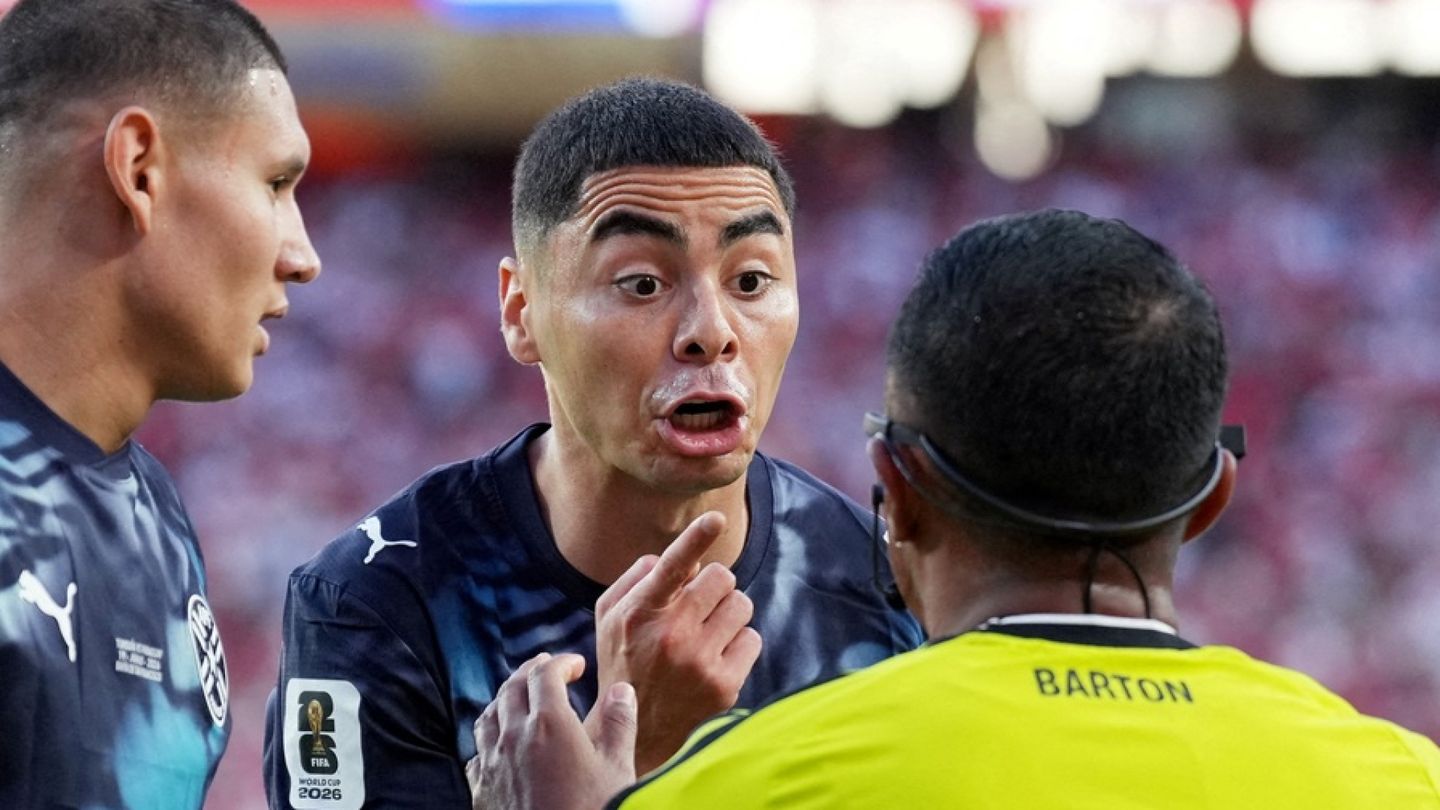
Paraguayan player Miguel Almiron made history in a recent World Cup match by receiving a direct red card. The incident occurred when Almiron covered his mouth while speaking aggressively to Turkey's Mert Müldür, leading to his expulsion after a video review.
This red card was a direct consequence of a recent rule change in men's football. The new regulation prohibits players from covering their mouths when speaking to an opponent in an aggressive or confrontational manner. "It's great that this rule was applied," said Jan-Peter Aravirta, a refereeing expert for Sanoma. "It makes it clear to everyone that this kind of behavior will not be tolerated."
According to Aravirta, Almiron and Müldür had a verbal exchange, and Almiron covered his mouth while saying something. Müldür immediately reacted, knowing that such an action could result in a red card. The former top referee explained that the rule was introduced after incidents like the one involving Benfica's Gianluca Prestianni, who allegedly made racist remarks while covering his mouth during a Champions League match. Although Prestianni denied racism, he received a six-match ban from UEFA for homophobic slurs. The International Football Association Board (IFAB) modified the rules regarding mouth covering in late April, and the World Cup adopted the change.
Almiron is the first player to be sent off for covering his mouth. Aravirta noted that while the situation was confrontational, it wasn't solely between the two players. He believes Almiron's action was intentional, possibly to cause trouble or as a learned habit to hide his words. "In principle, what is said on the field should be things that can be said openly," Aravirta stated. He also suggested that Almiron might not have received a red card if Müldür hadn't brought the situation to the referee's attention.
DistantNews Editorial
Originally published by Helsingin Sanomat in Finnish. Translated, summarized, and contextualized by our editorial team with added local perspective. Read our editorial standards.
More Stories


From Our Blog

What Gets Lost (and Found) When News Is Translated

The Critical Role of Diaspora Media in Global News

What Travellers Should Know About Countries with Restricted Press

A Digital Nomad's Guide to Following Local News

How the Same Story Looks Different in Different Countries
