


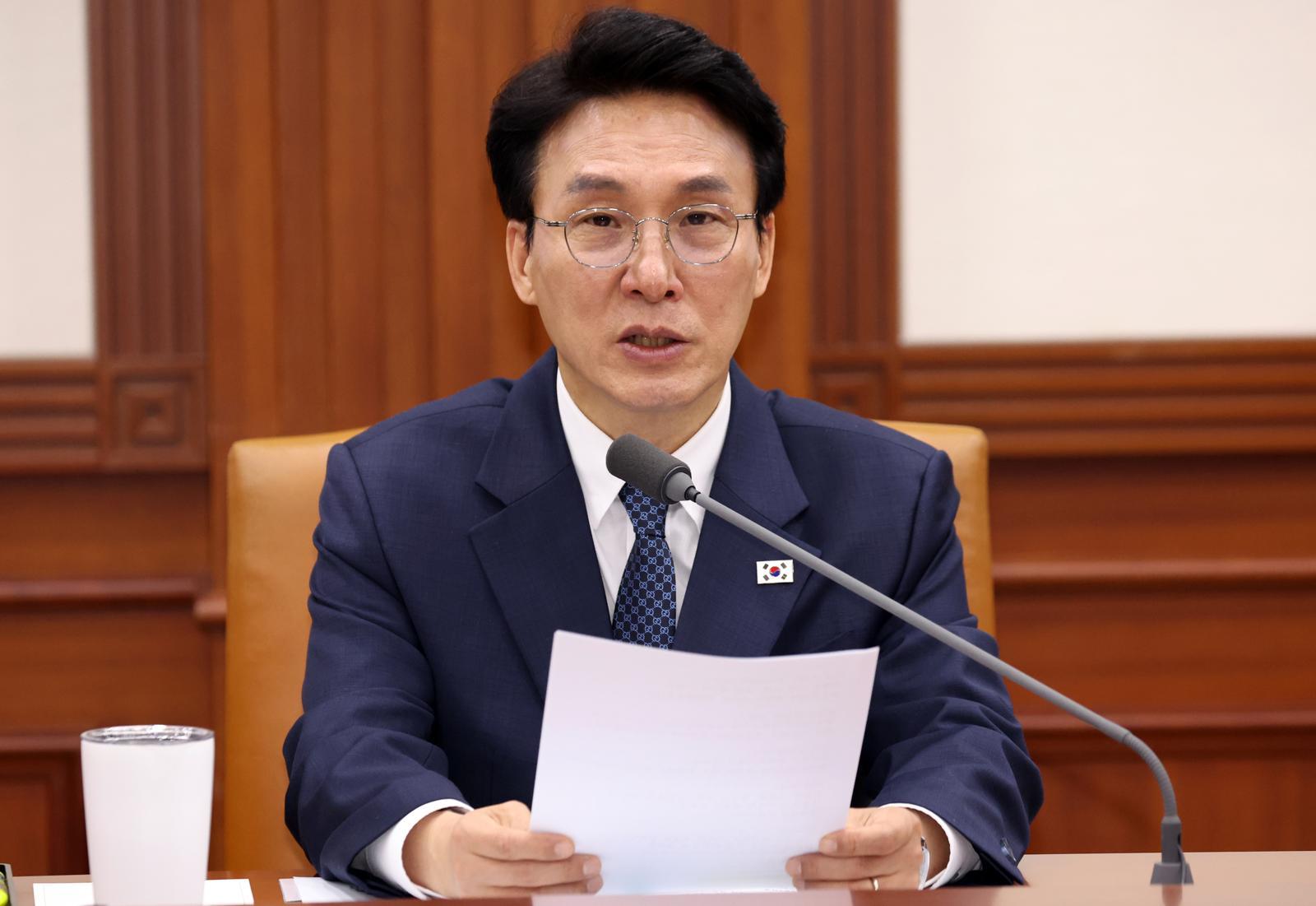
PM: Decision on 4th Oil Price Cap Implementation to Consider Positive Effects
Translated from Korean, summarized and contextualized by DistantNews.
TLDR
- South Korean Prime Minister Kim Min-seok stated the government will carefully consider the positive effects of the oil price cap system before deciding on a fourth implementation.
- The current third phase of the oil price cap is set to end soon, with a decision on its continuation pending.
- The government also plans to ensure supplementary budget measures effectively assist small and medium-sized enterprises and low-income households.
South Korea's Prime Minister Kim Min-seok has announced that the government will thoroughly evaluate the benefits and public opinions surrounding the oil price cap system before deciding whether to implement a fourth phase. This statement comes as the third phase of the price cap is nearing its conclusion, prompting discussions about its future. The Prime Minister emphasized that while some question the system's effectiveness, its positive impacts, such as preventing price surges, mitigating consumption decline, and easing the burden on price-sensitive groups like truck drivers, have been confirmed.
Addressing economic concerns, particularly the impact of prolonged Middle East tensions, Prime Minister Kim highlighted that small and medium-sized enterprises (SMEs) and low-income households are the most vulnerable. He assured that the government's supplementary budget would be communicated effectively to ensure it provides tangible support to these groups. This focus on economic relief reflects a broader strategy to stabilize the economy amidst global uncertainties and domestic challenges.
From the perspective of Dong-A Ilbo, a prominent South Korean newspaper, this decision-making process reflects the government's cautious approach to economic policy. The article notes the Prime Minister's call for inter-departmental cooperation in diversifying supply chains, transitioning to renewable energy, and expanding the circular economy. This forward-looking perspective, aiming to move away from traditional fossil fuel dependency, is crucial for South Korea's long-term economic resilience and innovation. The government's commitment to addressing immediate economic pressures while simultaneously planning for future transitions showcases a dual focus on stability and sustainable growth, a narrative that resonates with national aspirations for technological advancement and energy independence.
DistantNews Editorial
Originally published by Dong-A Ilbo in Korean. Translated, summarized, and contextualized by our editorial team with added local perspective. Read our editorial standards.
More Stories


From Our Blog

What Gets Lost (and Found) When News Is Translated

The Critical Role of Diaspora Media in Global News

What Travellers Should Know About Countries with Restricted Press

A Digital Nomad's Guide to Following Local News

How the Same Story Looks Different in Different Countries
