


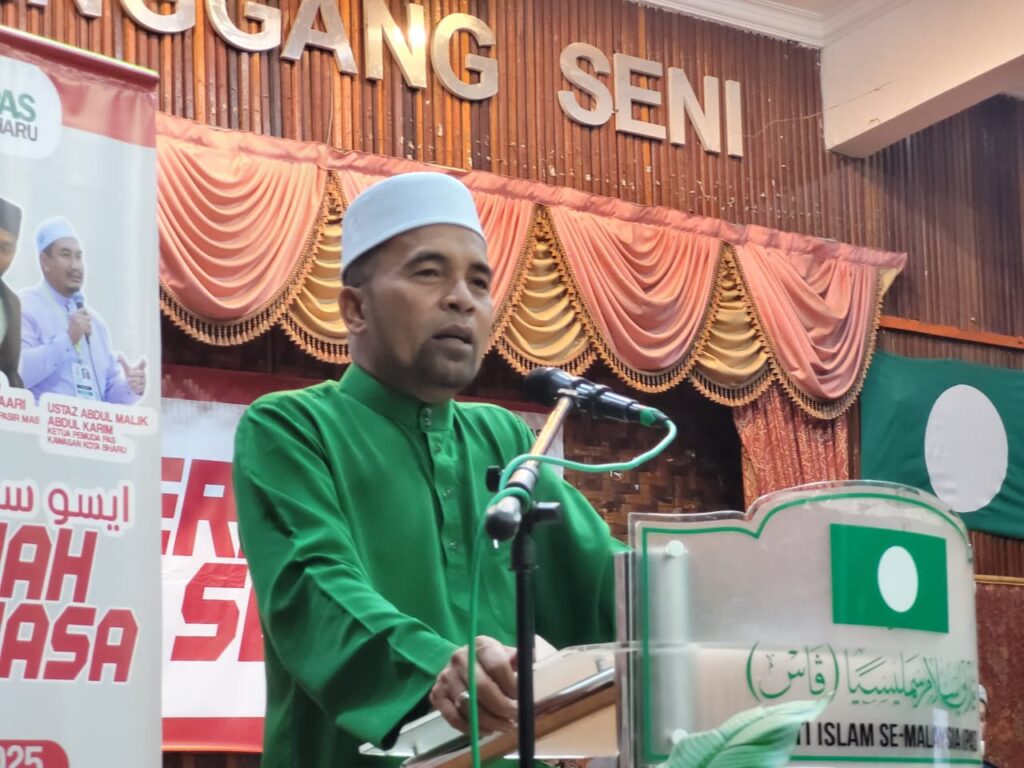
PN Supreme Council can expel member parties without Presidential Council approval
Translated from Malay, summarized and contextualized by DistantNews.
At a glance
News
Named sources
Context piece
- The Perikatan Nasional (PN) Supreme Council has the authority to expel member parties with a majority vote, without needing Presidential Council approval.
- This power is outlined in Articles 8.4(iii), 13, and 15 of the PN Constitution.
- Bersatu, a founding party, has stated it will remain in PN and contest elections under the coalition's logo, asserting no party can unilaterally remove it.
The Perikatan Nasional (PN) coalition possesses the power to dismiss its member parties through a majority decision by its Supreme Council, bypassing the need for endorsement from the Presidential Council. This authority is explicitly detailed in Articles 8.4(iii), 13, and 15 of the PN Constitution, according to Wan Rohimi Wan Daud, chairman of the Pas Central Law and Human Rights Committee.
Proceedings against a member party can be initiated under disciplinary provisions in Article 15. The Supreme Council can then establish a Disciplinary Committee to review the matter. "The disciplinary decision, whether to issue a warning, suspend, or expel a member party, can be made by the Supreme Council under Article 8.4(iii)," Wan Rohimi explained. "If the Supreme Council decides by majority that a member party is expelled, then that political party's membership in PN is terminated."
The disciplinary decision, whether to issue a warning, suspend, or expel a member party, can be made by the Supreme Council under Article 8.4(iii).
This clarification comes as Parti Pribumi Bersatu Malaysia (Bersatu), a founding member of PN, reaffirmed its commitment to the coalition. Bersatu President Tan Sri Muhyiddin Yassin stated the party intends to contest upcoming state elections under the PN banner, asserting that no entity can unilaterally expel Bersatu from the coalition, as such actions must adhere to the coalition's constitution, requiring consensus for key decisions.
Wan Rohimi further clarified that the PN Constitution does not recognize the concept of a "founding member" that grants special privileges. Decisions made by the Supreme Council take effect immediately and do not require prior confirmation from the Presidential Council. He added that no provision grants any member of the Presidential Council veto power over such decisions. However, the Presidential Council holds the final say on member party discipline under Article 7A, but its decisions require consensus or a unanimous vote, unlike the Supreme Council's majority-based decisions.
If the Supreme Council decides by majority that a member party is expelled, then that political party's membership in PN is terminated.
DistantNews Editorial
Originally published by Utusan Malaysia in Malay. Translated, summarized, and contextualized by our editorial team with added local perspective. Read our editorial standards.
More Stories

From Our Blog

What Gets Lost (and Found) When News Is Translated

The Critical Role of Diaspora Media in Global News

What Travellers Should Know About Countries with Restricted Press

A Digital Nomad's Guide to Following Local News

How the Same Story Looks Different in Different Countries
