


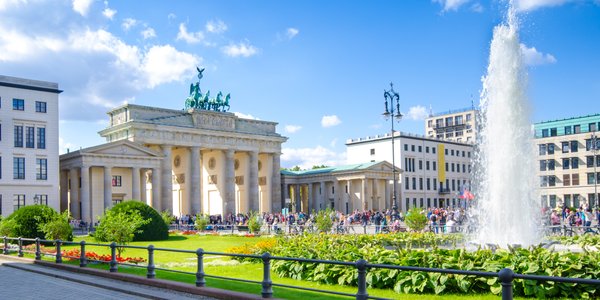
Poland and Germany mark 35 years of good neighborliness treaty
Translated from Polish, summarized and contextualized by DistantNews.
At a glance
Analysis
Sources not specified
Context piece
- Poland and Germany celebrate the 35th anniversary of their treaty on good neighborliness, signed in 1991.
- The treaty aimed to foster closer ties and optimism despite post-Cold War challenges.
- While some provisions are outdated, the treaty's spirit of cooperation remains relevant, though future relations face new complexities.
Poland and Germany are marking the 35th anniversary of their Treaty on Good Neighborliness, a foundational document signed on June 17, 1991. The treaty emerged from a complex period, with Poland recovering from economic hardship and Germany navigating the euphoria and challenges of reunification. Despite initial incidents of nationalism, the agreement signaled a shared vision for both nations within a unifying Europe.
The treaty was crucial in laying the groundwork for Poland's integration into Western structures. It facilitated visa-free travel between the two countries, a move met with widespread joy, though marred by isolated xenophobic incidents. German leaders at the time understood that Poland's inclusion in the Western community was vital for the stability of the post-war European order. The document explicitly recognized both states' future within a consolidating Europe.
Shortly after the treaty's signing, the Weimar Triangle, comprising the foreign ministers of Poland, Germany, and France, was established to further European integration. This initiative, alongside Poland's subsequent pursuit of NATO membership, marked the activation of a powerful engine for regional transformation. The article posits that without the Polish-German understanding of 1991, Europe's post-Cold War transition would not have proceeded as smoothly.
While the 1991 treaty's specific clauses may be outdated, its underlying sentiment of rapprochement and optimism endures. The author notes that attempts to draft a new treaty reflecting current European realities were wisely abandoned, as achieving consensus on future relations is currently infeasible. Instead, a military cooperation agreement, requiring no ratification and thus less prone to political deadlock, is anticipated. The future of Polish-German relations, however, remains an open question, complicated by shifting geopolitical landscapes and a depletion of the intellectual capital that once underpinned foreign policy consensus in Poland.
Były niedawno, po obu stronach, głosy zachęcające do spisania nowego traktatu, który byłby wspólną wizją stosunków polsko–niemieckich w mocno zmienionych warunkach w Europie i świecie. Próby nie podjęto i słusznie, bo uzgodnienie planów i wyobrażeń o przyszłości stosunków polsko–niemieckich jest dzisiaj niewykonalne.
DistantNews Editorial
Originally published by Rzeczpospolita in Polish. Translated, summarized, and contextualized by our editorial team with added local perspective. Read our editorial standards.
More Stories


From Our Blog

What Gets Lost (and Found) When News Is Translated

The Critical Role of Diaspora Media in Global News

What Travellers Should Know About Countries with Restricted Press

A Digital Nomad's Guide to Following Local News

How the Same Story Looks Different in Different Countries
