

Poland Needs 150 km More Motorways; Major Widening Projects Planned
Translated from Polish, summarized and contextualized by DistantNews.
At a glance
News
Named sources
Context piece
- Poland needs approximately 150 km more of highways to reach its target network of 7,980 km, including 2,100 km of motorways.
- The country has significantly expanded its high-speed road network since joining the EU in 2004, from under 720 km to over 5,593 km.
- Major projects include extending the A2 motorway towards the Belarusian border and widening the A2 between Łódź and Warsaw.
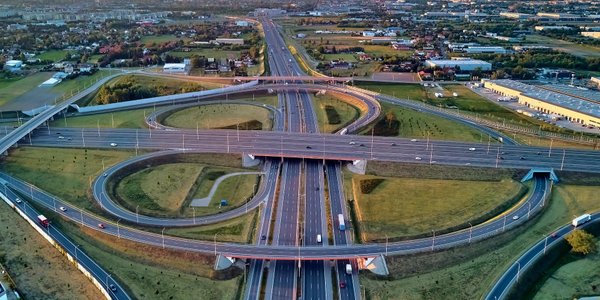
Poland is nearing its goal for high-speed road networks, with approximately 150 kilometers of motorways still needed to achieve a total target of 7,980 kilometers, which includes 2,100 kilometers designated as motorways. Currently, drivers have access to 5,593.2 kilometers of high-speed routes, comprising 3,643.2 kilometers of expressways and 1,950 kilometers of motorways. The scale of this development is starkly illustrated by comparing current figures to those from 2004, the year Poland joined the European Union. At that time, the country had fewer than 720 kilometers of high-speed roads, with just over 485 kilometers being motorways and nearly 233 kilometers being expressways. Some of the existing network then consisted of preserved or modernized sections of roads built before World War II. Today, key motorways like the A1 connect the Tricity area with the Czech border, the A4 stretches from the German border to Ukraine, and the A2 provides a route from Świecko to Biała Podlaska. Shorter motorways, including the A6 near Szczecin, the A8 around Wrocław, and the A18 connecting Olszyna to the A4, complete the network. The prospect of such extensive road development was unimaginable for many just a quarter-century ago. The A2 motorway is a significant focus of ongoing expansion. It is currently accessible from the German border to Biała Podlaska. The 38-kilometer section passing through Warsaw, between the Konotopa and Lubelska interchanges, functions as the S2 expressway. The entire corridor from the western border to Biała Podlaska spans nearly 630 kilometers. Future plans involve constructing two sections east of Biała Podlaska: a 9.3-kilometer route from Kijowiec to Dobryń, for which a contract was signed on June 10, 2026, and a 16.2-kilometer segment from Biała Podlaska to Kijowiec, for which a tender was re-awarded in late July. If these projects proceed without further delays, drivers should be able to reach the A2 motorway at the Terminal Samochodowy in Koroszczyn by 2029. This terminal will handle truck customs clearance, with the final stretch to the Belarusian border utilizing a customs road. Upon completion, the A2 will measure 613.8 kilometers. Currently, 588.3 kilometers are in operation, with 333.3 kilometers managed by the General Directorate for National Roads and Motorways (GDDKiA). The Świecko–Konin section, spanning 255 kilometers, is managed by Autostrada Wielkopolska, and 238 kilometers of this route are tolled, with the concession expiring in 2037. Another major planned expansion involves widening the A2 motorway between Łódź and Warsaw. This heavily used route, with daily traffic ranging from nearly 60,000 vehicles near Łódź to almost 100,000 near Warsaw, will undergo significant upgrades over its 92-kilometer length. Additional lanes will be added to 89 kilometers, while 3 kilometers near the Łódź Północ interchange will see resurfacing and new lighting. This specific section already features three lanes in each direction. A contract has been signed for the expansion of over 17 kilometers between Grodzisk Mazowiecki and Konotopa. On a 3-kilometer stretch between Pruszków and Konotopa, the motorway will have four lanes in each direction. The section from Łódź to Pruszków is planned to have three lanes. These construction works are designed to minimize disruption, with drivers expected to maintain at least two lanes of traffic in each direction throughout the project. An odcinkowy pomiar prędkości (section speed enforcement) system is also planned for the expanded segment.
DistantNews Editorial
Originally published by Rzeczpospolita in Polish. Translated, summarized, and contextualized by our editorial team with added local perspective. Read our editorial standards.
More Stories


From Our Blog

What Gets Lost (and Found) When News Is Translated

The Critical Role of Diaspora Media in Global News

What Travellers Should Know About Countries with Restricted Press

A Digital Nomad's Guide to Following Local News

How the Same Story Looks Different in Different Countries
