


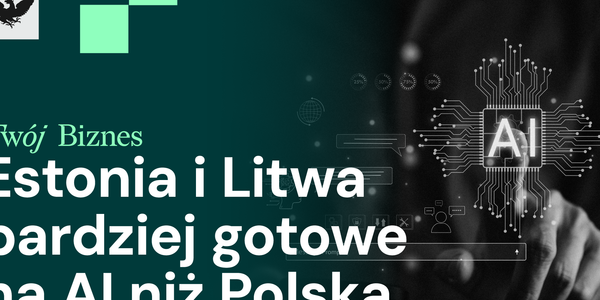
Poland ranks fourth in AI readiness; Middle East tensions simmer
Translated from Polish, summarized and contextualized by DistantNews.
At a glance
News
Sources not specified
Context piece
- Poland ranks fourth in the CEE AI Index 2026 for artificial intelligence readiness, behind Estonia, Lithuania, and Slovenia.
- The report highlights Poland's strengths in scientific research and computational infrastructure but notes barriers like high energy costs and insufficient R&D funding.
- Tensions in the Middle East persist, impacting market uncertainty despite potential US-Iran agreements, with implications for global energy markets.
Poland has secured fourth place in the CEE AI Index 2026, a ranking that assesses Central and Eastern European countries' preparedness for developing and implementing artificial intelligence. Estonia, Lithuania, and Slovenia ranked higher. The report, which analyzed over 30 indicators including technological infrastructure, regulations, and educational potential, identified Poland's research output, computational infrastructure, and national AI strategy as strong points.
However, the report also points to significant obstacles hindering Poland's AI development. These include elevated electricity prices, inadequate funding for research and development, a low level of venture capital investment, and limited adoption of AI by businesses. Furthermore, the scarcity of spin-off startups and the underutilization of AI in education remain pressing issues.
Meanwhile, the geopolitical landscape in the Middle East continues to cast a shadow of uncertainty over markets. Despite signals of a potential agreement between the United States and Iran, divergences remain. Following an Israeli airstrike on civilian targets in Beirut, Iranian officials warned that further escalation could derail talks and reignite conflict. Key sticking points include the lifting of sanctions and the unblocking of Iranian assets abroad. This geopolitical instability is also affecting global energy markets, with trade through the Strait of Hormuz significantly reduced compared to pre-conflict levels, even after a ceasefire allowed nearly a thousand commercial vessels to pass.
In parallel, the European Union is accelerating discussions on expanding its membership to include the Western Balkan countries. At a summit in Montenegro, EU leaders debated proposals from Germany and France aimed at encouraging candidate countries to pursue further reforms. These include offering partial access to the single market and participation in select EU programs before formal accession. Montenegro is seen as having the best chance for a swift conclusion to negotiations, potentially joining the EU as early as 2028.
DistantNews Editorial
Originally published by Rzeczpospolita in Polish. Translated, summarized, and contextualized by our editorial team with added local perspective. Read our editorial standards.
More Stories
From Our Blog

What Gets Lost (and Found) When News Is Translated

The Critical Role of Diaspora Media in Global News

What Travellers Should Know About Countries with Restricted Press

A Digital Nomad's Guide to Following Local News

How the Same Story Looks Different in Different Countries
