


Poland's 2027 budget plan faces criticism for high deficit
Translated from Polish and summarized by DistantNews. Read the original for the full story.
At a glance
News
Official statement
New plan
- Poland's government approved a draft budget for 2027 with projected revenues of 695 billion PLN and expenditures of 977.6 billion PLN.
- The budget includes increased spending on defense, healthcare, and social transfers, with defense allocated 198.1 billion PLN.
- Economists express concern over the projected deficit of nearly 283 billion PLN, calling the plan "wildly risky" and warning of insufficient fiscal consolidation.
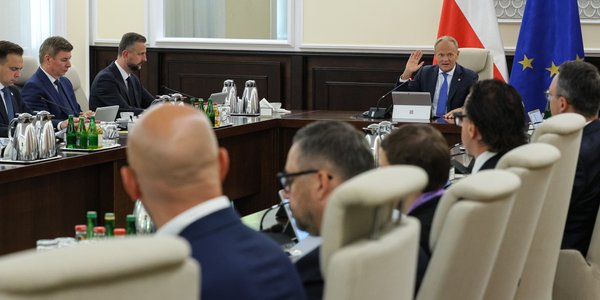
The Polish government has adopted a draft budget for 2027, outlining a financial plan that Prime Minister Donald Tusk described as "tight but responsible." The budget forecasts total revenues of 695 billion PLN, an increase of approximately 10% from the previous year, with tax revenues expected to reach 622.4 billion PLN. This includes anticipated higher income from corporate tax (CIT) due to a planned rate increase and improved business profitability, as well as value-added tax (VAT).
However, the expenditure side paints a different picture, with total budget spending projected at 977.6 billion PLN. Significant allocations are earmarked for defense, with 198.1 billion PLN (4.51% of GDP) dedicated to national defense. Healthcare also sees a substantial increase, with 274.1 billion PLN allocated, including a record 41.5 billion PLN for the National Health Fund (NFZ). Other key areas of spending include public security (36.5 billion PLN), higher education and science (43.7 billion PLN), and transportation infrastructure (62.4 billion PLN).
Despite the government's emphasis on responsibility, the draft budget projects a substantial deficit of nearly 283 billion PLN. This has drawn sharp criticism from economists, who label the plan as "wildly risky." They warn that the government is balancing on the edge of fiscal safety and express concern over the lack of fiscal consolidation measures. The budget also includes provisions for energy transition, with 8 billion PLN allocated for the construction of the first nuclear power plant and 2.8 billion PLN for the Intervention Stock Fund.
The projected deficit and increased spending, particularly on defense and social programs, raise questions about Poland's long-term fiscal sustainability. While the government aims to boost key sectors, the significant gap between revenue and expenditure could pose challenges in the coming years.
About this summary
Originally published by Rzeczpospolita in Polish. Translated, summarized, and contextualized automatically by DistantNews, with a note on how the source frames the story. Not individually reviewed before publishing. How this works.
More Stories



From Our Blog

What Gets Lost (and Found) When News Is Translated

The Critical Role of Diaspora Media in Global News

What Travellers Should Know About Countries with Restricted Press

A Digital Nomad's Guide to Following Local News

How the Same Story Looks Different in Different Countries
