


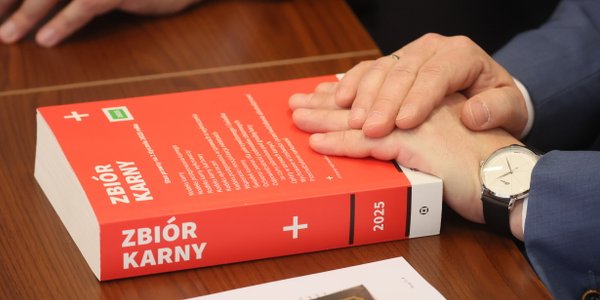
Poland's Anti-SLAPP Law a Partial Victory in Free Speech Battle
Translated from Polish, summarized and contextualized by DistantNews.
At a glance
Analysis
Sources not specified
Approved/passed
- Poland has enacted an anti-SLAPP law to expedite the dismissal of baseless lawsuits intended to silence public criticism.
- Despite this progress, Article 212 of the penal code, which criminalizes defamation, remains a significant barrier to free speech.
- International courts, including the European Court of Human Rights, have repeatedly urged Poland to decriminalize defamation, emphasizing that criminal sanctions should be a last resort.
Poland has taken a significant step toward safeguarding freedom of speech with the enactment of a new law on May 29, 2026. This legislation, widely known as the anti-SLAPP law, provides Polish courts with tools to swiftly eliminate clearly unfounded lawsuits aimed at suppressing criticism. While hailed as a success, it represents only a partial victory.
The country's penal code still retains Article 212, which criminalizes defamation. This article poses the most severe threat to media outlets, bloggers, activists, and ordinary citizens who engage in public discourse. Penalties for defamation, including slander that could damage another person's reputation, institution, or business, can range from fines and restrictions on liberty to up to a year in prison if published in mass media.
Beyond the potential sanctions, the mere initiation of criminal proceedings carries substantial weight. Accused individuals may face psychiatric evaluations and lengthy court battles. Even an acquittal does not erase the psychological, financial, and reputational toll of such a process. It is no coincidence that defamation cases are a frequent cause of Poland's losses before the European Court of Human Rights.
In rulings concerning cases like Maciejewski v. Poland, Długołęcki v. Poland, and Lewandowska-Malec v. Poland, the European Court of Human Rights has consistently reminded Poland that criminal sanctions against participants in public debate should be an absolute exception. For years, Strasbourg has reiterated a simple principle: prisons are not for words. The mere possibility of imprisonment creates a chilling effect, discouraging not only the accused but also observers from exposing irregularities or criticizing those in power.
This chilling effect extends beyond final verdicts; often, the mere commencement of proceedings is enough. For a local journalist or activist, a summons to a criminal court serves as a stark warning to remain silent. For years, journalistic and non-governmental organizations focused on protecting freedom of speech have called for the decriminalization of defamation. The Helsinki Foundation for Human Rights, the Civic Network Watchdog Poland, the Chamber of Press Publishers, the Polish Journalists' Association, the Journalists' Association, and ARTICLE 19 have long argued that civil law can effectively protect reputation, while criminal law inevitably induces a chilling effect. Paradoxically, the success of the anti-SLAPP law may highlight the weakness of retaining Article 212 of the penal code.
DistantNews Editorial
Originally published by Rzeczpospolita in Polish. Translated, summarized, and contextualized by our editorial team with added local perspective. Read our editorial standards.
More Stories


From Our Blog

What Gets Lost (and Found) When News Is Translated

The Critical Role of Diaspora Media in Global News

What Travellers Should Know About Countries with Restricted Press

A Digital Nomad's Guide to Following Local News

How the Same Story Looks Different in Different Countries
