

Poland's Cyber Commander Becomes NATO Strategic Advisor
Translated from Polish, summarized and contextualized by DistantNews.
At a glance
News
Named sources
Context piece
- Poland's Major General Karol Molenda, creator of the Cyber Command, has been appointed NATO Cyber Champion, a strategic advisor to the NATO commander.
- Molenda stated that Poland is no longer just a recipient of cybersecurity but a country that can share its experiences and cyber resilience school within NATO.
- He aims to advise on integrating cyberspace into joint operations, ensuring it's a core component rather than an add-on, and to leverage Poland's experience in countering advanced persistent threats.
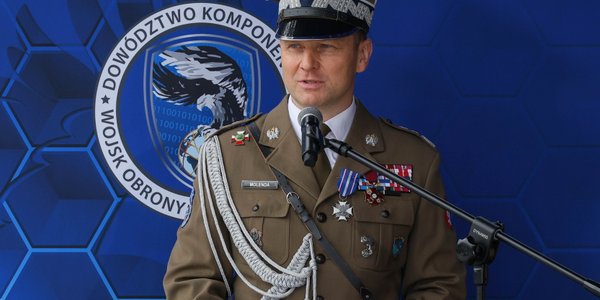
Major General Karol Molenda, the architect of Poland's Cyber Command, has been selected by NATO's Military Committee to serve as a Cyber Champion. In this strategic advisory role, he will focus on the transformation of cyberspace within the alliance.
Without a doubt, we are a country that can share its own experiences.
Molenda emphasized that Poland has evolved beyond being a mere recipient of cybersecurity. "Without a doubt, we are a country that can share its own experiences," he told WNP. He plans to advise the NATO strategic commander on integrating cyberspace into joint operations, ensuring it is a cohesive element rather than an afterthought.
I will advise the NATO Strategic Commander on the implementation of cyberspace in joint operations – so that 'cyber' is not an addition to other domains, but 'binds' the Alliance's efforts.
He believes this appointment is a recognition of Poland's growing cyber capabilities. "We are no longer just a recipient of cybersecurity; undoubtedly, we are a country that can share its own experiences, capabilities, and its school of cyber resilience," Molenda stated. He highlighted the Cyber Command's valuable experience in countering sophisticated Advanced Persistent Threats (APTs), noting that not all NATO countries possess such extensive combat experience.
We are no longer just a recipient of cybersecurity; undoubtedly, we are a country that can share its own experiences, capabilities, and its school of cyber resilience. I will want to implement this in NATO structures.
Molenda described the selection process as rigorous, involving interviews and scrutiny from military representatives. He believes his tactical, operational, and strategic experience, particularly from forming the Cyber Command and his time in military counterintelligence, were crucial factors in his selection. His goal is to foster greater interoperability and a unified approach to cyber defense among NATO allies, making it more difficult for adversaries to target individual nations.
This is the experience of a country that is very strongly attacked by various APT groups and yet manages to counteract these attacks. Undoubtedly, not all NATO countries have similar experiences.
DistantNews Editorial
Originally published by Rzeczpospolita in Polish. Translated, summarized, and contextualized by our editorial team with added local perspective. Read our editorial standards.
More Stories

From Our Blog

What Gets Lost (and Found) When News Is Translated

The Critical Role of Diaspora Media in Global News

What Travellers Should Know About Countries with Restricted Press

A Digital Nomad's Guide to Following Local News

How the Same Story Looks Different in Different Countries
