


Poland's defense spending debate misses the real issue: scale
Translated from Polish, summarized and contextualized by DistantNews.
At a glance
Analysis
Named sources
Context piece
- Poland's defense spending is projected to exceed $200 billion over a decade, significantly outpacing available funding from sources like the SAFE loan program.
- The debate over financing defense purchases is complex, with politicians focusing on the origin of funds rather than the overall scale of spending.
- The Polish defense industry's capacity is insufficient to meet demand, meaning a large portion of funds will be spent abroad on technology and components.
The debate in Poland surrounding the financing of its ambitious military modernization program, particularly concerning the SAFE loan instrument, is largely misdirected, according to Witold M. Orłowski, chief economic advisor at PwC Poland. Politicians are focusing on the source of funds, such as SAFE loans versus selling gold reserves or issuing bonds, while overlooking the sheer scale of Poland's defense needs.
The politicians talking about an 'alternative' to SAFE are confusing people.
Orłowski argues that the discussion about whether to use SAFE loans or other financing methods is pointless because Poland's defense spending is so immense. NATO data indicates Poland spends approximately $25 billion annually on new armaments. Over a decade, this could easily exceed $200 billion. The entire SAFE loan, even if supplemented by selling all of the National Bank of Poland's gold reserves, would not cover even half of these projected expenditures.
Furthermore, Orłowski contends that the claim that using SAFE loans would lead to avoidable debt is also misleading. Given Poland's significant public finance deficit, armament purchases will inevitably be financed through credit, regardless of the source. The only way to truly limit the increase in debt would be to finance a portion of these purchases through the actual sale of gold reserves, though this requires careful consideration to avoid destabilizing the Polish złoty.
Because we have a large public finance deficit, armament purchases will be made on credit anyway. This means an increase in debt regardless of whether we use European funds or loans from the USA or Korea.
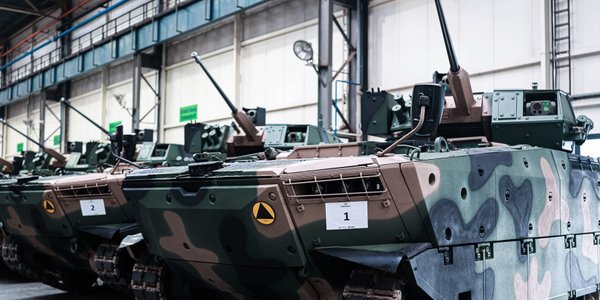
The notion that funds from SAFE could be spent predominantly within Poland is also challenged. Orłowski points out that Poland's defense industry, neglected for decades, lacks the capacity to produce the vast quantities of modern weaponry required. Even with substantial government orders, a significant portion of the allocated funds will inevitably be spent abroad on acquiring necessary technologies and components, often through offset agreements.
The neglected and poorly managed Polish defense industry is incapable of independently producing such large quantities of weapons that meet the requirements of modern warfare.
DistantNews Editorial
Originally published by Rzeczpospolita in Polish. Translated, summarized, and contextualized by our editorial team with added local perspective. Read our editorial standards.
More Stories



From Our Blog

What Gets Lost (and Found) When News Is Translated

The Critical Role of Diaspora Media in Global News

What Travellers Should Know About Countries with Restricted Press

A Digital Nomad's Guide to Following Local News

How the Same Story Looks Different in Different Countries
