

Poland's Economic 'Golden Age' Faces Challenges: Life Insurance Sector Identified as Key Weakness
Translated from Polish, summarized and contextualized by DistantNews.
At a glance
News
Named sources
Context piece
- Polish economic growth, described as a "golden age," is facing potential headwinds, prompting discussions about adapting to new challenges.
- Global capital still views Poland as a priority investment destination, despite uncertainties.
- The life insurance sector is identified as a fundamental issue hindering long-term capital market development due to low penetration and lack of tax incentives.
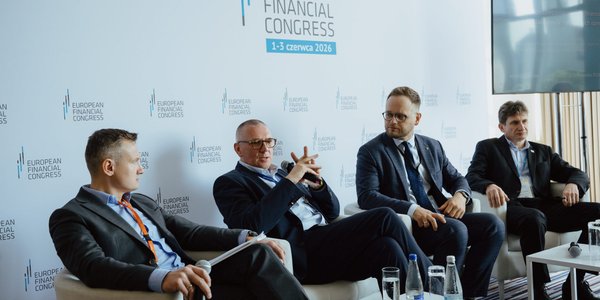
Zbigniew Jagiełło, former president of PKO Bank Polski, opened a panel discussion by referencing Poland's 37-year period of economic growth, excluding the pandemic year of 2020, calling it the country's "golden age." However, the discussion, themed "Financial Sector and Economic Development – Is Doing What We've Always Done Enough?", pivoted to explore whether this "golden age" is sustainable amidst potential "black swans" – unforeseen disruptive events.
We have the best economic period in history, called the golden age.
Elżbieta Czetwertyńska, president of Citi Handlowy, affirmed that global capital remains interested in Poland, stating it is a priority for both Citi and its international clients. She characterized "black swans" as the new normal, requiring adaptation. Czetwertyńska also noted that over half of Citi's European employees are based in Poland, and the bank's withdrawal from retail banking is part of a global strategy to bolster its institutional banking operations.
A significant concern raised during the discussion was the state of Poland's life insurance market. Adam Uszpolewicz, president of the Polish Chamber of Insurance (PIU), highlighted that while insurance companies are crucial for capital markets in countries like France and Scandinavia, this model is underdeveloped in Poland. He pointed to a French initiative where 0.5% of insurance reserves are invested in startups, generating significant capital. In Poland, a comparable investment would be around 1 billion PLN, but the scale and structure of the market are problematic.
As a matter of fact. Poland is a priority country not only from Citi's point of view but also for many of our global clients.
Uszpolewicz explained that the life insurance sector, which should provide long-term financing, constitutes less than a third of Poland's insurance market. This is compounded by a lack of tax incentives, unlike in countries where such savings are encouraged. He announced that the PIU would propose changes to address this gap and the underdeveloped health insurance market.
Black swans should be defined as the new normal, to which we must adapt.
Cezary Stypułkowski, president of Bank Pekao, provided further context on the life insurance market's scale, estimating it at approximately 0.8% of GDP in Poland, compared to 4-5% in developed markets and potentially 7% in France. He noted that this figure includes group insurance, which is dominated by PZU and is a Polish specificity. Stypułkowski emphasized that "genuine life insurance" – the type that could truly finance long-term development – is largely absent in Poland, questioning the reasons behind this situation.
The long-term financing is provided by the life insurance market, and in Poland, this is less than one-third of the market. This is the biggest pain point.
DistantNews Editorial
Originally published by Rzeczpospolita in Polish. Translated, summarized, and contextualized by our editorial team with added local perspective. Read our editorial standards.
More Stories

From Our Blog

What Gets Lost (and Found) When News Is Translated

The Critical Role of Diaspora Media in Global News

What Travellers Should Know About Countries with Restricted Press

A Digital Nomad's Guide to Following Local News

How the Same Story Looks Different in Different Countries
