


Poland's President to Resubmit Climate Referendum Proposal Amid EU ETS Reform Criticism
Translated from Polish, summarized and contextualized by DistantNews.
At a glance
News
Sources not specified
New plan
- Poland's President Andrzej Duda plans to resubmit a climate referendum proposal to the Senate, aiming for a thorough debate on energy security and the economy.
- The European Commission's revised EU Emissions Trading System (ETS) reform is seen by some Polish officials as insufficient, with proposed relief measures falling short of expected benefits.
- Concerns are raised that Poland may face disproportionately high costs from the ETS changes, despite the EU-wide reform, prompting calls for further negotiation and a national referendum.
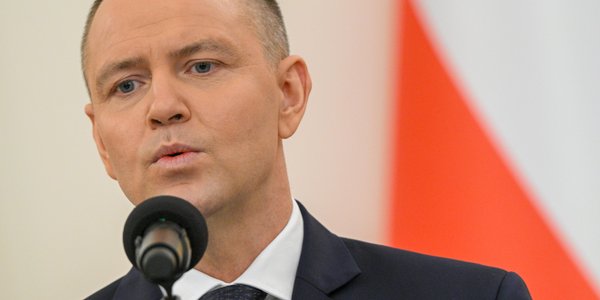
President Andrzej Duda intends to reintroduce a climate referendum proposal to the Polish Senate, aiming to ensure a comprehensive discussion on energy security and the national economy. This move follows the European Commission's unveiling of a long-awaited reform to the EU Emissions Trading System (ETS).
This time the Senate will not hide behind a "thesis" in the referendum question. We expect it to allow for a thorough debate and enable Poles to express themselves on this fundamental issue for the future of the Polish economy and energy security.
Paweł Szefernaker, a presidential minister, expressed anticipation for the Senate to allow a genuine debate, stating, "This time the Senate will not hide behind a 'thesis' in the referendum question. We expect it to allow for a thorough debate and enable Poles to express themselves on this fundamental issue for the future of the Polish economy and energy security." He criticized the EU's ETS reform, calling it a "delay of the problem" rather than a genuine relief. Szefernaker pointed out that while the EU reform offers about 10 billion euros in relief for the entire bloc's industry by 2030, Polish companies alone received approximately 3 billion euros in free allowances annually. The cost of phasing out these allowances for Poland by 2034 is estimated at around 13 billion euros, suggesting the country will bear greater losses than the total EU relief.
Yesterday the European Commission presented a long-announced proposal for changes to the ETS system – the most costly element of EU climate policy, which has burdened the European economy for over 20 years. After previous assurances from government representatives that a real reform would be fought for in Brussels, a breakthrough could have been expected. Unfortunately, the published draft shows that instead of real changes, we are dealing only with apparent corrections.
Minister of Climate Paulina Hennig-Kloska had previously given a positive assessment of the proposed changes, which include slowing the pace of CO2 emission reductions and shifting the final year from 2039 to 2049. However, she indicated the government would push for further slowdowns in the ETS. President Duda had initially proposed ETS changes in March, seeking a referendum to allow citizens to decide on such crucial matters. The ruling majority rejected this, asserting that the government would negotiate favorable solutions in Brussels. Szefernaker also highlighted concerns regarding the Modernization Fund, noting that the proposed increase is minimal compared to Poland's annual needs, further underscoring his view that the EU's proposals do not constitute real support for industry.
The European Commission is proposing about 10 billion euros in relief resulting from changed benchmarks for the entire EU industry by 2030. For comparison – Polish enterprises alone have received about 3 billion euros in free allowances annually so far. By 2034, the cost of phasing out these allowances for the Polish economy is estimated at around 13 billion euros. This means that one country will incur greater losses than the value of the relief provided for the entire European Union.
DistantNews Editorial
Originally published by Rzeczpospolita in Polish. Translated, summarized, and contextualized by our editorial team with added local perspective. Read our editorial standards.
More Stories


From Our Blog

What Gets Lost (and Found) When News Is Translated

The Critical Role of Diaspora Media in Global News

What Travellers Should Know About Countries with Restricted Press

A Digital Nomad's Guide to Following Local News

How the Same Story Looks Different in Different Countries
