


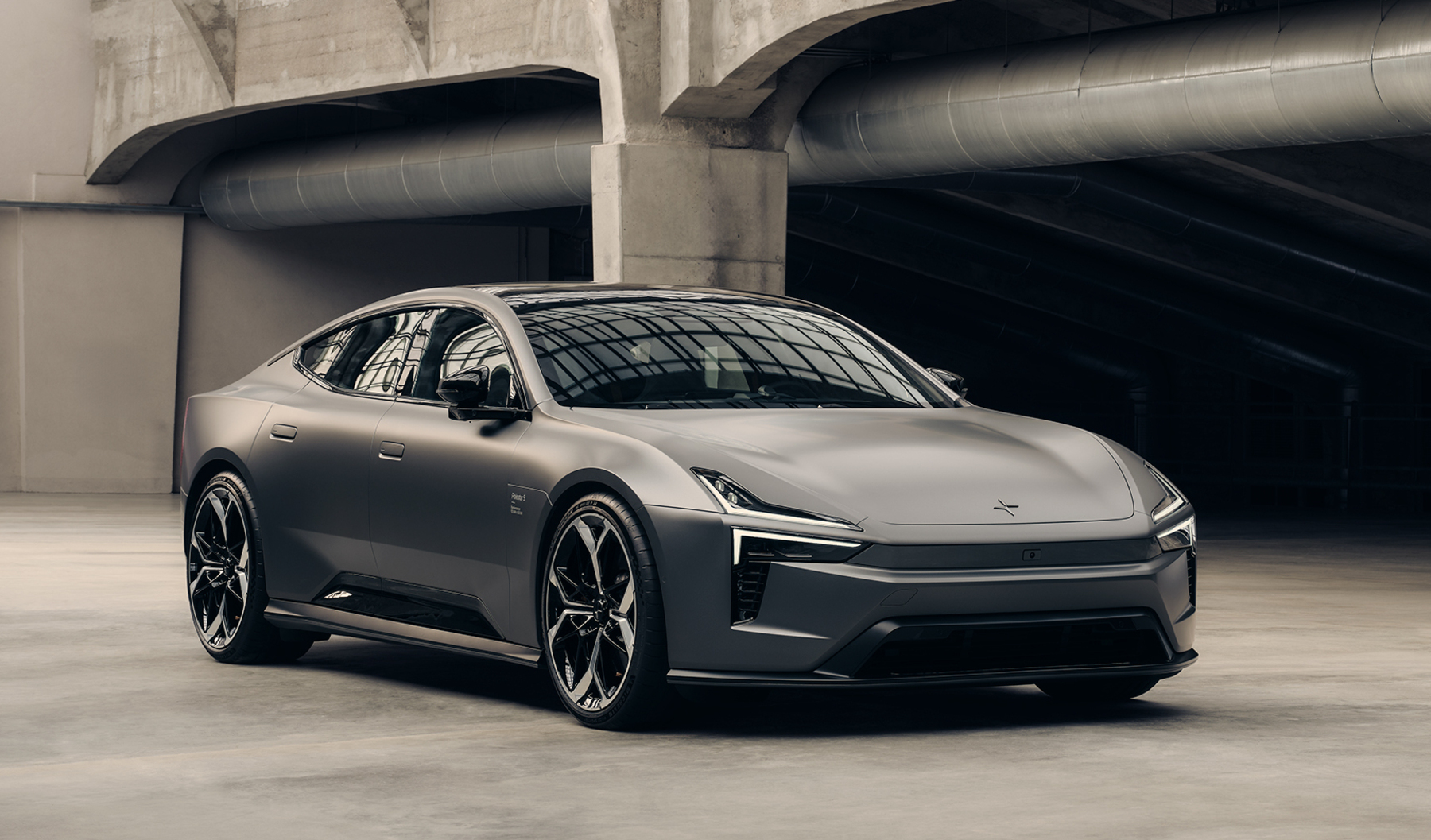
Polestar's Evolution: From Volvo's Tuning Arm to Standalone EV Maker
Translated from German, summarized and contextualized by DistantNews.
At a glance
In-depth
Sources not specified
Context piece
- Polestar has transitioned from a Volvo tuning division to an independent, all-electric premium car manufacturer under Geely's ownership.
- The Polestar 2, launched in 2019, was the brand's first mass-market electric sedan and a significant contributor to its sales, establishing Scandinavian minimalist design in the EV market.
- The new Polestar 4 model breaks convention by omitting a rear window, using a screen instead, which designers claim offers structural advantages and improved rear passenger headroom.
Polestar's journey from a niche performance tuning arm of Volvo to a standalone electric vehicle brand under the Chinese giant Geely represents a bold experiment in the automotive industry. Since its radical transformation began in 2017, Polestar has carved out a distinct identity in the premium EV segment.
Polestar 2 was the first production vehicle in the world to run on Google's Android Automotive as its operating system.
The Polestar 2, introduced in 2019, served as the foundational model for this new brand. Visually echoing its Volvo origins and built on the same platform as the Volvo XC40, it was also a technological pioneer, being the first production car globally to feature Google's Android Automotive operating system. This 4.6-meter sedan became the brand's reliable workhorse, successfully bridging the gap between Swedish design and Chinese manufacturing. With over 190,000 units sold, the Polestar 2 carried the brand's economic burden for years, proving that minimalist Scandinavian aesthetics could appeal to buyers even without an internal combustion engine.
While still a solid electric car, the Polestar 2's range is a compromise, offering an indicated 530 kilometers on a full charge, with real-world testing yielding 376 km. As a successor is expected in 2027, current promotional prices starting at 42,990 Euros make it an attractive purchase option.
With over 190,000 units sold, this vehicle carried the entire economic burden of the young brand for years and proved that reduced Scandinavian minimalism could find buyers even without an internal combustion engine.
The Polestar 4 marks a deliberate departure from traditional automotive design. This crossover coupe notably lacks a rear window, a design choice that engineers and designers explain offers structural benefits. By moving the upper cross-member further back, it provides unexpected headroom for rear passengers despite the sloping roofline. The traditional rearview mirror is replaced by a small video screen fed by a rear-mounted camera. While this setup offers a wider view of what's behind the car, accurately judging distances to following vehicles proved challenging in testing.
The crossover coupe lacks a rear window!
DistantNews Editorial
Originally published by Die Presse in German. Translated, summarized, and contextualized by our editorial team with added local perspective. Read our editorial standards.
More Stories


From Our Blog

What Gets Lost (and Found) When News Is Translated

The Critical Role of Diaspora Media in Global News

What Travellers Should Know About Countries with Restricted Press

A Digital Nomad's Guide to Following Local News

How the Same Story Looks Different in Different Countries
