


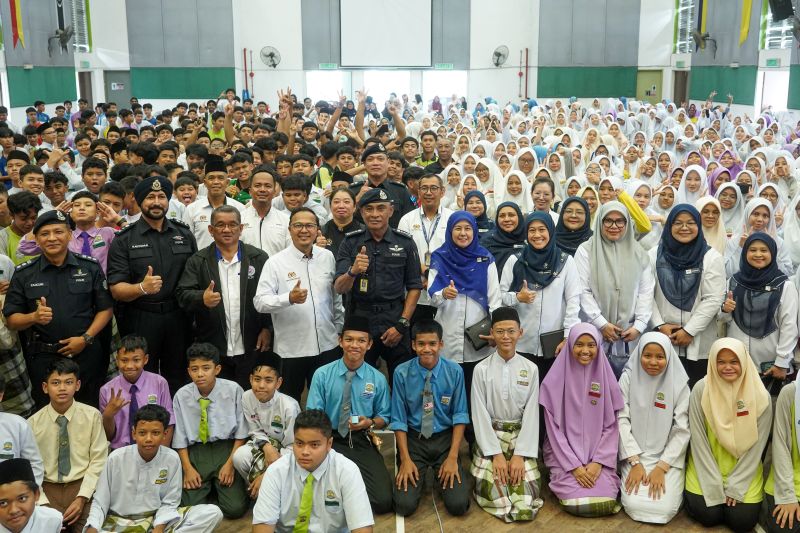
Police to Deploy Officers to 122 Secondary Schools in Kuala Lumpur
Translated from Malay, summarized and contextualized by DistantNews.
At a glance
News
Sources not specified
New plan
- Kuala Lumpur police will deploy officers to 122 secondary schools to enhance enforcement and ensure students comply with road traffic laws.
- Police will conduct checks, including driving license verification and urine tests, on identified students.
- This initiative aims to educate students on traffic laws and foster a culture of respect for regulations from a young age.
Kuala Lumpur police are implementing a new initiative to deploy officers to 122 secondary schools across the capital. The primary goal is to strengthen enforcement and ensure students adhere to road traffic laws, fostering a safer environment for young road users.
If before, traffic police rarely were in schools, after this they will be placed in schools to conduct checks on students, including checking driving licenses.
According to Kuala Lumpur Police Chief Datuk Fadil Marsus, the deployed officers will conduct various checks on students. These will include verifying driving licenses and performing urine tests on students identified as needing such screenings. The initiative targets students across all secondary schools in Kuala Lumpur, including private institutions, with a focus on those requiring intervention.
This program is a collaborative effort involving officers from the Traffic Investigation and Enforcement Department (JSPT) and the Kuala Lumpur Narcotics Crime Investigation Department (JSJN). Previously, traffic police presence in schools was infrequent. However, under this new plan, officers will be regularly stationed at schools to conduct checks and provide education on traffic law compliance.
They will also provide explanations and education on traffic law compliance.
Fadil stated that the program is part of Kuala Lumpur Police's ongoing commitment to educating the public on respecting the law, starting with traffic regulations. He highlighted the "Op Patuh Undang-undang" (Op PUU) operation, launched in October last year, which aims to cultivate a culture of law-abiding behavior among students and the community. Between January and May this year, 41 arrests involving students were made for reckless and dangerous driving offenses, a decrease from 58 arrests during the same period last year. The advocacy approach focuses on continuous education to instill respect for road traffic laws, aiming to cultivate disciplined, responsible, and integrity-driven future generations.
The advocacy approach focuses on continuous education so that students have more respect for road traffic laws, besides producing a generation that is more disciplined, responsible, and has integrity.
DistantNews Editorial
Originally published by Utusan Malaysia in Malay. Translated, summarized, and contextualized by our editorial team with added local perspective. Read our editorial standards.
More Stories



From Our Blog

What Gets Lost (and Found) When News Is Translated

The Critical Role of Diaspora Media in Global News

What Travellers Should Know About Countries with Restricted Press

A Digital Nomad's Guide to Following Local News

How the Same Story Looks Different in Different Countries
