

Policy Chief Defends Honam Semiconductor Investment, Citing AI-Era Needs
Translated from Korean, summarized and contextualized by DistantNews.
At a glance
News
Official statement
Context piece
- Presidential policy chief Kim Yong-beom strongly defended the planned semiconductor cluster investments in Honam, emphasizing their critical role in AI-era competitiveness.
- He argued that semiconductor production capacity is the core variable for national competitiveness, linking it to economy, security, education, and regional balance.
- Kim countered criticisms regarding water shortages and regional development, stating that infrastructure and national water management are key, not just existing water availability.
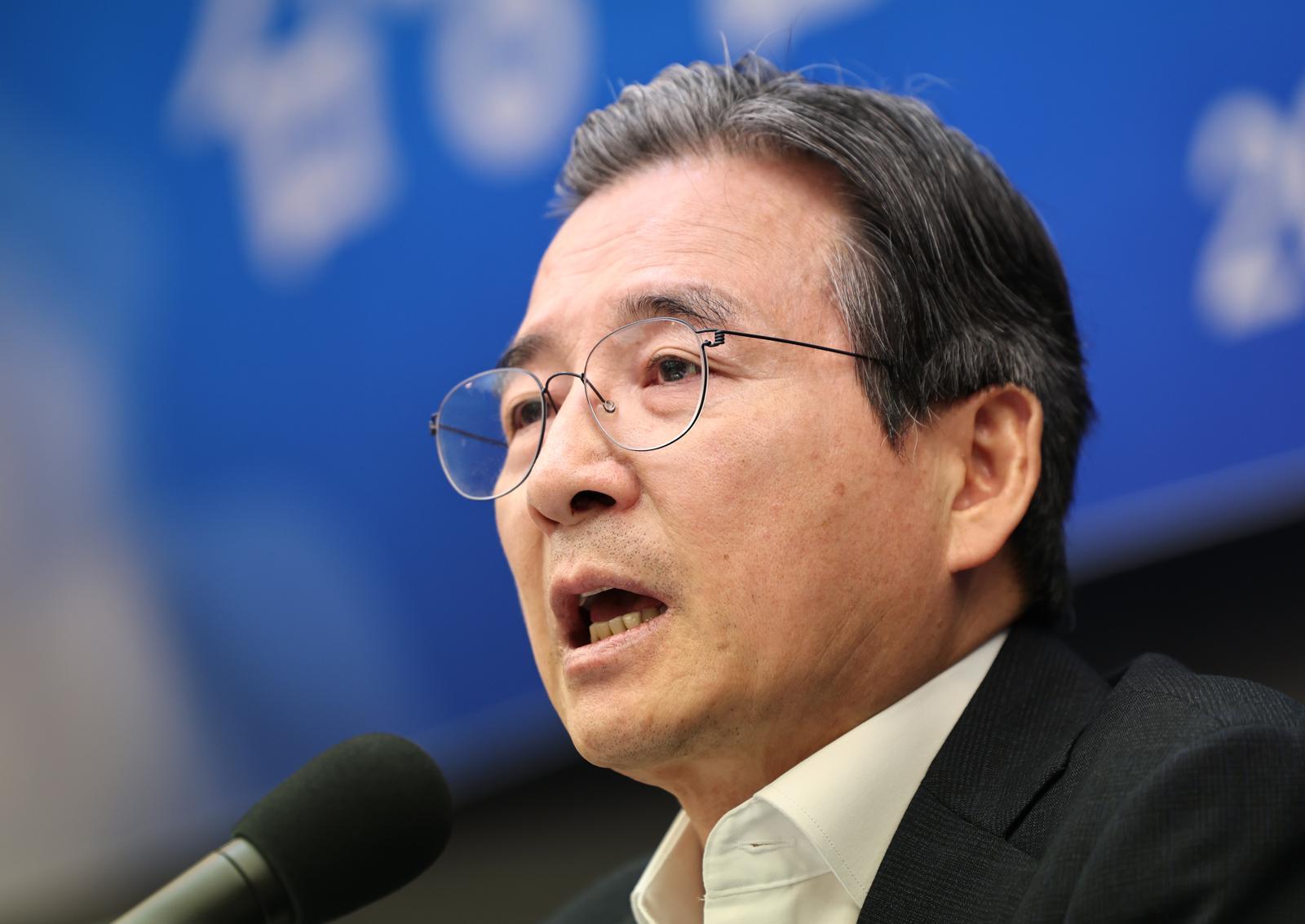
Presidential policy chief Kim Yong-beom has launched a robust defense of the planned semiconductor cluster investments in the Honam region, arguing that they are essential for South Korea's future competitiveness in the Artificial Intelligence era. In a series of Facebook posts and a speech at a Kukmin Club forum, Kim stressed that discussing the nation's future necessitates prioritizing the semiconductor industry.
If we are to discuss the future, we must first talk about semiconductors.
"If we are to discuss the future, we must first talk about semiconductors," Kim stated, labeling the current moment as a historic juncture that could redefine South Korea's economic trajectory. He asserted that semiconductors are no longer just an industry-specific issue but a central variable connecting economy, security, education, youth, the Seoul metropolitan area, and regional development. Kim likened neglecting semiconductors in economic discussions to discussing farming without mentioning rice paddies.
Semiconductors are no longer just an industry-specific issue but a central variable connecting economy, security, education, youth, the Seoul metropolitan area, and regional development.
Kim outlined three key policy tasks: expanding production capacity, productively utilizing excess liquidity, and creating youth employment opportunities. He emphasized the need to build more fabrication plants faster, stating that production capacity directly translates to national competitiveness. He also called for channeling the excess liquidity generated by the semiconductor boom into factories, power grids, water infrastructure, research facilities, equipment industries, and new cities, rather than solely into Seoul's real estate market. Kim framed the large-scale semiconductor fab clusters outside the capital not as regional development policies but as industrial policies crucial for boosting production capacity in the AI era.
More fabs must be built faster. Production capacity is national competitiveness.
Addressing concerns about water shortages, Kim argued that the issue lies not in the mere presence of water but in how national water management and infrastructure are designed. He asserted that sufficient water resources exist in the southwestern region and that securing industrial water supply of up to 1 million tons per day is feasible through measures like dam reinforcement, agricultural water reallocation, and wastewater reuse. He also highlighted the necessity of building national-level electricity and water grids, emphasizing that in the AI era, production capacity, not just algorithms, is the key asset. Kim concluded by reiterating that building advanced fabrication plants quickly and stably is a national strategy, stating, "The nation that builds wins."
The issue is not whether water exists, but how national water management and infrastructure are designed.
DistantNews Editorial
Originally published by Dong-A Ilbo in Korean. Translated, summarized, and contextualized by our editorial team with added local perspective. Read our editorial standards.
More Stories


From Our Blog

What Gets Lost (and Found) When News Is Translated

The Critical Role of Diaspora Media in Global News

What Travellers Should Know About Countries with Restricted Press

A Digital Nomad's Guide to Following Local News

How the Same Story Looks Different in Different Countries
