


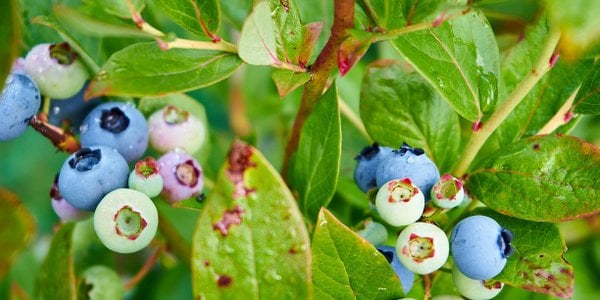
Polish Blueberries: A European Powerhouse Facing Domestic Price Battles
Translated from Polish, summarized and contextualized by DistantNews.
At a glance
News
Official statement
Context piece
- Poland leads Europe in American blueberry production, accounting for one-third of EU harvests and ranking sixth globally.
- Despite strong domestic production, Polish blueberries face price competition from imports, often of lower quality and longer transit times.
- Experts highlight the superior freshness and flavor of Polish blueberries, which can reach consumers within a day of picking, supporting the national economy.
Poland has emerged as Europe's powerhouse in American blueberry production, with harvests soaring from 4,000 tons in 2004 to an estimated 65,000 tons by 2025. The country now accounts for a third of the European Union's blueberry yield and holds a sixth-place position among global producers. This significant growth, particularly since Poland's accession to the EU, has transformed its agricultural landscape.
However, this success story faces a challenge on the home front. During the peak domestic season, Polish blueberries struggle to compete on price with imported fruits, which are frequently offered at promotional prices in large retail chains. Industry representatives note that this influx of cheaper foreign berries strengthens the negotiating position of retailers against local suppliers.
Experts and producers emphasize that the quality of imported blueberries often suffers due to extensive transport times, sometimes spanning dozens of days. These fruits may travel from as far as Peru, Zimbabwe, or South Africa. In contrast, Polish blueberries boast a key advantage: freshness. They can reach consumers as quickly as a day after being picked, ensuring they are ripe, sweet, and full of flavor when purchased.
Beyond their market performance, blueberries are lauded for their health benefits. They are rich in antioxidants, supporting the immune system, and provide essential vitamins like A, C, K, E, and B vitamins. They also offer valuable minerals such as potassium, magnesium, manganese, and copper. With a low glycemic index and high fiber content, they aid digestion and are suitable for diabetics. Their low calorie count, around 60 kcal per 100 grams, also makes them an ideal choice for those on a diet.
Polska borówka ma jedną kluczową przewagę: czas. Zamiast spędzać kilkanaście lub kilkadziesiąt dni w ładowniach statków, samolotach i chłodniach, może trafić do sklepu nawet w dobę po zerwaniu z krzewu.
DistantNews Editorial
Originally published by Rzeczpospolita in Polish. Translated, summarized, and contextualized by our editorial team with added local perspective. Read our editorial standards.
More Stories



From Our Blog

What Gets Lost (and Found) When News Is Translated

The Critical Role of Diaspora Media in Global News

What Travellers Should Know About Countries with Restricted Press

A Digital Nomad's Guide to Following Local News

How the Same Story Looks Different in Different Countries
