


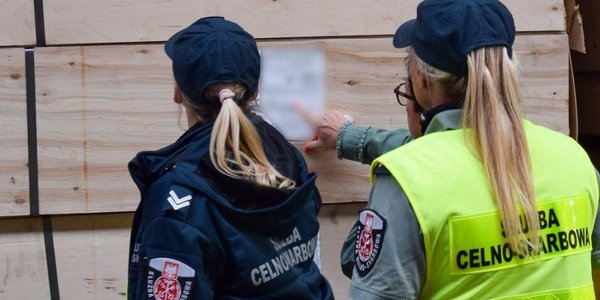
Polish Customs Rules Jeopardize Transit Agencies, Industry Warns
Translated from Polish and summarized by DistantNews. Read the original for the full story.
At a glance
News
Named sources
Context piece
- Polish customs authorities are reportedly imposing liability for customs duties and VAT on carriers and freight forwarders for post-transit reclassifications of goods.
- The logistics industry argues this practice contradicts EU transit procedures and court rulings, potentially driving transit traffic away from Poland.
- Companies warn that if the current practice continues, firms may withdraw from handling transit, rerouting cargo through alternative corridors that bypass Poland.
A significant dispute is unfolding in Poland's logistics sector, where customs agents and freight forwarders are sounding the alarm over current practices by customs offices that they claim are undermining the transit process and jeopardizing their businesses.
The core issue revolves around customs authorities holding carriers, forwarders, and other parties responsible for customs duties, VAT, and other charges. This liability arises from subsequent challenges to the tariff classification, description, or declared contents of goods transported in sealed containers, particularly along the Polish section of the New Silk Road and at terminals near Małaszewicze.
Industry representatives, citing a European Court of Justice ruling (Case C-409/14 Schenker) and the TAXUD Transit Manual, argue that a subsequent differing assessment of a goods' CN code, when the goods remained under customs supervision and were presented at the destination office, should not constitute a breach of the transit procedure. Joanna Porath, president of the Porath customs agency, warned that maintaining the current practice could lead companies to cease handling transit operations, redirecting cargo to corridors that bypass Poland.
Further complicating matters, operators in the transit procedure are generally responsible only for delivering goods unchanged within the specified timeframe to the customs office of destination. They typically lack access to sealed containers, do not conduct independent inspections, and do not possess full technical documentation or the tools to tariff complex technical products. Piotr Sienkiewicz, director at CCS Poland, emphasized that if goods are not removed from customs supervision and the transit procedure is correctly concluded, the operator's role should end there.
The Polish Chamber of Forwarding and Logistics (PIL) notes that the interpretation by the National Revenue Administration (KAS) makes all participants in the supply chain, from the initial declaration to the terminals, jointly liable. This broad interpretation is seen by the freight forwarding industry as overturning the legal order. Paweł Moskala, owner and director of Real Logistics, questioned how the Common Transit Procedure could continue if customs agencies do not inspect goods, arguing it disrupts the fundamental idea of the procedure. Spedytors and transport companies report being held liable years later for discrepancies caused by others, based on data they did not originate, raising concerns about fairness and the integrity of the transit system.
About this summary
Originally published by Rzeczpospolita in Polish. Translated, summarized, and contextualized automatically by DistantNews, with a note on how the source frames the story. Not individually reviewed before publishing. How this works.
More Stories

From Our Blog

What Gets Lost (and Found) When News Is Translated

The Critical Role of Diaspora Media in Global News

What Travellers Should Know About Countries with Restricted Press

A Digital Nomad's Guide to Following Local News

How the Same Story Looks Different in Different Countries
