

Polish Discussion on UPA Heroes Sparks Debate on History and National Identity
Translated from Polish, summarized and contextualized by DistantNews.
At a glance
Interview
Sources not specified
Context piece
- A Polish discussion debated the naming of a Ukrainian army unit after UPA heroes, with one guest calling it natural for nation-building.
- The conversation sharply contrasted views on the Volhynia massacres, with one side attributing blame to UPA leadership and the other denying it.
- One participant argued that Poland's strong reaction is "hysteria based on ignorance" of Ukrainian history and propaganda, while the other defended the public's right to express emotion.
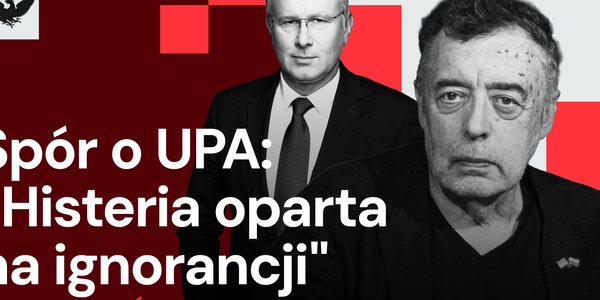
A recent discussion on Polish television ignited controversy over the naming of a Ukrainian army unit after figures associated with the Ukrainian Insurgent Army (UPA). Kazimierz Wóycicki, a guest on the program, expressed a view that surprised the host by deeming the naming "completely natural" and a standard part of nation-building, akin to how any state constructs its pantheon of heroes.
Every nation-state builds its pantheon.
Wóycicki drew parallels between Stepan Bandera and Józef Piłsudski, suggesting that both were figures who fought for their nation's independence and faced imprisonment. He argued that for many nations oppressed by the Soviet Union, Russia posed a greater threat than Germany during World War II, a context he used to explain historical alliances. However, the conversation grew heated when the topic turned to the Volhynia massacres.
The UPA and OUN-B are responsible for the genocide of the Polish population.
Bogusław Chrabota, the host, strongly emphasized that the UPA and OUN-B were responsible for the genocide of the Polish population in Volhynia, describing it as a planned and executed operation. Wóycicki contested this, suggesting the crime did not originate from the UPA leadership, who he claimed condemned it, and that the responsibility might lie with individuals like Klym Sawur, though no direct order was found. He acknowledged the events as genocide but also mentioned alleged killings of Ukrainian civilians by Polish Home Army (AK) units, rejecting a " an eye for an eye" approach.
the crime did not originate from the UPA leadership, but was condemned by it.
Wóycicki further posited that Poland's current reaction to the UPA naming is "hysteria based on ignorance" of Ukrainian history, suggesting Poland has fallen prey to Russian propaganda that equates "Banderism" with Nazism. He pointed out that a monument to Klym Sawur has stood in Ukraine since the 1990s without significant Polish protest. Chrabota countered that while hysteria can stem from ignorance, the Polish public has a right to express its emotions, especially given the scale of the atrocities, which he argued was incomparable to actions by the AK or the "cursed soldiers."
today's Polish reaction is based on ignorance of history and is, as he said, 'hysteria based on ignorance'.
DistantNews Editorial
Originally published by Rzeczpospolita in Polish. Translated, summarized, and contextualized by our editorial team with added local perspective. Read our editorial standards.
More Stories


From Our Blog

What Gets Lost (and Found) When News Is Translated

The Critical Role of Diaspora Media in Global News

What Travellers Should Know About Countries with Restricted Press

A Digital Nomad's Guide to Following Local News

How the Same Story Looks Different in Different Countries
