


Polish F-16s Faced Technical Issues During Russian Missile Incident
Translated from Polish and summarized by DistantNews. Read the original for the full story.
At a glance
News
Named sources
Under investigation
- Polish F-16 fighter jets experienced technical difficulties, including the inability to use the Link-16 data system, during a Russian missile incursion.
- Official statements suggested a swift and effective military response, but reports indicate a more complex reality.
- The incident raises questions about NATO's air defense readiness and coordination.
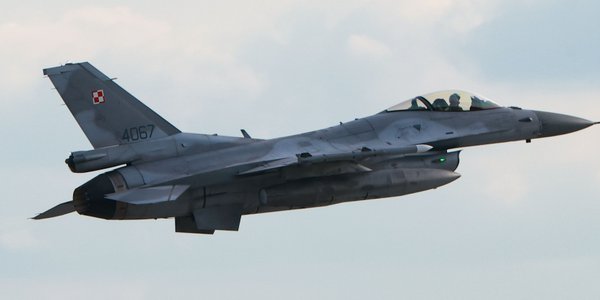
During the July 30 incident where a Russian missile breached Polish airspace and crashed near Tarnawa-Kolonia, Polish F-16 fighter jets faced significant operational challenges. Crucially, the pilots were unable to utilize the Link-16 data exchange system, a standard NATO communication tool, which hampered their ability to effectively track and intercept the threat.
The first information clearly indicates that the appropriate services, primarily the military and our pilots, acted very quickly and efficiently.
While official statements from Prime Minister Donald Tusk and General Ireneusz Nowak emphasized the military's rapid and efficient response, suggesting readiness to shoot down the missile, reports from Rzeczpospolita paint a different picture. According to the newspaper, one of the two scrambled F-16s was refueling mid-air from an allied tanker, while the other was initially occupied with identifying a Ukrainian MiG-29 near the border, possibly attempting its own interception.
This discrepancy between official narratives and reported on-the-ground realities raises serious questions about the effectiveness of Poland's air defense during the incident. The failure of the Link-16 system, in particular, highlights potential vulnerabilities in NATO's integrated air defense network and the complex coordination required during such high-stakes events.
One of the F-16 fighter jets received orders to intercept an object that violated Polish airspace; it arrived exactly when the missile hit the ground; if the missile had continued its flight, I would have decided to shoot it down.
The official account stated that an unidentified object was detected at 3:40 AM and an F-16 was dispatched. By 3:46 AM, the object disappeared from radar before a definitive identification could be made. However, the revelation that the F-16s were not fully operational due to technical limitations suggests that the situation may have been far more precarious than initially presented.
At 3:40 AM, an unidentified object moving westward was detected in Polish airspace. To identify and intercept it, an F-16 fighter on duty was dispatched to the area. At 3:46 AM, before a definitive identification could be made, the object disappeared from radar displays.
About this summary
Originally published by Rzeczpospolita in Polish. Translated, summarized, and contextualized automatically by DistantNews, with a note on how the source frames the story. Not individually reviewed before publishing. How this works.
More Stories



From Our Blog

What Gets Lost (and Found) When News Is Translated

The Critical Role of Diaspora Media in Global News

What Travellers Should Know About Countries with Restricted Press

A Digital Nomad's Guide to Following Local News

How the Same Story Looks Different in Different Countries
