

Polish Railways Face Declining Freight as Parking Fees Soar
Translated from Polish, summarized and contextualized by DistantNews.
At a glance
News
Named sources
New plan
- Polish railway organizations are protesting a significant increase in fees for train parking on main tracks, planned for the 2026/2027 timetable.
- They argue that without sufficient side tracks, these main tracks must serve as temporary parking and shunting areas.
- The organizations claim that prioritizing passenger trains over freight is reducing the attractiveness and volume of freight transport.
Polish railway organizations are raising concerns over a proposed steep increase in fees for parking trains on main tracks, which is slated to take effect with the 2026/2027 timetable. The Ministry of Infrastructure had planned to raise these fees by up to 1,800 percent.
In a joint letter to the Ministry of Infrastructure, several railway organizations, including the Association of Independent Railway Carriers, the Chamber of Land Transport, and the Railway Business Forum, acknowledged that main tracks should not be blocked unnecessarily. However, they argue that the fees for parking on these essential tracks should be linked to the responsibility of the parties involved in causing the delay. They point out that due to a lack of side tracks and limited loading facilities, these main tracks are often forced to function as both parking and shunting areas.
The problem of insufficient and constantly decreasing availability of infrastructure for parking trains should be solved by the administrator by increasing the availability of such infrastructure.
Carriers have long reported issues with the availability of infrastructure for stopping trains, emphasizing that such stops are a necessary part of operational processes, similar to truck stops. The organizations argue that the "problem of insufficient and constantly decreasing availability of infrastructure for parking trains should be solved by the administrator by increasing the availability of such infrastructure." They have repeatedly appealed for the inclusion of supporting infrastructure, such as additional tracks, to enhance flexibility and train reception capacity.
As industry organizations, we have repeatedly appealed not to ignore the accompanying infrastructure (additional tracks), which increases flexibility and the ability to accept trains.
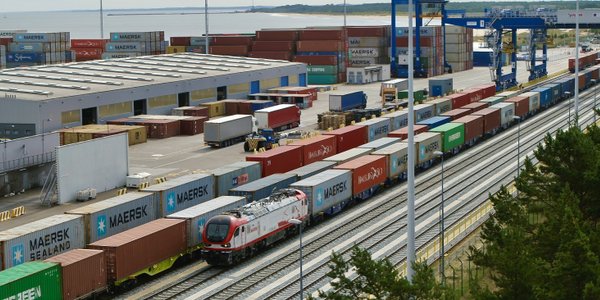
According to the organizations, PKP PLK (the Polish railway infrastructure manager) has overlooked the provision of essential infrastructure for freight transport, including additional tracks for parking and shunting, during railway line modernizations. They highlight that passenger traffic is prioritized over freight in Poland, similar to other European countries, forcing slower freight trains to yield to faster passenger services. The average speed of freight trains in Poland was 28.8 km/h in 2025, a 5.5% increase from 2024, while passenger trains averaged 55.6 km/h. This speed disparity widens significantly when comparing the fastest intermodal freight trains (39.7 km/h) to PKP Intercity passenger trains (83.2 km/h).
These low speeds make rail an unattractive option for freight transport, leading to a decline in freight transport work and tonnage by approximately 10% between 2022 and 2025. In contrast, passenger transport increased by over 28% during the same period. Freight traffic accounts for 28% of operational work on PKP PLK, and the railway administration is beginning to recognize the needs of this customer group. Recently, PKP PLK opened a new 750-meter track at Rozprza station, intended to improve train movement on the Warsaw-Katowice line, with freight trains already utilizing the new infrastructure.
During the modernization of railway lines, PKP PLK 'omit the provision of necessary infrastructure for freight transport, including, among others, additional tracks for parking rolling stock and performing shunting work.'
DistantNews Editorial
Originally published by Rzeczpospolita in Polish. Translated, summarized, and contextualized by our editorial team with added local perspective. Read our editorial standards.
More Stories



From Our Blog

What Gets Lost (and Found) When News Is Translated

The Critical Role of Diaspora Media in Global News

What Travellers Should Know About Countries with Restricted Press

A Digital Nomad's Guide to Following Local News

How the Same Story Looks Different in Different Countries
