


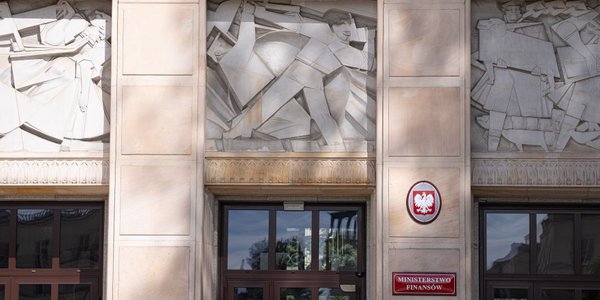
Polish tax ministry's 'tax cut' raises concerns over hidden increases
Translated from Polish and summarized by DistantNews. Read the original for the full story.
At a glance
Analysis
Named sources
Context piece
- Poland's Ministry of Finance announced tax adjustments that are being presented as a tax cut, but critics contend they will lead to higher taxes for many.
- The plan involves raising the first tax threshold and shifting some income to a lower 24% bracket, while simultaneously increasing the corporate tax rate from 19% to 24%.
- The ministry claims excise tax hikes on alcohol aim to reduce consumption and social harm, but critics question this rationale, pointing to increased disability pensions for alcohol-related issues.
Poland's Ministry of Finance has unveiled a set of tax adjustments that it frames as a reduction, sparking debate among economists and the public. The proposed changes include raising the initial income tax threshold and reclassifying a portion of income currently taxed at 32% into a new 24% bracket. However, critics argue that these measures are deceptive, as they are coupled with a significant increase in the corporate tax rate for large companies, from the current 19% to 24%.
All taxes are transferable, as demonstrated by banks after the introduction of the so-called 'bank tax' and by Orlen and Lotos after the introduction of the fuel fee.
Economist Robert Gwiazdowski, writing for Rzeczpospolita, suggests the ministry should be called the "Ministry of Taxes" rather than the "Ministry of Finance," implying its primary focus is on taxation rather than broader financial management. He contends that all taxes are ultimately transferable. Gwiazdowski points to historical examples, such as banks passing on the costs of the "bank tax" and Orlen and Lotos shifting the burden of the "fuel fee" onto consumers, as evidence that businesses will likely pass the increased corporate tax burden onto consumers.
The ministry also justifies raising excise taxes on alcoholic beverages, stating the goal is to curb consumption and reduce associated social harms. While acknowledging this as a noble objective, Gwiazdowski questions the consistency of this approach. He notes that disability pensions paid by the Social Insurance Institution (ZUS) for work incapacity due to long-term alcohol abuse are set to increase by over 5% from March 1, 2026, meaning alcoholics will receive nearly 100 PLN more, bringing their total to almost 2,000 PLN.
The increase in excise rates on all alcoholic beverages is primarily aimed at reducing the consumption of these beverages, and consequently, reducing the negative social consequences associated with their consumption.
Furthermore, Gwiazdowski challenges the ministry's rationale for maintaining lower excise taxes on beer, citing the ministry's claim that it must protect the "tradition of beer consumption as a beverage with flavor qualities, not a source of cheap alcohol." He argues that many mass-produced beers lack flavor and are instead high in alcohol content, sometimes exceeding 17%, which he refers to as "cheap alcohol." The lack of a legal definition for beer in Poland, unlike for vodka and wine, allows producers to market beverages with high alcohol content under the "beer" label, which consumers may accept.
We must protect the 'tradition of beer consumption as a beverage with flavor qualities, not a source of cheap alcohol.'
About this summary
Originally published by Rzeczpospolita in Polish. Translated, summarized, and contextualized automatically by DistantNews, with a note on how the source frames the story. Not individually reviewed before publishing. How this works.
More Stories
From Our Blog

What Gets Lost (and Found) When News Is Translated

The Critical Role of Diaspora Media in Global News

What Travellers Should Know About Countries with Restricted Press

A Digital Nomad's Guide to Following Local News

How the Same Story Looks Different in Different Countries
