


Politician's 'Regimes are short' remark sparks controversy
Translated from Korean, summarized and contextualized by DistantNews.
At a glance
News
Sources not specified
Context piece
- A controversial statement by politician Jeong Cheong-rae, "Regimes are short, the people are eternal," has caused a stir.
- The statement is seen as a critique of the current administration and has drawn parallels to past presidential controversies.
- The article also touches on declining approval ratings for President Lee, election results, and other political developments.
A recent remark by politician Jeong Cheong-rae, "Regimes are short, the people are eternal," has ignited a political firestorm. The statement, delivered during a political briefing, is being interpreted by many as a sharp critique of the current administration's perceived transience compared to the enduring will of the populace.
The controversy echoes past political incidents, including the resignation of spokesperson Lee Ji-eun, who was likened to President Lee by a former presidential secretary. This comparison, made in the context of a perceived decline in President Lee's approval ratings following local elections, has fueled discussions about the stability and public perception of the current government.
President Lee's approval rating has reportedly fallen to 50.4%, a decrease of 9.4 percentage points since the local elections. Meanwhile, the Democratic Party holds a slight lead over the People Power Party in recent polls, with 38.6% support compared to 38.1%. These figures add a layer of context to the political discourse surrounding Jeong's statement.
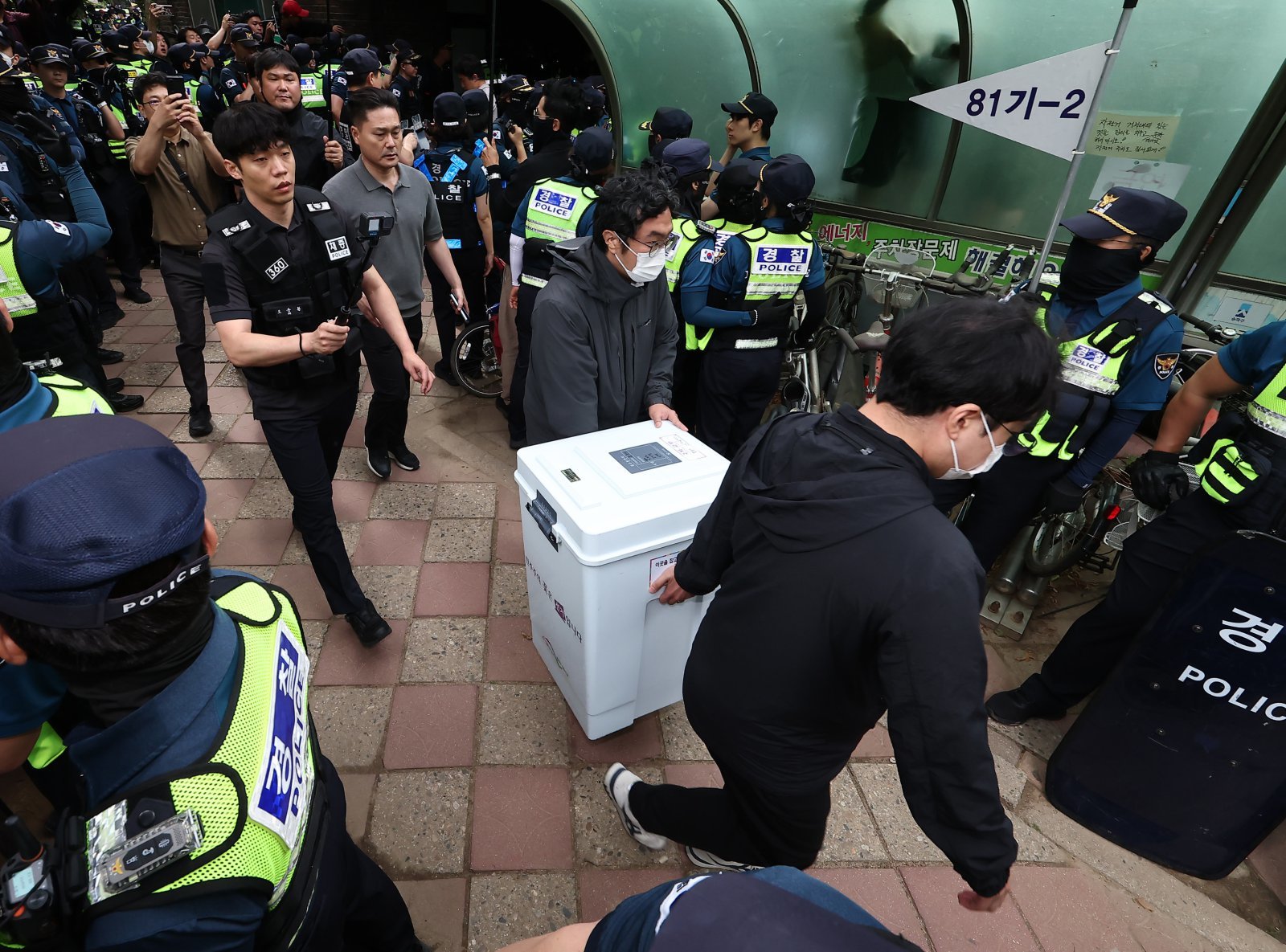
The article also references President Lee's past comments about the "brutal history" of former presidents, suggesting a potential vulnerability or a sense of shared experience with those who faced political downfall. Additionally, it notes the disposal of ballot boxes from the Jamsil polling station by the Songpa District Election Commission and calls for a by-election, further highlighting the dynamic and often contentious nature of South Korean politics.
DistantNews Editorial
Originally published by Hankyoreh in Korean. Translated, summarized, and contextualized by our editorial team with added local perspective. Read our editorial standards.
More Stories

From Our Blog

What Gets Lost (and Found) When News Is Translated

The Critical Role of Diaspora Media in Global News

What Travellers Should Know About Countries with Restricted Press

A Digital Nomad's Guide to Following Local News

How the Same Story Looks Different in Different Countries
