

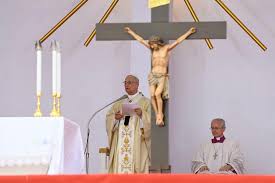
Pope Leo XIV in Angola: A Cauterizing Agent on a Wooden Leg?
Translated from French, summarized and contextualized by DistantNews.
TLDR
- Pope Leo XIV visited Angola, criticizing social injustice, systemic corruption, and wealth inequality during his trip.
- He proposed justice, reconciliation, and political courage as solutions to the country's development challenges.
- The Angolan government's response was seen as detached, raising doubts about the impact of the Pope's message.
Pope Leo XIV's visit to Angola, the third stop on a whirlwind African tour, brought a powerful message of reform to a nation still grappling with the aftermath of a brutal civil war. Unlike predecessors who offered more conventional addresses, Pope Leo XIV did not shy away from confronting the deep-seated issues plaguing Angola: rampant social injustice, pervasive corruption, and the obscene concentration of national wealth in the hands of a predatory elite, while a significant portion of the population lives in poverty.
He put words to the ills that are dragging down the country's economic and social development: social injustice, systemic corruption, and the indecency of national wealth confiscated by a predatory minority, while a third of the population survives below the poverty line.
From the perspective of Le Pays, a publication deeply invested in the socio-political landscape of Burkina Faso and the wider Sahel region, the Pope's frank assessment resonates. His call for justice, reconciliation, and courageous political leadership offers a stark contrast to the often-stagnant governance witnessed across many African nations. The Pope's willingness to name the problems that many Angolans only whisper about, for fear of reprisal, is particularly noteworthy. This directness, however, seems to have met a wall of political indifference.
He proposes a simple but demanding triptych: justice, reconciliation, and political courage.
The Angolan government's reaction, particularly President João Lourenço's speech, appeared disconnected from the Pope's urgent concerns. While the Pope spoke of the need for good governance and listening to the youth, the President's address focused on sovereignty and diplomatic diversions, sidestepping the critical issues of inequality and corruption. This disconnect raises serious questions about whether the Pope's words, however potent, can penetrate a political system seemingly resistant to change.
The reaction of the Angolan authorities, almost caricaturally out of step with popular concerns, casts a shadow over the real impact of the Pope's words.
This situation highlights a recurring challenge in international engagement with African nations: the gap between external calls for reform and the internal political realities. While Western media might focus on the Pope's diplomatic mission, from a regional perspective, the true story lies in the potential for genuine change versus the entrenched systems that often stifle it. The Pope's visit, while offering a moral compass, may ultimately prove to be a temporary balm—a "cauterizing agent on a wooden leg"—if the political will to enact meaningful reform remains absent.
Is the pontifical word... merely a cauterizing agent on a wooden leg?
DistantNews Editorial
Originally published by Le Pays in French. Translated, summarized, and contextualized by our editorial team with added local perspective. Read our editorial standards.
More Stories

From Our Blog

What Gets Lost (and Found) When News Is Translated

The Critical Role of Diaspora Media in Global News

What Travellers Should Know About Countries with Restricted Press

A Digital Nomad's Guide to Following Local News

How the Same Story Looks Different in Different Countries
