

🇧🇫
Burkina Faso
Pope Leo XIV in Equatorial Guinea: What Can the Pope's Sermon Change?
Translated from French, summarized and contextualized by DistantNews.
TLDR
- Pope Leo XIV is on a pastoral visit to Equatorial Guinea, the final stop of his African tour.
- The Pope will engage with political and religious leaders, visit a psychiatric hospital, and an school named after his predecessor.
- His visit aims to strengthen the faith of Catholics in a region where the Church plays a significant role, but also raises questions about governance and resource allocation.
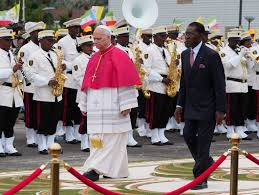
Pope Leo XIV's visit to Equatorial Guinea marks the culmination of his significant tour of Africa, following stops in Algeria, Cameroon, and Angola. Arriving on April 21, the Pontiff has chosen this Central African nation, where 75% of the population identifies as Catholic, for the final leg of his journey. This choice is particularly resonant given the profound influence of the Church in Equatorial Guinea, often described as the country's backbone, deeply embedded in its universities and hospitals.
The Pope's itinerary includes crucial dialogues with both political and religious authorities, as well as engagement with the cultural sphere. His planned visits to a psychiatric hospital and a school named in honor of his predecessor, Francis, underscore his commitment to addressing diverse societal needs. For the Catholic Church, Africa represents a vital and growing demographic, a stark contrast to its declining presence in Europe. Leo XIV's presence aims to galvanize the faithful, particularly in a world increasingly marked by vice and intolerance, reinforcing the Church's role as a moral compass.
However, the visit is not without controversy. Reports suggest that Equatorial Guinean authorities implemented salary cuts for civil servants and military personnel to finance the event. While officials have denied this, the perception persists that public funds, especially in a nation where oil wealth is reportedly concentrated within a ruling clan possessing "ill-gotten gains" abroad, are being diverted from the needs of ordinary citizens. From a local perspective, the Pope's visit presents a complex opportunity. While he can inspire the faithful, many hope he will also address the pressing issues of governance, corruption, and the unequal distribution of the nation's resources – challenges that directly impact the daily lives of Equato-Guineans, especially given President Teodoro Obiang Nguema's long tenure in power.
DistantNews Editorial
Originally published by Le Pays in French. Translated, summarized, and contextualized by our editorial team with added local perspective. Read our editorial standards.
More Stories

From Our Blog

What Gets Lost (and Found) When News Is Translated

The Critical Role of Diaspora Media in Global News

What Travellers Should Know About Countries with Restricted Press

A Digital Nomad's Guide to Following Local News

How the Same Story Looks Different in Different Countries
