


Pope Leo XIV Visits Lampedusa: A Pilgrimage of Memory and Hope for Migrants
Translated from French, summarized and contextualized by DistantNews.
At a glance
In-depth
Named sources
Context piece
- Pope Leo XIV visited Lampedusa on the 250th anniversary of American independence.
- The visit marked a pilgrimage of remembrance and hope for migrants, echoing Pope Francis's 2013 visit.
- He paid tribute to deceased migrants, renamed a quay in honor of Pope Francis, and met with young migrants.
Pope Leo XIV made a significant pilgrimage to Lampedusa, the Mediterranean island symbolizing the migrant tragedy, on July 4, 2026. This visit coincided with the 250th anniversary of American independence, a notable detail given Leo XIV is the first U.S.-born pontiff.
His journey mirrored that of Pope Francis, who made Lampedusa the site of his first papal trip in 2013, denouncing the "globalization of indifference." Pope Leo XIV arrived early Saturday and immediately proceeded to the Cemetery of the Nameless at Cala Pisana. There, he offered a tribute and prayer for migrants who perished at sea, laying flowers on the grave of a child named Joussef.
Ten years earlier, my story began here, at Lampedusa.
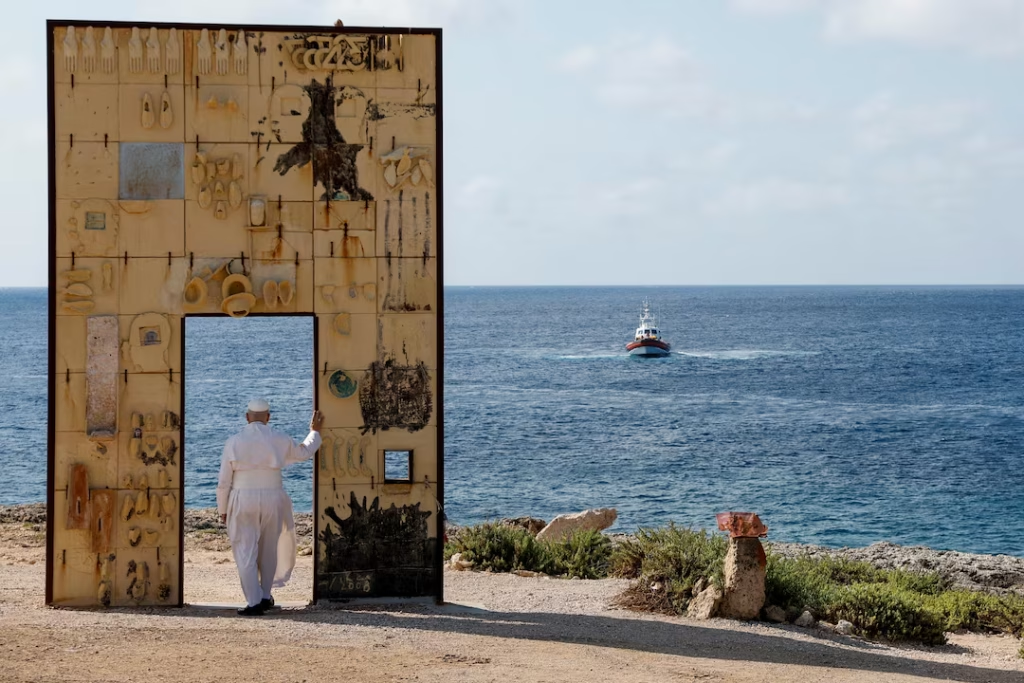
The pontiff then visited the symbolic 'Porta d'Europa' sculpture overlooking the Mediterranean. He walked hand-in-hand with migrant children before passing through the gate. Amidst a strong wind that briefly carried away his skullcap, he paused to gaze at the sea, where a military vessel was visible patrolling offshore. During his visit, he received a letter and a balloon from a young migrant named Leo, who arrived on the island alone ten years prior after losing his mother.
Later, at Molo Favaloro, a key location where migrant boats are brought ashore, Pope Leo XIV unveiled and blessed a plaque renaming the quay 'Molo Francesco' in honor of his predecessor. He also met and greeted a group of migrants accompanied by the Red Cross. In a letter to the mayor of Lampedusa, the Pope emphasized that dedicating the quay to Francis underscored the bond his predecessor forged with the island community.
We have to remember that this is a tragedy, and we have to remember that we have to do something.
DistantNews Editorial
Originally published by El Watan in French. Translated, summarized, and contextualized by our editorial team with added local perspective. Read our editorial standards.
More Stories


From Our Blog

What Gets Lost (and Found) When News Is Translated

The Critical Role of Diaspora Media in Global News

What Travellers Should Know About Countries with Restricted Press

A Digital Nomad's Guide to Following Local News

How the Same Story Looks Different in Different Countries
