


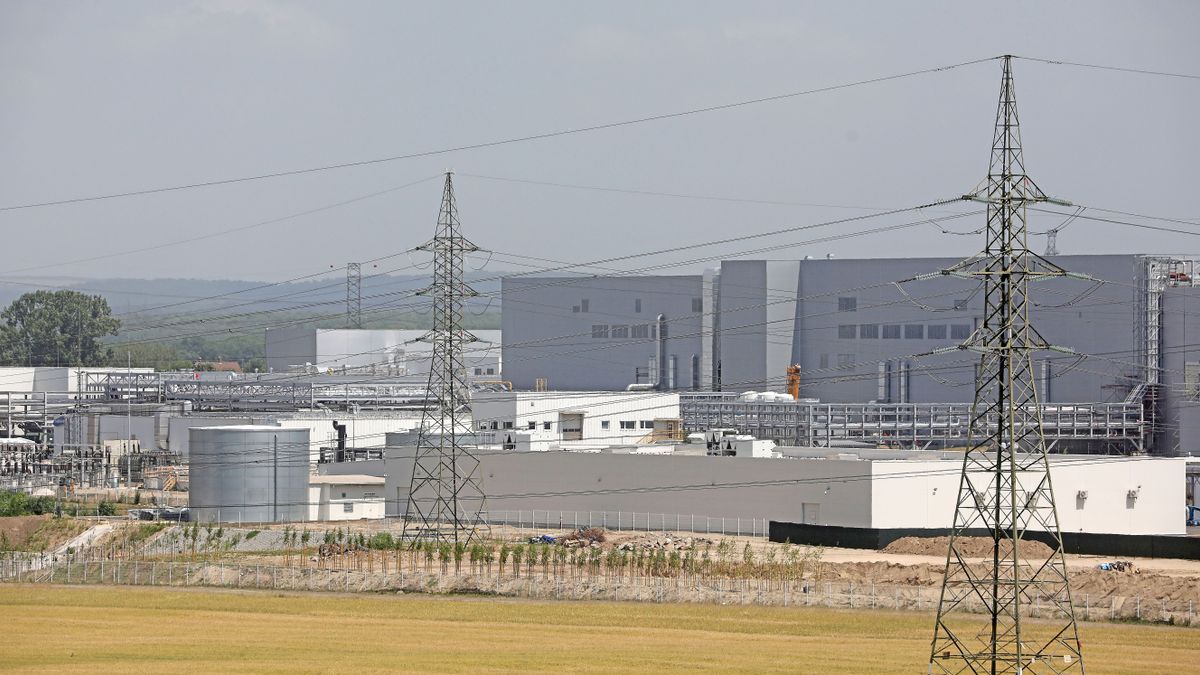
Post-Election Admission: Greenpeace Says Göd Samsung Plant Harmless, Undermining Tisza Party Claims
Translated from Hungarian, summarized and contextualized by DistantNews.
TLDR
- The Tisza Party and Greenpeace initially claimed that battery factories, specifically the Samsung plant in Göd, were dangerous and released harmful substances.
- Following the recent elections, Greenpeace admitted that the Göd Samsung plant did not release any harmful materials, contradicting earlier claims used by the Tisza Party for a smear campaign.
- This admission suggests that the Tisza Party's panic-mongering was politically motivated, as Hungary will still need these factories after a potential change in government.
The recent election results have brought to light a stark contradiction in the narrative surrounding battery factories in Hungary. For years, opposition parties and certain environmental groups, including Greenpeace and the Tisza Party led by Péter Magyar, have stoked public fear by claiming that facilities like the Samsung plant in Göd pose a significant threat to health and the environment. They alleged that the government was complicit in hiding the dangers associated with these industrial giants.
However, in a revealing turn of events just days after the election, Greenpeace itself has acknowledged that the Göd Samsung plant has not emitted any harmful substances. This admission directly refutes the core arguments used by the Tisza Party in their campaign. It appears that the urgency and alarm surrounding the battery factories were manufactured for political gain, designed to capitalize on public anxieties during the election period.
The battery factories were dangerous before the election, but not after.
The timing of this 'confession' is highly suspect. It suggests that the Tisza Party's aggressive stance on battery factories was a calculated political maneuver. Now that the election is over, and regardless of the outcome, Hungary's need for industrial development, including battery production, remains. The narrative has shifted from 'danger' to 'necessity,' a convenient pivot that allows the party to align with future economic realities without losing face.
This episode highlights a concerning trend of political opportunism exploiting environmental concerns. While robust environmental oversight is crucial, the deliberate creation of panic for electoral advantage undermines genuine public discourse and trust. The focus should be on factual, science-based assessments rather than politically charged campaigns that mislead the public and hinder necessary economic development.
The story of the Göd battery factory is the NER itself: corruption, lies, Asian economic migrants, health damage, environmental damage, silenced authorities, intimidated workers... submission to the polluting Asian multinational.
DistantNews Editorial
Originally published by Magyar Nemzet in Hungarian. Translated, summarized, and contextualized by our editorial team with added local perspective. Read our editorial standards.
More Stories



From Our Blog

Countries Without a Free Press: What You Need to Know

What Press Freedom Means for the News You Read

What Gets Lost (and Found) When News Is Translated

The Critical Role of Diaspora Media in Global News

What Travellers Should Know About Countries with Restricted Press
