


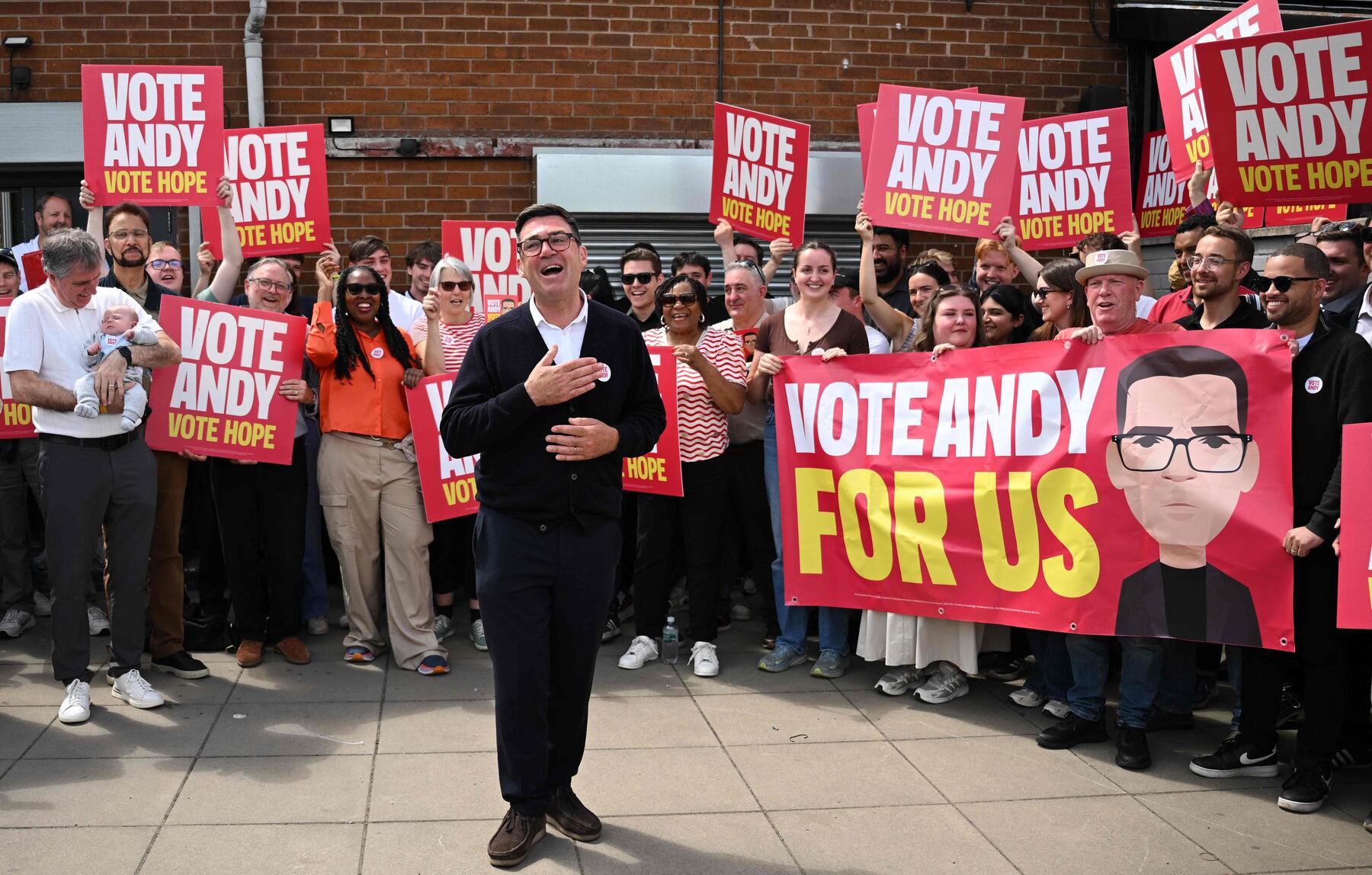
Power Struggle in London Escalates: Andy Burnham Openly Challenges Premier Starmer
Translated from German, summarized and contextualized by DistantNews.
At a glance
News
Named sources
New plan
- Andy Burnham secured a decisive victory in a UK by-election, winning 55% of the vote.
- The win positions Burnham as a strong contender to challenge Keir Starmer for Labour leadership.
- Burnham's victory is seen as a crucial moment for Labour, potentially marking a turning point for the party.
Andy Burnham, a Labour candidate, achieved a resounding victory in a UK by-election in the north of England, securing approximately 55% of the vote. This outcome surpassed expectations, as Burnham had been favored but the margin of his win was significant. His closest rival, Robert Kenyon of Reform UK, garnered only 35% of the votes.
Everyone knows politics isn't working.
This by-election win is poised to have considerable implications for national politics, as Burnham has openly expressed his ambition to become Prime Minister. Following his triumph, his chances of challenging current Labour leader Keir Starmer appear stronger. Burnham stated after his victory, "Everyone knows politics isn't working." He declared that the day "could mark the turning point" and vowed to make "the name Makerfield stand for the change this country needs," calling it "Labour's last chance."
Today could mark the turning point.
The Labour party mobilized significant resources to ensure Burnham's victory in Makerfield, with thousands of activists engaged in campaigning. While Keir Starmer expressed pleasure on social media, acknowledging Labour's "campaign of hope and confidence," he is also aware that this was primarily a personal triumph for Burnham. As the most popular Labour politician, Burnham's ability to decisively defeat Reform UK, a party that had recently gained ground in local elections, is seen as a rare and significant achievement by political analyst Rob Ford.
I want to ensure that the name Makerfield stands for the change this country needs.
Burnham's success provides him with a strong argument for being the best candidate to lead Labour to a second term in government by defeating Reform UK nationwide. However, questions remain about his ability to replicate this success on a national level as Prime Minister. His campaign in Makerfield positioned him as both a local politician and an internal rebel against the Labour establishment. As Prime Minister, he would embody that establishment, and he has yet to present a comprehensive government program, leaving uncertainty about how his policies might differ from Starmer's.
It is Labour's last chance.
DistantNews Editorial
Originally published by Die Presse in German. Translated, summarized, and contextualized by our editorial team with added local perspective. Read our editorial standards.
More Stories



From Our Blog

What Gets Lost (and Found) When News Is Translated

The Critical Role of Diaspora Media in Global News

What Travellers Should Know About Countries with Restricted Press

A Digital Nomad's Guide to Following Local News

How the Same Story Looks Different in Different Countries
