

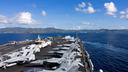

Powerful Warplanes, Drones, and Elite Ships: Secret List of Weapons Trump is Withdrawing from NATO Leaks
Translated from Croatian, summarized and contextualized by DistantNews.
At a glance
News
Named sources
Context piece
- The Trump administration is preparing to significantly reduce U.S. military contributions to NATO, including fighter jets, drones, and naval forces.
- This move, detailed in a document shared with allies, aims to adjust to new global circumstances and a strategic shift towards the Indo-Pacific.
- European nations are reportedly seeking ways to fill the potential gaps before the next NATO summit.
The Trump administration is planning a substantial reduction in the military assets the United States provides to NATO for alliance defense. A document shared by U.S. representatives with allies, as reported by German outlets Welt and Bild, indicates Washington intends to decrease its contributions of fighter jets, drones, aerial refueling tankers, and naval forces designated for NATO operations.
This initiative represents one of the most significant alterations to U.S. contributions to NATO in decades. European nations are already exploring methods to compensate for the anticipated voids before the upcoming NATO summit. The document specifically addresses the NATO Force Model, a system dictating the speed at which member states can deploy forces during crises or war, and Washington is proposing considerable cutbacks in this area.
The most substantial impact is expected in air power. Reports suggest a decrease in U.S. F-16 fighter jets allocated to NATO from 99 to 63, and F-15E combat aircraft from 54 to 36. Modern KC-46 tankers would be entirely removed from planning, while the number of older KC-135 tankers would drop from 71 to 63. Changes are also dramatic for unmanned systems, with long-range reconnaissance drones potentially being eliminated and the number of MQ-9 armed drones nearly halved.
These reductions extend to the U.S. Navy, which would shift from providing two carrier strike groups to just one for NATO. The number of cruisers and destroyers would also be halved, and submarine capabilities for launching cruise missiles would be withdrawn entirely from the alliance's available assets. Additionally, the number of P-8A Poseidon maritime patrol aircraft would decrease from 26 to 15.
U.S. military officials assert these changes are a necessary adaptation to evolving global conditions. General Alexus G. Grynkewich, commander of U.S. European Command, stated that the previous model had an "unhealthy interdependence on U.S. armed forces." He added that "the potential reality of simultaneous multi-front conflicts requires restructuring." This decision aligns with Washington's broader strategic pivot, with the U.S. administration increasingly focusing on the Indo-Pacific and its rivalry with China. U.S. Secretary of Defense Pete Hegseth emphasized at the Shangri-La Dialogue that "America is a Pacific nation" and that the U.S. is ensuring military strength to support its long-standing position in the region. Despite concerns, NATO has issued reassuring statements, with spokesperson Allison Hart characterizing Europe's role as evolving.
DistantNews Editorial
Originally published by Večernji List in Croatian. Translated, summarized, and contextualized by our editorial team with added local perspective. Read our editorial standards.
More Stories

From Our Blog

What Gets Lost (and Found) When News Is Translated

The Critical Role of Diaspora Media in Global News

What Travellers Should Know About Countries with Restricted Press

A Digital Nomad's Guide to Following Local News

How the Same Story Looks Different in Different Countries
