


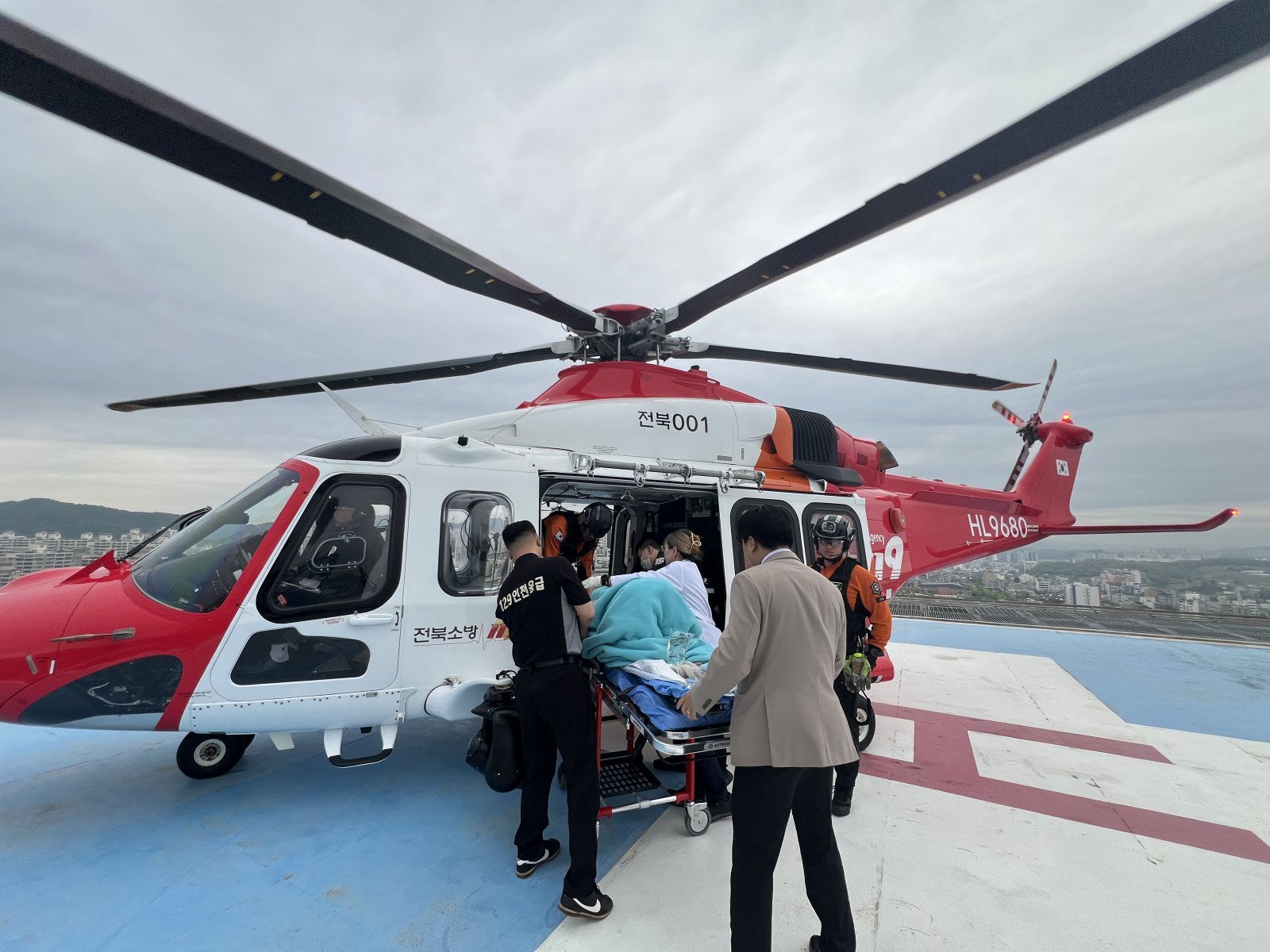
Pregnant Woman Flies 360km by Fire Helicopter to Incheon Amid Hospital Bed Shortage
Translated from Korean, summarized and contextualized by DistantNews.
TLDR
- A pregnant woman in Jeonju, South Korea, experiencing premature labor, was transported by fire helicopter to Incheon for treatment due to a lack of available hospital beds.
- The 24-week pregnant patient, at high risk of premature birth, required immediate medical attention, prompting an extensive search for a suitable hospital.
- The successful transfer was facilitated by South Korea's integrated fire helicopter dispatch system, which allows for cross-regional deployment.
This incident highlights a critical gap in our healthcare system, where a pregnant woman in Jeonju faced a harrowing journey due to the unavailability of local medical facilities. The 24-week pregnant patient, with a history of cervical cerclage, was at high risk of premature birth. Despite the urgency, finding an accepting hospital proved incredibly difficult, forcing a desperate search that extended to the Seoul metropolitan area.
The patient, who had a history of cervical cerclage, was at high risk of premature birth.
Ultimately, a Gachon University Gil Hospital in Incheon agreed to admit her. The swift response of the Jeonju fire department, utilizing a fire helicopter for a 360-kilometer transfer, undoubtedly saved precious time. This event underscores the vital importance of the nationwide integrated dispatch system for fire helicopters, a system that allows for rapid deployment irrespective of regional jurisdiction.
The Jeonbuk 119 Emergency Situation Management Center expanded its search to the Seoul metropolitan area, checking with a total of 14 hospitals before receiving confirmation from Gachon University Gil Hospital in Incheon.
While the article notes the success of this system, which was expanded nationwide in March after a pilot program, it is crucial to reflect on why such a situation arose in the first place. The need for a pregnant woman to travel such an extreme distance for basic medical care is unacceptable. This incident should serve as a wake-up call for authorities to ensure adequate hospital capacity and accessibility, especially for high-risk pregnancies, across all regions of our country. The Dong-A Ilbo believes that while technological solutions like the integrated dispatch system are commendable, they should complement, not compensate for, fundamental deficiencies in healthcare infrastructure.
The nationwide fire helicopter integrated dispatch system enabled a wide-area response.
DistantNews Editorial
Originally published by Dong-A Ilbo in Korean. Translated, summarized, and contextualized by our editorial team with added local perspective. Read our editorial standards.
More Stories



From Our Blog

What Gets Lost (and Found) When News Is Translated

The Critical Role of Diaspora Media in Global News

What Travellers Should Know About Countries with Restricted Press

A Digital Nomad's Guide to Following Local News

How the Same Story Looks Different in Different Countries
