


President Declares National Climate Disaster Amid Record Heatwave
Translated from Korean, summarized and contextualized by DistantNews.
At a glance
News
Official statement
New plan
- President Lee Jae-myung declared the current extreme heatwave a national climate disaster situation, demanding maximum policy response.
- He emphasized protecting citizens' lives and safety, particularly vulnerable populations like those in temporary housing and outdoor workers.
- The president called for reflecting budget requests for heatwave response infrastructure improvements in next year's budget.
President Lee Jae-myung has declared the nation's current record-breaking heatwave a "national climate disaster situation," urging an unprecedented level of policy response.
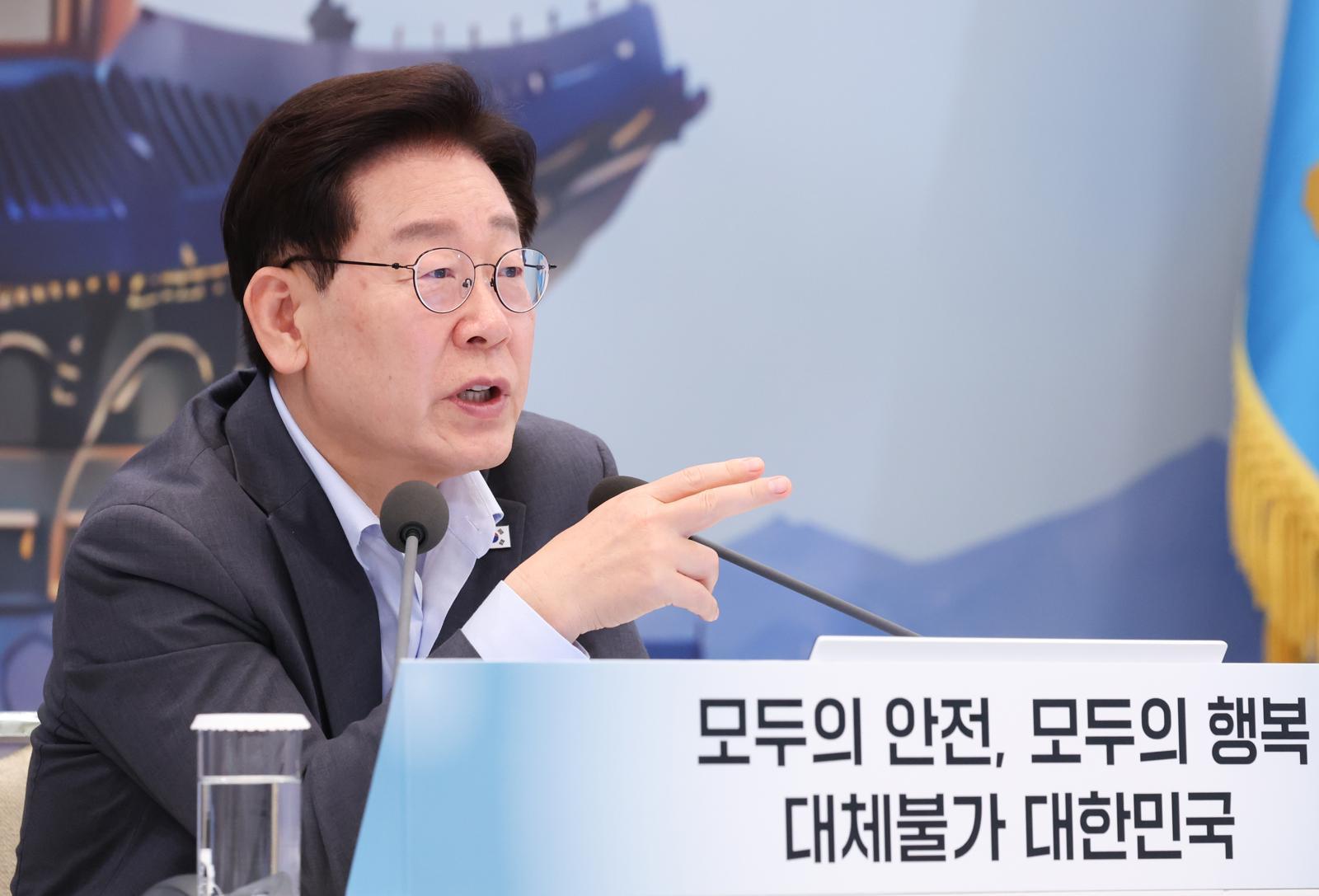
"We must raise the level, scope, and speed of policy responses to the maximum with greater tension than ever before," Lee stated during a meeting on heatwave and drought response. He noted that the extreme heat has gripped the entire country, with unprecedented heatwave "critical warnings" issued in the Seoul metropolitan area for the first time, following the southern regions.
We must raise the level, scope, and speed of policy responses to the maximum with greater tension than ever before.
The president stressed that the top priority is safeguarding citizens' lives and safety. He highlighted that disasters disproportionately affect the vulnerable, specifically mentioning residents in facilities like "goshiwons" (small single-room accommodations), "jjokbang villages" (slum-like housing), and vinyl greenhouses. Lee also called for focused administrative efforts to protect workers on construction sites, in agriculture, and fisheries.
The top priority is safeguarding citizens' lives and safety.
Lee acknowledged the significant efforts of frontline public officials during the intense heat and encouraged them to continue their work by directly inspecting sites and implementing necessary measures swiftly for those in need. He also urged a review of incorporating budget requests for improving infrastructure related to heatwave response into the upcoming national budget.
"Fundamentally, we must focus on improving infrastructure such as housing, water supply facilities, power grids, and heatwave response facilities to adapt to the new normal of climate disaster situations," Lee said. He specifically mentioned the need to address the lack of cooling facilities in traditional markets, which significantly reduces customer numbers during summer, causing hardship for vendors.
We must focus on improving infrastructure such as housing, water supply facilities, power grids, and heatwave response facilities to adapt to the new normal of climate disaster situations.
DistantNews Editorial
Originally published by Hankyoreh in Korean. Translated, summarized, and contextualized by our editorial team with added local perspective. Read our editorial standards.
More Stories


From Our Blog

What Gets Lost (and Found) When News Is Translated

The Critical Role of Diaspora Media in Global News

What Travellers Should Know About Countries with Restricted Press

A Digital Nomad's Guide to Following Local News

How the Same Story Looks Different in Different Countries
