

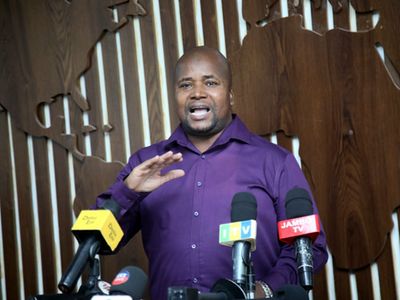

President Hassan: Demands on Tanzania Violate Human Rights
Translated from Swahili, summarized and contextualized by DistantNews.
At a glance
News
Sources not specified
Context piece
- Tanzania's President Samia Suluhu Hassan has stated that demands made on the country violate human rights.
- The specific nature of these demands and the entities making them are not detailed in the provided text.
- The statement suggests a conflict between external expectations and the nation's approach to human rights.
Tanzanian President Samia Suluhu Hassan has asserted that certain demands being made on the country contravene fundamental human rights principles. The statement, delivered without specifying the exact nature of these demands or the parties involved, signals a firm stance by the Tanzanian government against external pressures it deems infringing.
President Hassan's declaration implies a potential disagreement over how human rights standards are being interpreted or applied in relation to Tanzania. The government appears to be drawing a line, indicating that it will not compromise on what it perceives as its sovereign rights or the well-being of its citizens under the guise of adhering to external expectations.
This assertion could relate to various international engagements, including development aid conditions, trade agreements, or diplomatic relations where human rights benchmarks are often discussed. The President's strong words suggest that Tanzania is prepared to challenge or reject demands that it believes overstep boundaries and infringe upon its national autonomy or the rights of its people.
The government's position underscores a broader trend among some nations to assert their sovereignty and define their own development paths, often pushing back against what they view as externally imposed norms or conditions. President Hassan's statement positions Tanzania as a country unwilling to accept demands that it considers a violation of basic human rights.
DistantNews Editorial
Originally published by Mwananchi in Swahili. Translated, summarized, and contextualized by our editorial team with added local perspective. Read our editorial standards.
More Stories

From Our Blog

What Gets Lost (and Found) When News Is Translated

The Critical Role of Diaspora Media in Global News

What Travellers Should Know About Countries with Restricted Press

A Digital Nomad's Guide to Following Local News

How the Same Story Looks Different in Different Countries
